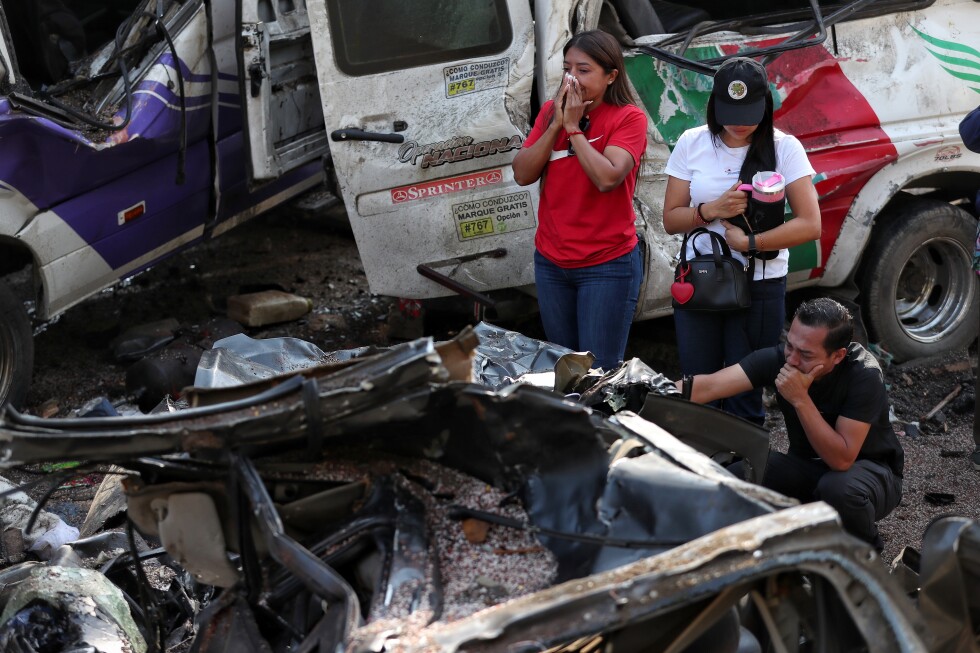
On a quiet Saturday along Colombia’s critical Pan-American Highway, a hidden explosive device ripped through a civilian passenger bus traveling through the municipality of Cajibio, leaving a trail of death and devastation that has shaken the South American nation. Regional authorities confirmed Sunday that the death toll from the attack has climbed to 20, with 15 women and five men counted among the fatal victims.
Octavio Guzmán, governor of the hard-hit Cauca department, shared updated details on the social platform X, noting that 36 additional people were wounded in the blast. Three of those injured remain in intensive care, while five child victims are expected to make a full recovery, according to Guzmán’s update. Forensic teams have launched a full identification effort to confirm the identities of all those killed: Colombia’s Institute of Legal Medicine has deployed a multi-disciplinary team of specialists, including forensic dentists, anthropologists, and medical examiners, to process remains and notify next of kin.
This deadly bombing is not an isolated incident. Over the past 72 hours alone, more than two dozen violent attacks have been recorded across southwestern Colombia, a long-troubled region marked by power struggles between illegal armed factions. These groups have long fought to control lucrative coca growing territories and strategic river and coastal smuggling routes that feed multi-billion dollar drug trafficking networks supplying Central American and European illicit drug markets.
Top Colombian military leaders have labeled the attack a clear act of terrorism. Gen. Hugo López, commander of Colombia’s national Armed Forces, pinned responsibility for the bombing on two dissident factions originating from the now-disbanded Revolutionary Armed Forces of Colombia (FARC): the network of Iván Mordisco, one of the country’s most-wanted fugitive leaders, and the Jaime Martínez faction, both of which maintain a heavy armed presence in Cauca.
International bodies have joined in condemning the violence against civilian communities. The United Nations High Commissioner for Human Rights issued a formal statement rejecting the attacks, calling on Colombian law enforcement and judicial authorities to launch a full, transparent investigation into the incident and ensure accountability and justice for all those affected. In response to the tragedy, Governor Guzmán announced a three-day period of national mourning across Cauca on Sunday to honor the lives lost in the attack.