In private discussions with several Gulf Arab nations, the Trump administration has pushed local authorities to award multi-billion-dollar infrastructure reconstruction contracts to American engineering, manufacturing and construction companies, following the widespread damage the region sustained in Iran’s retaliatory strikes amid the U.S.-Israeli war on the Islamic Republic, multiple U.S. and Arab officials with direct knowledge of the talks confirmed to Middle East Eye.
The Gulf states targeted by the lobbying effort include Kuwait, Bahrain, and the United Arab Emirates – the three countries that bore the brunt of Iranian counterattacks and suffered the worst infrastructure damage. Neighboring Saudi Arabia and Oman, by comparison, reported far less severe damage from Iranian air and drone strikes, the officials added.
In talking points shared with Gulf leaders, U.S. officials have centered their pitch on the deep-rooted economic partnerships between Washington and Gulf monarchies, framing American involvement in reconstruction as a natural extension of those long-standing ties. A senior U.S. official told Middle East Eye that the push to secure reconstruction contracts for domestic firms aligns with the Trump administration’s core “America First” foreign policy doctrine, which prioritizes economic statecraft designed to benefit U.S. commercial interests.
However, one senior Arab official criticized the timing of the lobbying effort, calling it “a little tone-deaf” at a moment when Gulf governments remain on high alert for a resumption of open hostilities, and are increasingly uncertain about long-term U.S. security commitments to the region.
This push is far from a symbolic gesture: independent energy analyst firm Rystad Energy estimates that repair costs for energy-related infrastructure across the Gulf alone could climb as high as $39 billion, a figure that does not include the massive damage sustained within Iran itself. Currently, a fragile ceasefire holds between Washington and Tehran, even as the two sides remain locked in a tense stalemate over control of the Strait of Hormuz, with both enforcing rival blockades on shipping through the critical chokepoint. The Iranian government has calculated that it sustained $270 billion in combined direct and indirect economic damage from the U.S.-Israeli war.
Though most Gulf monarchies publicly opposed the U.S.-Israeli military campaign against Iran, they nonetheless became the primary target of Tehran’s retaliatory strikes. The UAE alone faced at least 2,000 ballistic missiles and drone attacks, according to regional defense sources. The hardest-hit Gulf states are also the most economically vulnerable to Iran’s new control over the Strait of Hormuz, through which roughly a fifth of global oil supplies pass; unlike Saudi Arabia, which operates a pipeline that bypasses the strait via the Red Sea, these nations remain fully reliant on the chokepoint for their energy exports.
While Gulf states collectively hold massive sovereign reserves that can cover reconstruction costs, growing signs indicate they are bracing for a prolonged period of economic downturn as energy exports remain stalled. Kuwait, for example, hosts one of the world’s largest sovereign wealth funds, valued at roughly $1 trillion – on par with the funds held by the UAE and Saudi Arabia, though it generally maintains a far lower public profile. Even so, U.S. Secretary of State Scott Bessent confirmed this week that the UAE and other affected Gulf states have approached Washington to request currency swap lines that would give them access to much-needed U.S. dollars while their energy export revenue remains frozen.
A former senior U.S. official familiar with the negotiations told Middle East Eye that a quid pro quo is already on the table: “I could see the US looking for a trade-off where Gulf states using a swap line commit to US firms for rebuilding.”
Kuwait, located at the northeastern edge of the Persian Gulf, was also heavily damaged by Iranian strikes. The country already hosts the fourth-largest U.S. military presence in the world, and Iranian strikes hit key U.S. facilities including Camp Arifjan and Ali al-Salem Air Base. Beyond military sites, Kuwait International Airport suffered extensive damage, and at least two major national power and water desalination plants were also hit, Reuters reported.
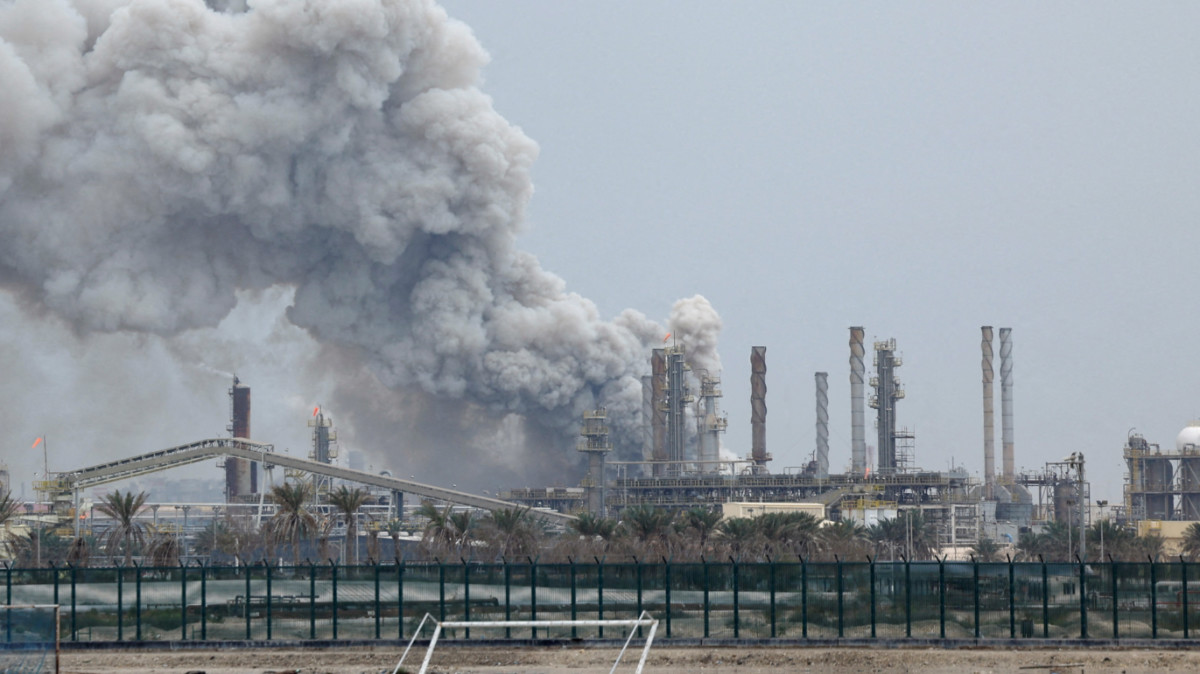
Similarly, Bahrain – a small island kingdom connected only to Saudi Arabia via the King Fahd Causeway – sustained widespread infrastructure damage. The kingdom’s main port, which hosts the U.S. Navy’s Fifth Fleet, was heavily targeted, and critical industrial sites across the country also sustained heavy damage. The Financial Times confirmed that Amazon’s regional cloud computing operations based in Bahrain were knocked offline by the strikes, and Aluminium Bahrain – one of the world’s largest single-site aluminum smelters – was forced to declare force majeure after sustaining critical damage. Bahrain’s national Bapco refinery also issued a force majeure notice following the attacks.
To date, U.S. officials have not yet pushed for contracts to go to any specific American firms, but have made clear their goal of positioning U.S. companies as the top candidates for all major reconstruction work moving forward.