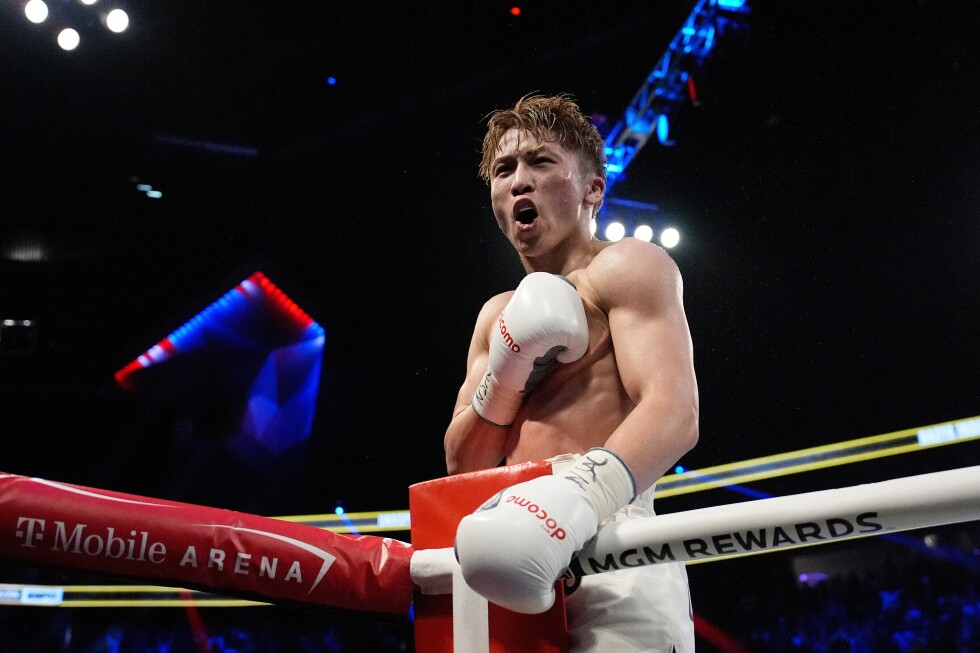
On May 2, dubbed “The Day” by the Japanese boxing community, the Tokyo Dome will host what is widely considered the most high-profile bout in the nation’s boxing history: a showdown between two undefeated Japanese legends vying for supremacy. Undisputed super-bantamweight world champion Naoya Inoue, boasting a 32-0 professional record with 27 knockouts and nicknamed “The Monster,” will face rising contender Junto “Big Bang” Nakatani, who holds an equally unblemished 32-0 record with 24 wins by KO.
The bout carries unprecedented stakes for Japanese boxing, marking the first time two athletes from the country have ranked among the top six in Ring Magazine’s prestigious pound-for-pound global rankings, with Inoue holding the number two spot and Nakatani claiming sixth. All 55,000 general admission tickets sold out within days, and pay-per-view access has also been selling at record pace, drawing interest from demographics that have historically been less engaged with the sport, including women and children. Fans across the nation are already hailing this moment as the true golden age of Japanese boxing — a milestone that comes even as the country has long produced world-class champions, including Boxing Hall of Fame inductees Yoko Gushiken and Fighting Harada.
What makes this moment particularly transformative, beyond one blockbuster bout, is the deep pipeline of young talent emerging across Japan’s lighter weight divisions, ensuring that this boom is not a one-off event. Standout prospects include Daiya Kira, a 2024 pro debutant who already holds a 3-0 record, and Riku Masuda, who scored a major upset by stopping legend Nonito Donaire earlier this year. This growing pool of contenders has experts convinced that the current wave of popularity will extend far beyond the May 2 main event.
The energy of this boom is visible at gyms across Tokyo. On a recent warm evening at downtown Tokyo’s Kadoebi Boxing Gym, more than a dozen boxers trained relentlessly on heavy bags, driven by the momentum of the sport’s rising profile. Mikio Sakai, Japan’s fifth-ranked middleweight, explained that the sport’s appeal in the country stems from its alignment with traditional cultural values, what he calls “the samurai spirit” — the ability to build inner confidence and resilience through discipline. Like many Japanese boxers, Sakai’s introduction to the sport came through an unexpected cultural influence: his father introduced him to boxing by showing him the *Rocky* film franchise to teach him grit and determination, before he joined his high school’s boxing club. “I always thought punching was so cool from when I was a kid,” Sakai told reporters. “I aspired to be a strong man.”
Beyond Inoue and Nakatani, Japanese boxing has already accumulated an impressive roster of current and former bantamweight champions in recent years, including Seiya Tsutumi, Yoshiki Takei and Ryosuke Nishida, with dozens more young athletes turning pro every year. The May 2 fight card is stacked from top to bottom: Naoya Inoue’s younger brother Takuma Inoue, who recently defeated Japanese star Tenshin Nasukawa, will defend his WBC bantamweight belt against former multi-division champion Kazuto Ioka.
Japanese boxing pundits, many of whom reach huge audiences via social media, have been consumed with analyzing the bout’s potential outcomes. Former OPBF super bantamweight champion Shingo Wake is confident Inoue will emerge victorious, while former world champion Takanori Hatakeyama has warned Inoue against overcommitting to a knockout win, a mistake that could open the door for Nakatani to capitalize. While most analysts lean toward an Inoue win thanks to his superior experience, elite speed, and precise footwork and distance control, predictions remain far from unanimous. Nakatani, a taller right-handed southpaw with a longer reach, carries equal knockout power in both hands, making him a dangerous threat for any opponent.
A defining trait of the modern Japanese boxing scene that sets it apart from many other global circuits is the stoic, disciplined demeanor shared by most of its top athletes. Many top Japanese boxers got their start in traditional martial arts like karate, which is widely taught as an educational character-building activity for children across Japan. Both Inoue and Nakatani trained in karate from early childhood, and grew up in supportive family environments that nurtured their boxing ambitions. Inoue’s father has served as his long-time trainer and closest advisor, and regularly appears alongside his son at press conferences. Nakatani, who moved to the United States as a teenager to study boxing and regularly trains in Los Angeles, has his brother in his corner for every bout, and works with Rudy Hernandez, one of the most respected trainers in professional boxing. “We won’t know until the bell rings,” Hernandez said of the bout’s outcome. “We have two great fighters.”
In a contrast to the trash talk that often dominates promotion for major bouts in other countries, both Inoue and Nakatani have maintained polite, respectful interactions throughout the fight buildup, always addressing each other with a smile while reaffirming their commitment to winning. “I want to show you all a spectacular fight,” Inoue told reporters. “I’ve studied and thoroughly know Nakatani, the fighter.”
When the opening bell rings on May 2, one of the two undefeated competitors will suffer their first professional loss. When asked if a draw — a outcome many fans are quietly hoping for — was on the table, Nakatani smiled and acknowledged it is highly unlikely, but not impossible. For Japanese boxing, regardless of the result, this historic bout already marks a new high point for the sport in the country.