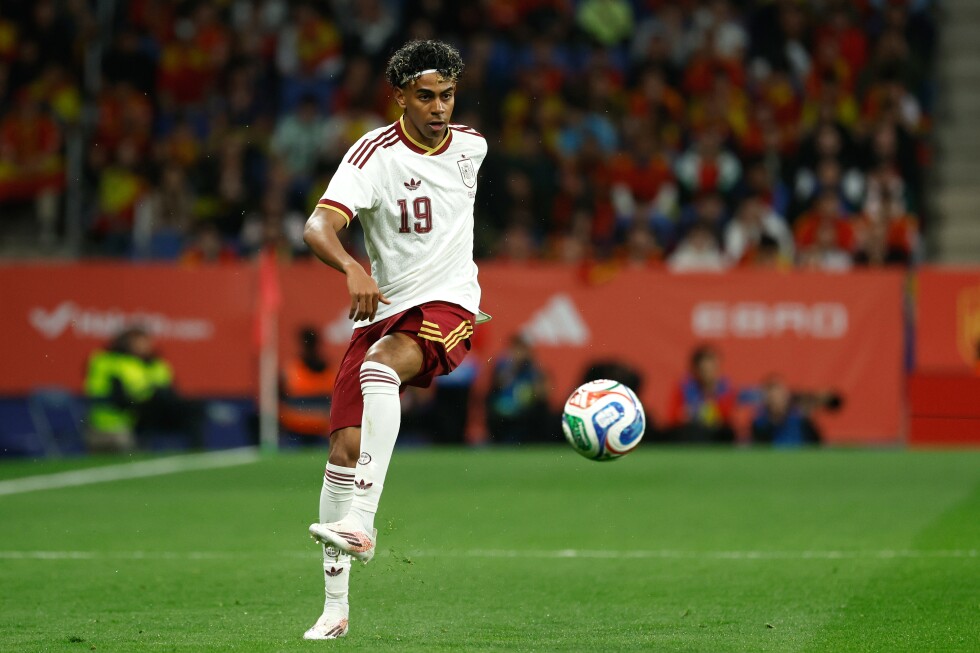
MADRID – As Spain’s men’s national soccer team prepares to compete for the 2025 World Cup title, a string of high-profile discrimination incidents has plunged Spanish soccer into a global reckoning, overshadowing the team’s on-pitch success and raising urgent questions about cultural change within the sport. The latest controversy came in a March friendly match against Egypt, held in Barcelona, where a faction of Spanish supporters directed anti-Muslim chants at the Egyptian team and jeered the Egyptian national anthem – an incident that sparked international outrage just months before the World Cup kicks off. This incident marks the third major discrimination scandal to hit Spanish soccer in two years, following 2023’s racist abuse targeting Real Madrid star Vinícius Júnior and the unwanted sexual advance by former Spanish Football Federation (RFEF) president Luis Rubiales against Women’s World Cup winner Jenni Hermoso. With Spain set to co-host the 2030 World Cup, cleaning up its international reputation as a tolerant host nation has become a top priority for Spanish authorities and soccer leaders, who have pushed back against framing the entire country as racist or discriminatory. Esteban Ibarra, leader of the Madrid-based Movement Against Intolerance, Racism and Xenophobia, argues that the harmful acts are limited to small, radical fan factions rather than the broader Spanish supporter base. “It’s not a very good image for Spain right now, but we can’t mistake these acts by minority groups, usually the ultra groups, with the actions of the majority of fans in Spain,” Ibarra noted. Spain’s highest sports governing body, the Higher Council for Sports, echoed that position in a statement to the Associated Press, stressing that the disruptive fans do not represent the vast majority of Spanish supporters. “These acts, which we condemn in the strongest possible terms, have been perpetrated by a group of people who in no way represent the vast majority of Spanish soccer fans,” the council said. “The chants were deplorable and cannot be repeated. We are confident that the Spanish men and women attending the World Cup this summer will support our team with passion and always with respect.” Critics and affected parties have pushed back against framing the incidents as isolated, however. The Egyptian Football Association called the chants “entirely unacceptable in football stadiums” and emphasized that this negative phenomenon must be collectively addressed and fully eradicated. Notably, the incident occurred even with 18-year-old Spanish star forward Lamine Yamal – a practicing Muslim – in Spain’s lineup. The day after the friendly, Yamal publicly condemned the chants as disrespectful and intolerable, arguing that the bigotry was unacceptable regardless of whether it was directed at him personally. “I understand that not all fans are like that, but to those who chant these things: Using a religion as a taunt on the field makes you look ignorant and racist,” Yamal said. “Football is for enjoying and cheering, not for disrespecting people for who they are or what they believe.” The RFEF has pointed to Yamal’s widespread popularity as proof that discrimination does not reflect the views of most Spanish fans, noting that Yamal’s jersey is the highest-selling Spain national team shirt and that he draws massive crowds everywhere the team travels. The federation also highlighted ongoing anti-discrimination campaigns run in partnership with the Spanish government and other soccer entities. In response to the incident, Spanish authorities launched a criminal investigation into the fan behavior, and FIFA has opened formal disciplinary proceedings against the RFEF. The anti-Muslim incident comes on the heels of two major scandals that already put Spanish soccer’s culture of discrimination under the global microscope. In 2023, Vinícius Júnior, Real Madrid’s Black Brazilian forward, was subjected to racist slurs from ultra fans during a La Liga match in Valencia, prompting the star to speak out forcefully about the pervasive problem of racism in Spanish soccer. At the time, Vinícius said that the Spanish league “now belongs to racists” and that Spain was widely perceived as a racist country globally. He has since softened that framing, noting that racism exists in every nation, but continues to advocate for stronger action. After praising Yamal’s condemnation of the anti-Muslim chants, Vinícius said: “I’m not saying that Spain or Germany or Portugal are racist countries, but there are racists in these countries, and in Brazil and other countries as well. But if we keep fighting together, I think future players and people in general won’t have to go through this again.” Vinícius’ protest sparked widespread global support and pushed Spanish authorities to take stronger action against on-pitch discrimination. For the first time in Spanish professional soccer history, a court handed down a conviction for racial abuse in soccer following Vinícius’ repeated calls for accountability, and multiple other radical fans have received penalties for discriminatory acts. A recent ruling from the Spanish Supreme Court also set a new precedent for harsher sentences for intolerance in sports, marking a tangible step forward in the fight against discrimination. Just months after the Vinícius controversy, Spanish soccer faced another major cultural reckoning with the Rubiales scandal. After Spain won the 2023 Women’s World Cup, then-RFEF president Luis Rubiales grabbed Jenni Hermoso, a star Spanish player, by the head and kissed her on the lips without her consent. Rubiales ultimately resigned and was found guilty of sexual assault, with critics arguing the incident exposed deep-rooted sexism in Spanish soccer leadership. The RFEF says the scandal prompted sweeping internal reform: today, 50% of the federation’s board of directors are women, and women hold multiple senior leadership positions within the organization. As the World Cup approaches, Spain is grouped with Saudi Arabia, a majority-Muslim nation, adding extra urgency to addressing the recent anti-Muslim incident. Spanish soccer and government officials say they have put in place robust measures to prevent similar incidents during the tournament, including monitoring bulk ticket purchases to block known radical ultra fans from accessing matches. Ibarra argues that the high global attention on recent scandals has put Spain on alert, making it less likely that similar incidents will occur during the World Cup. “Especially now that Spain is on alert because of the international repercussion of the recent incidents, more severe measures are expected against these Spanish ultra groups that are responsible for these acts,” Ibarra said. The Spanish government said it has coordinated for years across law enforcement, soccer governing bodies, clubs and fan groups to stop a small faction of hooligans from tarnishing the sport. The government claims it has “one of the most advanced systems in Europe” to combat sports-related intolerance, with a dedicated anti-violence commission that coordinates action between law enforcement, prosecutors and other relevant institutions. Spain enters the 2025 World Cup as one of the pre-tournament title favorites. The team, which currently holds the European Championship title, recovered from a disappointing round-of-16 exit at the 2022 Qatar World Cup to win the 2023 Nations League and finish as runners-up in the 2024 iteration, building strong momentum on the pitch ahead of the tournament. But that on-pitch success has been partially overshadowed by the ongoing reckoning over discrimination, leaving observers waiting to see if the recent string of scandals will translate to lasting cultural change in Spanish soccer.
Spain heads to World Cup with its image battered by cases of racism, sexism and xenophobia