In the frigid pre-dawn hours of Valentine’s Day this year, a small group of weary women huddled outside the gates of a Caracas detention center, straining to hear every name a police officer shouted into the dark night. With each call, a gaunt detainee stumbled out into the tearful embrace of waiting loved ones. When the roll call ended, 15 men and two women—all labeled political prisoners—had walked free. But for Mileidy Mendoza and Sandra Rosales, the moment was heavy with bittersweet tension: their husbands’ names never came.
What began as two isolated women’s quiet agony over detained spouses grew into a grassroots movement that would test the new post-Nicolás Maduro Venezuelan government’s commitments to political reform under intense U.S. and international pressure. It is a story of unexpected sisterhood, relentless courage, and the unfinished struggle to secure freedom for more than 400 political prisoners still held behind bars.
Neither Mendoza nor Rosales had any prior political organizing experience before their husbands’ arrests last November. Mendoza, a 30-year-old stay-at-home mother who sold handcrafts to supplement her driver husband’s income, lived quietly in western Caracas with her two children. Rosales, a 37-year-old elementary school teacher, raised four kids in Valencia, a once-booming industrial city north-central Venezuela. Both were apolitical; Rosales and her husband, Dionnys Quintero, an explosives technician for Venezuela’s intelligence service, had even long supported the ruling socialist party. When both men were arrested in November and accused of collaborating with U.S.-backed opposition factions to plant a bomb in a central Caracas plaza, neither woman was given official confirmation of the detentions for weeks, and no visitors or phone calls were allowed. The Venezuelan government never responded to requests for comment on the arrests.
Their shared predicament drew them together after the January 3 U.S. military operation that captured and removed Maduro from power. Under direct pressure from the Trump administration to restore civil liberties, the interim government led by acting President Delcy Rodríguez announced it would free jailed political dissidents, sparking hope for hundreds of families with loved ones detained under Maduro’s authoritarian rule. Mendoza, who had already spent weeks trekking between detention centers searching for her husband Eric Díaz, learned he was being held at a Calle Mara police station, a dead-end street in an industrial Caracas neighborhood, alongside dozens of other political prisoners.
Mendoza and a handful of other wives traveled to the station expecting to reunite with their husbands that day. When no releases happened, they refused to leave. They set up a makeshift camp on the sidewalk with just a few fleece blankets; local businesses and residents stepped in to donate foam cushions, water, electricity, and bathroom access. Within days, the camp grew to 30 women, most of them wives and mothers of detained dissidents, who transformed the dead-end street into a permanent protest site. Rosales joined the movement shortly after it began, and she and Mendoza quickly became close collaborators: Rosales’ calm, rational balance tempered Mendoza’s fiery, unapologetic passion, and the pair forged a sisterhood that extended beyond their shared fight. “We are much more than comrades; we are a family,” Mendoza said.
As the protest gained international attention, the government made its first concession: it allowed the women their first in-person visits, officially confirming the detainees were being held at the site. What the women saw during that January 27 visit shocked them: their loved ones were pale, gaunt, and had aged dramatically in custody. Male detainees were forced to wear baby blue uniforms—the official color of opposition leader María Corina Machado’s party, which the government accuses of plotting the bomb attack—an intentional branding the women saw as part of the regime’s repression.
Far from quelling the protest, the visit only strengthened the women’s resolve. Rejecting offers of limited, regular visitation as insufficient, they doubled down: they met with lawmakers debating an amnesty bill for political prisoners, filed court paperwork, met with legal teams, and held round-the-clock prayer vigils. After more than a month of camping outside the station, 10 women launched a hunger strike to force further action. Mendoza lasted five days without food before dehydration, heart palpitations, and dizziness forced her to end the strike and receive medical care; Rosales lasted two days. The strike concluded on the 42nd day of the protest, with only one woman outlasting Mendoza by a matter of hours.
Two weeks after the hunger strike, the first major breakthrough came on Valentine’s Day, when the government released 17 prisoners. Two more releases followed on March 7, when 25 more men walked free. But each release left Mendoza and Rosales with the same hollow disappointment: their husbands remained in custody. Shortly after the March releases, the women learned their spouses had been transferred to a notoriously harsh prison outside Caracas, a facility long known for sweltering temperatures, systematic physical and psychological abuse, and inadequate food supplies. The women suspected the transfer was retaliation for their high-profile protest.
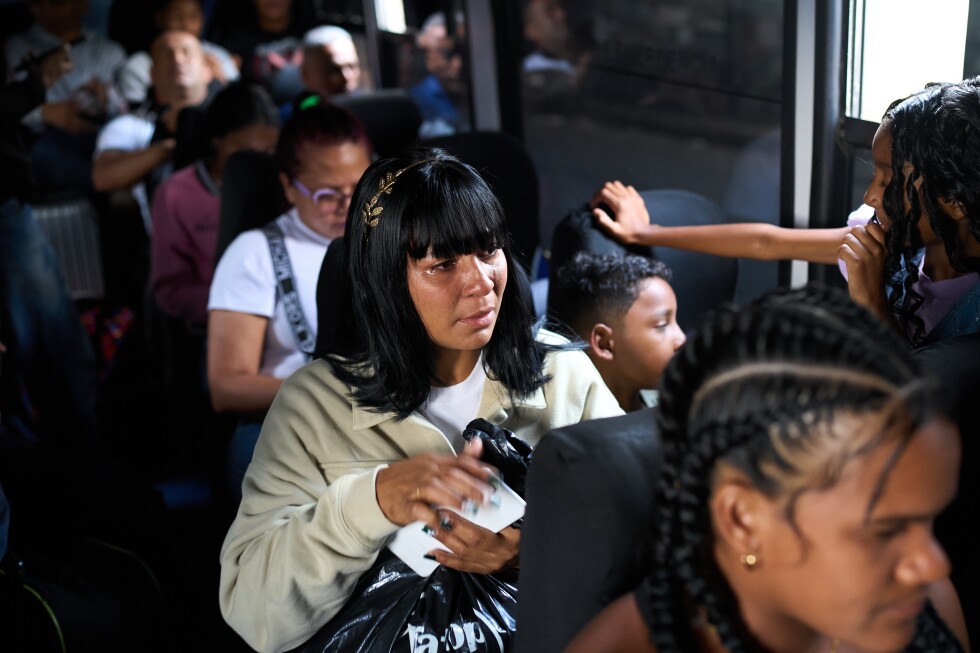
After 64 days of continuous camping outside the Calle Mara police station, the remaining core of the movement folded their tents and suspended the site protest, shifting into a waiting game. Two weeks later, they were granted a new visit at the outlying prison, this time allowed to bring their children. On Easter Sunday, April 5, the women traveled by bus to the facility, each carrying small comforts for their husbands: Mendoza brought popcorn and fried plantains, her husband’s favorite snacks, while Rosales brought a sheet cake to celebrate her eldest daughter’s birthday and her own, which fell that very day. The four-hour visit was filled with small updates on school, dental appointments, and family life, but the women left with a clear promise: they would not abandon their fight. They just needed time to regroup.
To date, human rights groups confirm more than 400 political prisoners remain in Venezuelan custody, and the government has not responded to repeated requests for comment on its plans for future releases. The Trump administration has praised the interim government’s pledge to free detainees, but critics note releases have been selective, falling far short of the full amnesty activists and family members demand. For Mendoza, Rosales, and the other women of the Calle Mara camp, the fight is far from over. “We must continue fighting for our goal, which is the release of all of them,” Mendoza said. “Not one, not two, not 17, but all of them.”