The ongoing conflict in the Middle East has sent ripples across global energy markets and international diplomacy, with a flurry of new developments emerging over the past 24 hours that have heightened economic uncertainty and shifted geopolitical dynamics.
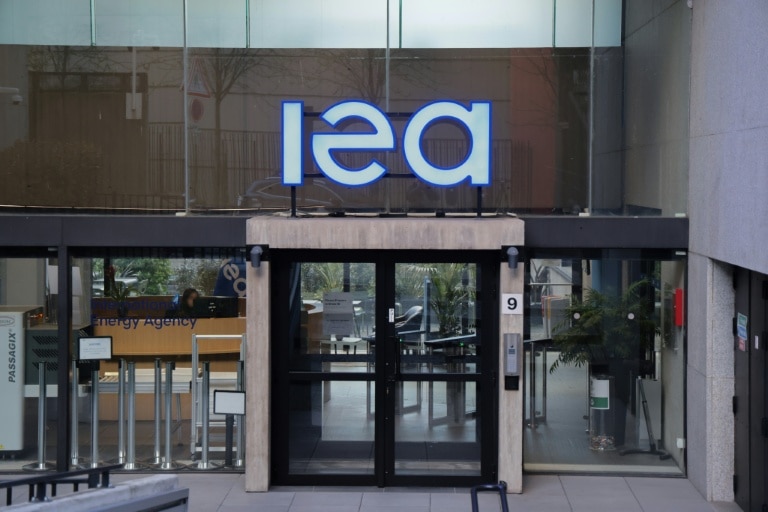
One of the most significant warnings came from the International Energy Agency (IEA), which projects that strained global liquefied natural gas (LNG) markets—tightened significantly by the ongoing regional conflict—will remain constrained through the end of 2026 and into 2027. The energy volatility has already moved global markets: oil prices have continued their upward climb, while equity markets have faced downward pressure as investors grow increasingly anxious over stalled diplomatic efforts to de-escalate the crisis. Adding to market jitters are ongoing threats to critical energy chokepoints, with Iran maintaining its position of tension around the Strait of Hormuz and the United States upholding its blockade of Iranian ports.
On the diplomatic front, French President Emmanuel Macron emphasized the urgent need for regional calm during his participation in an EU summit held in Nicosia, where scheduled talks with Middle Eastern leaders were on the agenda. “It is in everyone’s interest for stability to return as soon as possible and for the world’s economies to be reassured,” Macron stated.
In a counterterrorism move, the U.S. State Department announced a reward of up to $10 million for any information leading to the leader of Kataeb Sayyid al-Shuhada (KSS), an Iraqi armed group backed by Tehran that Washington has formally designated as a terrorist organization.
A limited win for de-escalation came with the announcement of a three-week extension to the ceasefire between Israel and Lebanon, made public by U.S. President Donald Trump on Thursday. Speaking to reporters, Trump expressed optimism about long-term peace, saying “I think there’s a very good chance of having peace. I think it should be an easy one.” He also confirmed plans to hold high-level talks with leaders from both nations in the coming two weeks. The ceasefire extension was immediately tested, however, after Hezbollah announced it had launched rocket attacks targeting the Shtula settlement in northern Israel. The group claimed the strike was retaliation for Israeli violations of the ceasefire and an Israeli strike on the southern Lebanese town of Yater.
Trump also addressed rising tensions with Iran, telling reporters at the White House that while the U.S. faces no immediate pressure to end the ongoing standoff with Tehran, “the clock is ticking” for the Iranian government as the conflict’s disruptions continue to harm the global economy. He explicitly ruled out the use of nuclear weapons against Iran, noting “A nuclear weapon should never be allowed to be used by anybody.”
To bolster its military presence in the region, the U.S. military confirmed that the USS George H.W. Bush aircraft carrier has arrived in Middle Eastern waters, bringing the total number of U.S. Navy carrier battle groups deployed in the theater to three. Trump also issued a new operational order for U.S. naval forces in the region, saying “I have ordered the United States Navy to shoot and kill any boat, small boats though they may be…that is putting mines in the waters of the Strait of Hormuz.” Just days after a similar interdiction, the U.S. Defense Department also announced that U.S. forces had boarded a vessel in the Indian Ocean suspected of carrying material support to Iran, marking the second such operation in three days.
On the sports front, U.S. Secretary of State Marco Rubio distanced the American government from calls to bar Iran from this year’s World Cup, including a proposal that Italy take the Iranian national team’s place in the tournament. Rubio confirmed that Iranian footballers are welcome to compete, and denied that Washington had requested the team stay home. He did, however, note that members of the Iranian delegation with documented ties to the Islamic Revolutionary Guard Corps (IRGC) may be denied entry.
Israeli Defense Minister Israel Katz reaffirmed his country’s military preparedness for wider conflict, stating that Israel is “prepared to resume the war” and is only waiting for authorization from Washington to push Iran back “to the Stone Age.”