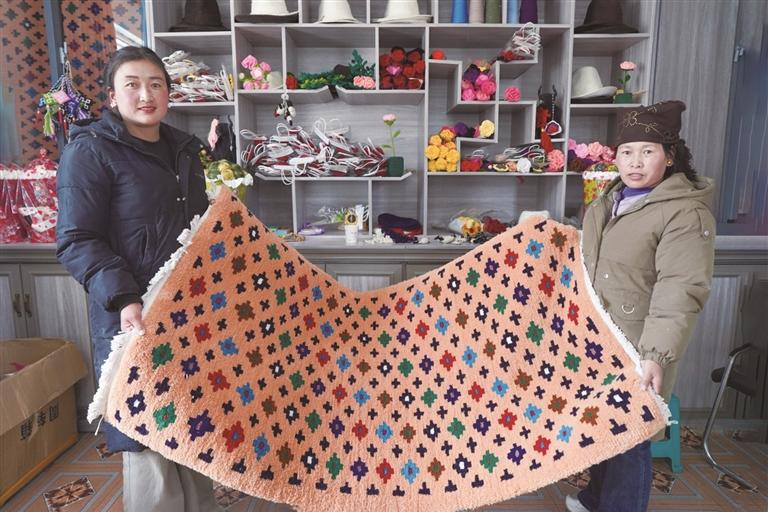
Nestled in the rolling pastoral landscapes of China’s Xizang Autonomous Region, a small community weaving initiative has evolved from a dormant local skill into a powerful engine that drives both cultural preservation and inclusive rural economic growth, turning generations-old handcraft traditions into a stable, growing source of income for local women.
For centuries, Gangba Village has built its cultural identity around two core pillars: animal husbandry and traditional handweaving. Passed down from mother to daughter through countless generations, local women have long mastered the craft of weaving hand-knotted Tibetan rugs and the iconic bangdan, a traditional woven apron worn as part of local cultural attire. For decades, however, these cherished skills were confined to household production, never scaled to reach broader markets. This isolation severely capped their economic potential, leaving the future of both the craft and the community’s livelihood uncertain.
The first shift toward change came in 2015, when local villagers established the Gangba Village Weaving Cooperative. Launching with a modest initial seed fund of just 16,000 yuan, equivalent to roughly $2,340, the cooperative struggled to gain momentum for nearly a decade. Outdated operational structures, limited market access, and weak management systems kept growth stagnant for years. A transformative turning point arrived in 2024, when targeted external support – including guidance and resources from a government-backed village development work team – helped the cooperative overhaul its operations. Leaders worked to modernize production processes, open new national sales channels, and strengthen professional business management practices that aligned with modern market demands.
Stewarded by local community leaders Basang Tsering and Tashi Lhamo, the cooperative has since grown into a dynamic, community-owned social enterprise. Local artisan weavers have adapted their time-honored traditional techniques to fit modern consumer preferences, creating a diverse product line that includes handwoven rugs, soft wool scarves, and custom woven car accessories. Each piece retains the distinct cultural character of Xizang weaving while integrating contemporary design aesthetics that resonate with today’s consumers.
The cooperative’s homegrown “Gangba Weaving” brand has gradually built a strong reputation beyond village borders, now reaching mainstream consumer markets in the regional capital of Lhasa and creating steady new local employment opportunities that did not exist a decade earlier. By 2025, the cooperative’s accessible training programs and flexible work arrangements – designed to accommodate caregiving and family responsibilities – had already helped eight local women achieve full financial independence, while allowing them to remain close to their families and communities.
Far more than just an economic development project, the cooperative represents a growing, successful model for safeguarding intangible cultural heritage through adaptive innovation. With concrete plans to expand production and reach national and international markets in coming years, the people of Gangba Village are working to share their centuries-old weaving tradition with global audiences, while continuing to lift community livelihoods and sustain their unique cultural identity for future generations.