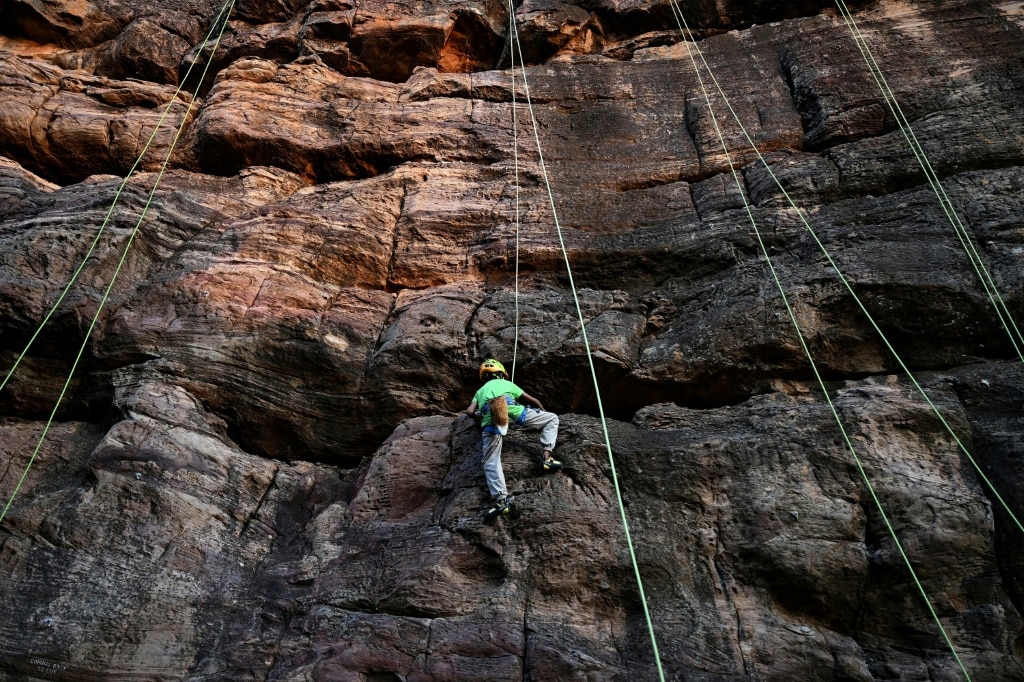
In a display of jaw-dropping speed, Indian speed climber Deepu Mallesh can scale a vertical wall equivalent to the height of five full-sized city buses in just five seconds – a feat so quick it can easily slip past an untrained eye. Yet for Mallesh and dozens of other elite Indian climbers chasing international Olympic dreams, the biggest obstacle is not the steep rock face in front of them, but the systemic barriers that have left the sport largely unsupported in a cricket-mad nation.
Once a niche recreational activity, competitive climbing has exploded in grassroots popularity across India over the past decade. The Indian Mountaineering Foundation (IMF) reports that tens of thousands of people now participate in sport climbing regularly, with more than a dozen purpose-built commercial climbing gyms opening across the country since 2014. But while recreational participation has surged, the transition to a full-time professional career has remained out of reach for most talented athletes, held back by prohibitive costs, near-zero sponsorship access, and a complete lack of official government recognition.
Today, just 3,500 climbers compete at any level across India, and only around 60 athletes earn the chance to compete in international tournaments each year. Many promising climbers have been forced to walk away from the sport entirely due to financial pressure. For those who persist, like 28-year-old Mallesh, balancing elite training with basic survival is a constant juggle. Mallesh, who has already represented India in international competition and dreams of becoming the first Indian climber to qualify for the Olympic Games, works part-time as a climbing instructor to fund his training and competition goals for the 2028 Los Angeles Olympics.
“What I like most about climbing is how raw and honest it is. It’s just you, the wall and the clock,” Mallesh explained. Despite placing outside the medals at last month’s IFSC World Climbing Championships in China, Mallesh set a new Indian national record of 5.39 seconds in the men’s speed discipline, and earned a spot to compete at the 2025 Asian Games in Tokyo this autumn. Still, his journey has been marked by financial uncertainty. For years, Mallesh relied entirely on crowdfunding to cover international competition costs, raising roughly 1 million rupees ($10,500) two years ago to attend six global events. He has missed multiple competitions over his career simply because he could not raise enough money to cover travel and entry fees. “If I get proper funding and proper support I might see my career through till the Olympics. Otherwise I will have to find something else to do,” he said.
The financial burdens facing climbers are substantial even at the basic level. A single high-quality pair of climbing shoes and safety harness costs around 10,000 rupees ($106), and a chalk bag for improving grip costs an additional 5,000 rupees. Unlike regular athletic shoes, competition climbing shoes wear out quickly, lasting just three to six months with regular training – and most athletes carry a backup pair for competition events. Nineteen-year-old 2024 Asian climbing silver medalist Joga Purty is one of the rare lucky few: she holds a sponsorship from Indian conglomerate Tata, a lifeline that has allowed her to continue competing. “If I didn’t have this I also would be one of those who quit the sport,” Purty said.
Unlike most major sports in India, competitive climbing has not earned official government recognition or support under the National Sports Governance Act. IMF representative Keerthi Pais says the organisation is currently in active negotiations to secure this designation, a change that would open up access to government funding, training infrastructure, and development programs that could transform the sport’s trajectory in India. “This recognition will help them continue their climbing career,” Pais said. For Mallesh, official status would do far more than provide symbolic validation: “It directly impacts support, funding, infrastructure and sponsorship opportunities.” Pais added that government policy to reduce barriers for building new climbing gyms would also be transformative, calling the move “the game-changer” that would unlock widespread, sustainable growth for the sport.
Commercial gym operators have already stepped into the gap left by limited government support, acting as a catalyst for grassroots growth. Mumbai-based The Indian Bouldering Company owner Shaiv Gandhi says private facilities have driven rising public awareness and provided the specialized training infrastructure that emerging athletes need to develop their skills. His gym has even launched an internal talent scouting program that allows promising young climbers to train for free, putting the onus on facility owners to nurture the next generation of elite competitors. “We already have a programme where we have told our instructors to keep an eye out for budding talent… if anyone you think has potential, let them climb. It’s on me,” Gandhi said. Since 2002, Indian climbers have already claimed nearly 70 medals across international competitions, including top finishes at Asian youth championships, proving that with systemic support, Indian athletes could compete with the best in the world on the global stage.