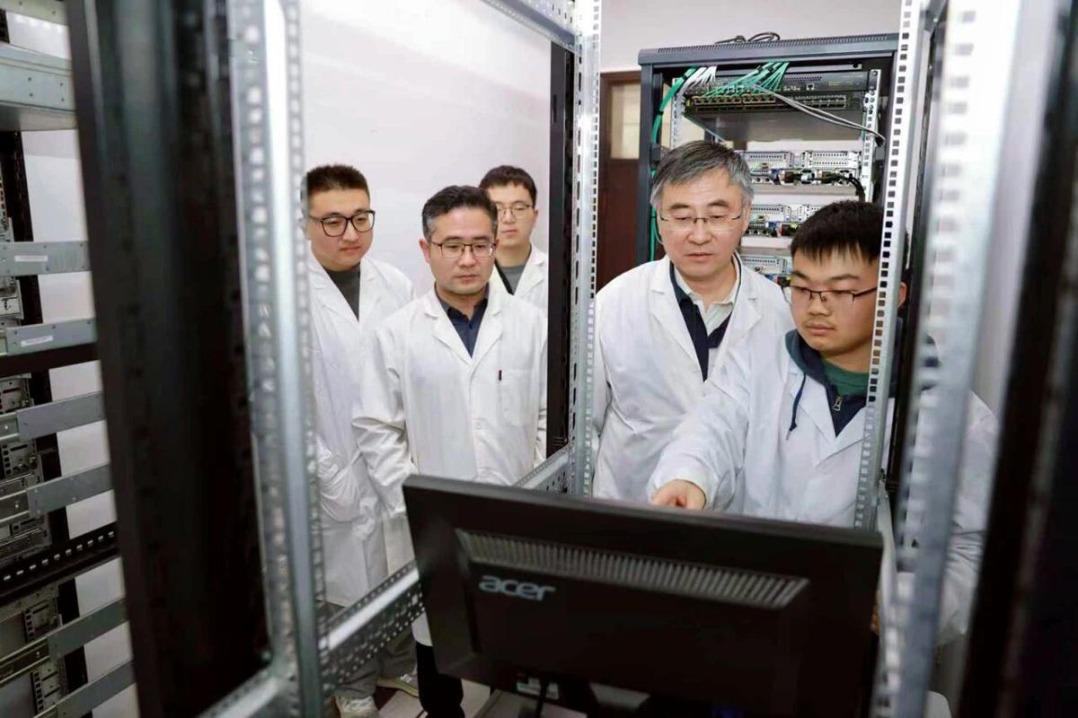
A decades-long effort to reimagine polymer material development through artificial intelligence reached a major milestone this month, as researchers at Shanghai’s East China University of Science and Technology (ECUST) launched the third iteration of their groundbreaking AI plus Polymers platform. The new release marks a critical step forward in China’s transition from traditional, trial-and-error based materials R&D to a modern, intelligent and precision-driven design ecosystem.
Unlike early versions of the tool, the v3.0 platform delivers comprehensive upgrades across every core layer of its infrastructure, built specifically to address the wide-ranging research and development needs of academic and industrial teams working with polymer materials. It now hosts a massive curated database of 7.6 million specialized polymer-related entries, integrates more than 80 tailored AI models, and features over 10 purpose-built algorithms designed exclusively for polymer science applications. According to the ECUST research team, these improvements enable far more efficient intelligent design of high-performance resins, organic optoelectronic materials, and advanced composite materials, supported by an enhanced human-computer interaction framework that streamlines workflows for both researchers and industry practitioners.
ECUST’s journey in AI-accelerated polymer research stretches back more than a decade, to 2013, when the team pioneered the country’s first AI-powered polymer research program. Over the years, they have built an entirely new research paradigm dubbed “AI for polymers”, which is fully protected by independent, indigenous intellectual property rights held by the university team.
Since the platform’s first public launch in March 2023, it has seen rapid adoption across China’s advanced manufacturing and materials sectors. To date, more than 10 national aerospace research institutes and over 60 domestic new chemical material enterprises have integrated the platform into their regular R&D operations. Real-world applications of materials developed through the “AI for polymers” paradigm are already delivering impact: high-performance resins and advanced conductive adhesives created with the platform’s support have already entered full-scale industrial use. Most notably, a novel resin with unique properties—high-temperature resistance, superior toughness, and easy processability—has already been deployed in key components of China’s aerospace and advanced precision equipment, the team confirmed.
Looking ahead, the ECUST team has set ambitious expansion goals for the paradigm-shifting technology. “Our team’s vision is to expand the new AI paradigm to broader fields, including polymer structural materials, functional materials, and biomedical materials,” said Lin Jiaping, lead scientist of the research program. “Also, we aim to comprehensively empower the design and development of polymer materials and promote the digital transformation of the entire industry through artificial intelligence.”