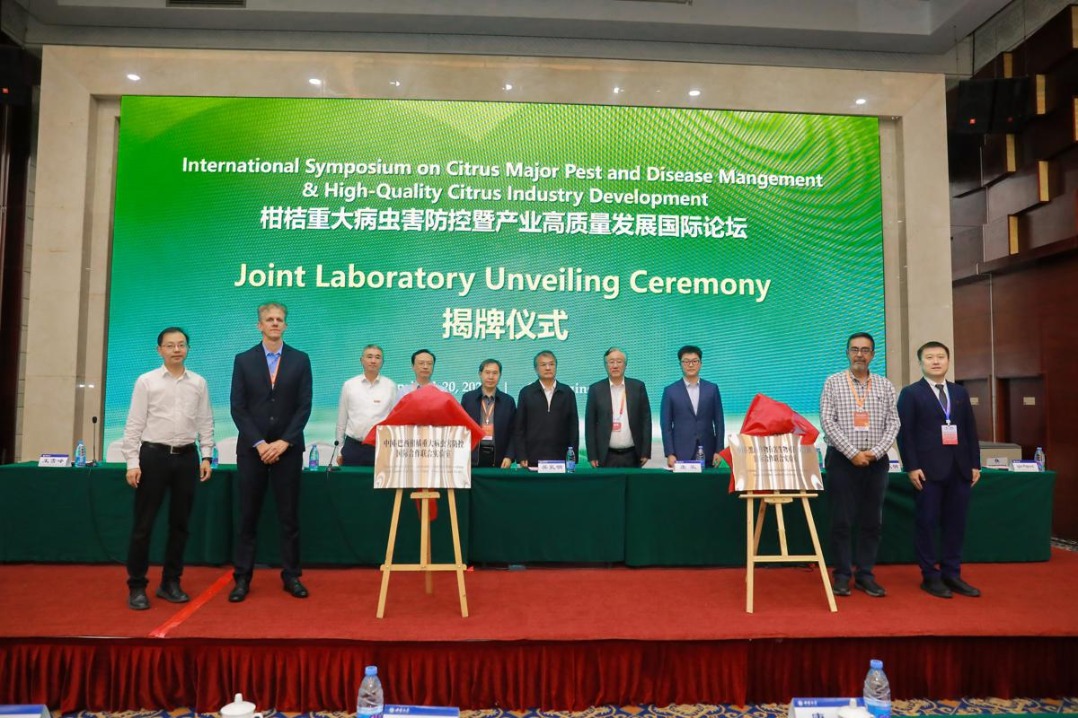
On Saturday, a landmark international agricultural research collaboration took a major step forward in Chongqing’s Beibei District, as China inaugurated two joint citrus research laboratories alongside partners from Brazil and Montenegro. The new facilities were launched as part of a broader global push to strengthen cross-border cooperation in the citrus sector, addressing shared threats that hamper production worldwide.
The opening ceremony unfolded during a two-day international symposium focused on citrus pest and disease management, which gathered leading experts from six nations: China, Australia, Brazil, South Africa, Italy, and Montenegro. Beyond the unveiling of the labs, the symposium brought together global stakeholders to advance collaborative research on emergent pest and disease outbreaks, refine evidence-based control measures, and drive sustainable, high-quality growth of the global citrus industry.
Officially named the China-Brazil Joint Laboratory for the Prevention and Control of Major Citrus Diseases and Pests, and the China-Montenegro Joint Laboratory for Sustainable Control of Crop Pests, the two facilities are tasked with developing cutting-edge strategies for disease-resistant citrus breeding and cross-border disease transmission prevention. The overarching goal of the work conducted at the labs is to advance long-term sustainable development of the global citrus sector.
Nelson Arno Wulff, chief scientist in biotechnology and diagnostics at Fundecitrus — Brazil’s leading non-profit organization dedicated to citrus plant protection — emphasized the transformative potential of the new partnership. He noted that the collaborative research will help nurture robust, productive citrus cultivation practices, directly support growers across global markets, and strengthen the entire global citrus supply chain.
As two of the world’s top citrus producing nations, China and Brazil face overlapping, high-stakes challenges in the sector. One of the most pressing shared threats is citrus greening disease, a devastating incurable pathogen that gradually kills infected citrus trees and has caused widespread production losses across major growing regions globally.
Chongqing has long been a core hub of China’s domestic citrus industry, and local data underscores this significance. Liu Chenglong, vice-chairman of the Chongqing Association for Science and Technology, shared that the city currently maintains more than 256,667 hectares of citrus orchards, with an annual total output reaching 5.3 million tons and an annual industrial output value exceeding 50 billion yuan, equivalent to roughly $7.33 billion.
Beibei District, the host of the new laboratories, holds an especially critical position in China’s citrus supply chain. Lyu Jun, deputy head of Beibei District, explained that the region supplies more than half of all virus-free container-grown citrus seedlings used across China, solidifying its status as the country’s largest production base for high-quality citrus planting material.
The symposium, which featured keynote presentations and technical discussions from global experts, was hosted by Southwest University and the Beibei District government. The event forms part of the broader Chengdu-Chongqing Economic Circle development initiative, with co-organization support from the science and technology bureaus of Beibei District in Chongqing and Mianyang City in neighboring Sichuan Province.