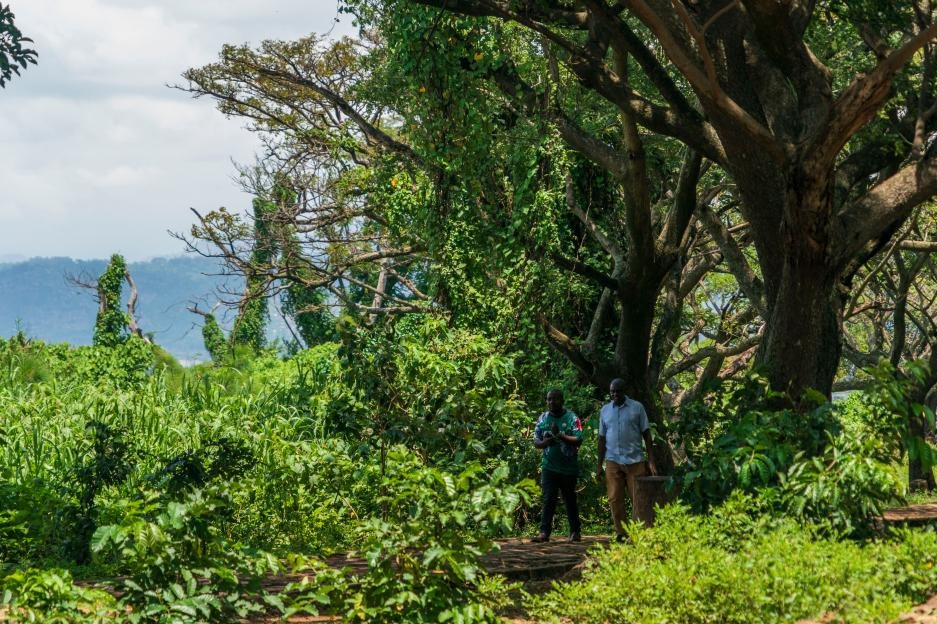
In a landmark step to align environmental protection with long-term economic growth, the Kenyan government has partnered with the United Nations Development Programme (UNDP) to roll out the Biodiversity Finance Initiative (BIOFIN), an ambitious framework designed to mobilize between $100 billion and $150 billion in nature-focused investment over the next 10 years. Against a backdrop of widening gaps in conservation funding across the globe, the initiative re-frames biodiversity protection as a core economic pillar rather than a secondary environmental concern, creating a centralized national platform to bring diverse stakeholders together to scale up conservation investment.
The collaborative platform unites a broad cross-section of actors, from Kenya’s National Treasury and Nairobi Securities Exchange to commercial banks, local and international conservation groups, and global development partners. This multi-stakeholder design is intended to break down silos between public policy, private finance and on-the-ground conservation work, creating a coordinated pathway to expand investment that delivers both ecological and economic benefits.
Festus Ng’eno, Principal Secretary for Kenya’s State Department for Environment and Climate Change, framed BIOFIN as a practical, evidence-driven solution to the pressing biodiversity finance gap. He emphasized that while Kenya’s unparalleled natural capital forms the backbone of the national economy and sustains livelihoods for millions of Kenyans, this critical resource is facing growing pressure from multiple fronts: accelerating climate change, widespread land degradation, rising pollution, and unsustainable natural resource extraction.
“That is why we must treat biodiversity conservation not just as an environmental issue, but as a key economic and development priority,” Ng’eno stated at the official launch. “Financing biodiversity should not be viewed as a cost, but as a strategic investment in economic resilience, climate adaptation and sustainable development. Let us move beyond dialogue and focus on implementation.”
Chris Kiptoo, Principal Secretary at Kenya’s National Treasury, reinforced this framing, outlining the Treasury’s commitment to building a inclusive biodiversity finance architecture that protects fragile ecosystems while advancing economic empowerment for marginalized groups including women, young people, Indigenous peoples, and local host communities. Kiptoo noted that relying exclusively on public funding can never close the massive biodiversity finance gap, making cross-sector and cross-border partnership and private capital mobilization non-negotiable.
He pushed back against the common narrative that conservation spending competes with other pressing public priorities. “It is an investment in economic resilience, fiscal sustainability, and intergenerational equity, fully consistent with the objectives of Medium-Term Plans IV and Kenya’s ongoing public finance reforms,” Kiptoo explained. He added that BIOFIN directly complements existing government initiatives, most notably the Financing Locally Led Climate Action Program, which already works to expand climate and nature investment at the county and community level.
“Through the program, Kenya is already demonstrating how well targeted public finance can empower local actors, build resilience, and deliver measurable outcomes on the ground,” Kiptoo said. “BIOFIN builds on this foundation by providing a national framework to scale, coordinate, and sustain such investments over the long term.”
UNDP Resident Representative in Kenya Jean-Luc Stalon noted that BIOFIN is a proven global model: more than 40 participating countries have already mobilized over $2.7 billion for biodiversity protection through the initiative, proving that investing in nature is far from a luxury — it is a strategic development choice for countries operating amid tight resource constraints.
“Today’s launch signals Kenya’s intention to be part of that leadership,” Stalon said. “Success, however, will depend on what follows: strong institutional alignment, openness to innovative financing models, and sustained public private collaboration.” He emphasized that BIOFIN is not a traditional short-term conservation project, but a systemic financial framework designed to turn global climate and biodiversity commitments into tangible on-the-ground action.
Led locally by program manager Christine Mwangi through UNDP Kenya, BIOFIN Kenya will deliver targeted support across three core areas: advancing policy reform aligned with biodiversity goals, developing a pipeline of investable conservation projects, and improving biodiversity budget tracking at both national and county levels. The initiative will also pilot a range of innovative financing instruments, including green bonds, blended finance structures, and ecosystem-based revenue mechanisms, building on the progress already made through ongoing government programs like the Financing Locally-Led Climate Action Programme.