Recent attacks from former president and current US leader Donald Trump against Pope Leo XIV and Italian Prime Minister Giorgia Meloni have inadvertently revealed a potential path to de-escalation and lasting peace between the United States and Iran. By falsely claiming that the pair’s opposition to his war on Iran equates to supporting Tehran’s acquisition of nuclear weapons – and even a potential nuclear attack on Italy – Trump has publicly reframed the core purpose of the conflict, shifting it away from the original goal of regime change to a singular focus on blocking Iran from developing a nuclear arsenal.
This rhetorical shift, which carries the political risk of alienating the estimated 53 million Catholic voters across the United States, signals that Trump is now seeking to force Iran into accepting new constraints on its nuclear program. A negotiated agreement on this front would allow him to claim a form of political victory and wind down the conflict without a total defeat. While this outcome is feasible, achieving a lasting deal would require Washington to secure backing from two unlikely sources: China, and the political allies and frameworks Trump has spent years condemning – the administration of former US President Barack Obama, and the governments of Germany, France, and the United Kingdom.
As the current US-Iran ceasefire approaches its April 21 expiration, nuclear policy is far from the only sticking point between the two nations. Significant divides remain on a host of critical issues: the long-term governance rules for the strategic Strait of Hormuz, through which a fifth of the world’s oil supplies pass; the sweeping Western sanctions imposed on Iranian exports, sovereign foreign assets, and domestic financial institutions; Iran’s long-standing military and political support for militant groups Hezbollah in Lebanon, Hamas in Gaza, and the Houthi movement in Yemen; and the future development of Iran’s ballistic missile program.
Even so, Trump’s recent focus on nuclear non-proliferation as the conflict’s core goal suggests that this issue could serve as the key to unlocking progress on all other sticking points, at least from his perspective.
It is widely agreed across the global community that expanding the circle of nuclear-armed states beyond the current nine – the United States, Russia, China, India, Pakistan, the United Kingdom, France, Israel, and North Korea – poses unacceptable risks to global security. The foundational global framework for managing this risk has been the 1968 Treaty on the Non-Proliferation of Nuclear Weapons (NPT), which binds nuclear and non-nuclear states alike to blocking the spread of nuclear weapons technology while enabling the peaceful sharing of civilian nuclear energy technology.
In the decades since the NPT entered into force, three new openly nuclear-armed states have emerged: India, Pakistan, and North Korea. Israel has also developed an unacknowledged nuclear arsenal, and experts widely believe that existing nuclear powers provided clandestine support to many of these new programs. While this gradual proliferation is a cause for concern, the doctrine of mutually assured destruction has acted as a powerful deterrent: with the notable exception of North Korea, analysts broadly agree that no nuclear-armed state would ever launch a nuclear attack, as it would immediately prompt devastating retaliation. The greatest existential nuclear risk today, by contrast, is the possibility of nuclear materials or weapons falling into the hands of non-state terrorist groups that cannot be deterred by the threat of reciprocal attack.
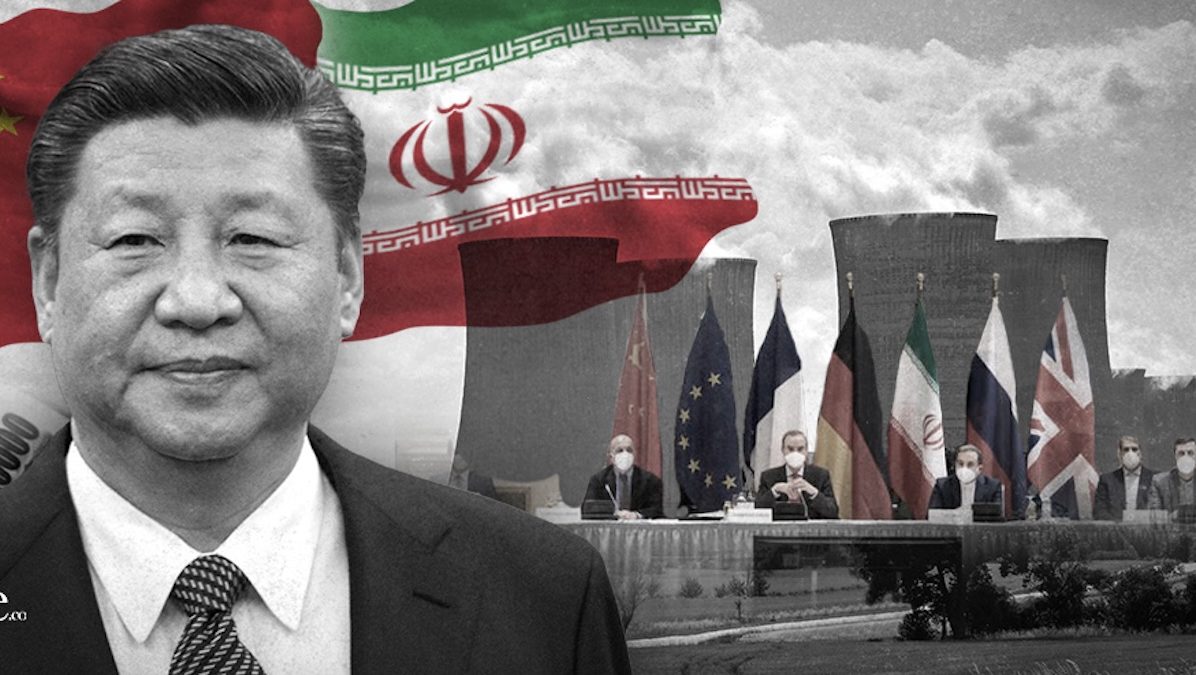
For 25 years, since evidence of Iran’s secret advanced uranium enrichment program first emerged, global powers have pursued diplomatic means to ensure Iran’s nuclear program remains exclusively for civilian energy use, not weapons development. After years of multilateral negotiations, this effort culminated in the 2015 Joint Comprehensive Plan of Action (JCPOA), an agreement reached between Iran and the P5+1 group – the United States, the United Kingdom, France, Germany, Russia, and China.
The JCPOA placed strict verifiable limits on Iran’s uranium enrichment activities, mandated regular inspections by the International Atomic Energy Agency (IAEA), and offered phased relief from crippling Western sanctions in exchange for compliance. Though European powers led much of the late-stage diplomatic work, the agreement was widely hailed as one of former President Barack Obama’s most significant foreign policy achievements. Remarkably, even rival major powers Russia and China agreed to back the deal – making it a top target for Trump during his 2016 presidential campaign. Shortly after taking office in 2018, Trump withdrew the United States from the JCPOA and reimposed all US sanctions on Iran.
Israel has never supported the JCPOA, arguing that Iran’s long history of secret nuclear activities means it cannot be trusted to uphold its non-proliferation commitments, especially given Iran’s ongoing support for groups that regularly target Israeli territory. While other powers argue that any Iranian nuclear weapon would be deterred by the threat of massive retaliation from Israel or the US, Israeli leaders have refused to test this proposition.
The great irony of the current moment, however, is that any new negotiations between US and Iranian negotiators will almost certainly center on an updated version of the 2015 JCPOA – the very agreement Trump shredded seven years ago.
Following US and Israeli airstrikes on Iranian nuclear infrastructure in June 2025, Iran’s uranium enrichment capacity has been drastically reduced, a key change from the 2015 baseline. A new outstanding issue that will need resolution is Iran’s current stockpile of roughly 400 kilograms of enriched uranium, much of which is buried under rubble from the bombings. While partially damaged, the stockpile remains militarily potent, so a new framework will need to establish a clear plan to secure and dispose of this material.
Negotiators face two core structural challenges: Iran will never agree to renounce its sovereign right to civilian uranium enrichment, and Israel will never fully accept that Iran has permanently abandoned any ambition to build a nuclear weapon. If Trump is serious about securing a nuclear deal to end the conflict and withdraw US naval forces from the Middle East, he will need to find creative diplomatic solutions to bridge these gaps.
Both China and the original JCPOA framework offer clear paths forward. As an original signatory to the 2015 deal and a country with deep existing economic, military, and political ties to Iran, China could lead a multinational consortium to manage Iran’s existing enriched uranium stockpile and oversee the operation of its civilian nuclear program. Beijing has no strategic interest in seeing Iran become a nuclear-armed state, a position that could allow it to win trust from Washington, European capitals, and even Jerusalem. Reports already indicate that China has been working behind the scenes to encourage a negotiated peace, and the upcoming summit between Trump and Chinese President Xi Jinping in Beijing on May 14-15 creates a unique opportunity for the two major powers to broker a breakthrough agreement.
European governments, which already hold decades of experience negotiating and implementing the original JCPOA, can contribute their institutional knowledge to the new talks, while the IAEA stands ready to resume its independent verification role.
Most analysts believe Iran would accept such a framework, particularly if it leads to phased relief from crippling Western sanctions and deeper economically beneficial trade and investment ties with China. The biggest unanswered question remains whether Trump will be willing to accept a deal that revives the core framework of the Obama-era agreement he once condemned, and walk away from the conflict with a limited political victory rather than pushing for total regime change.