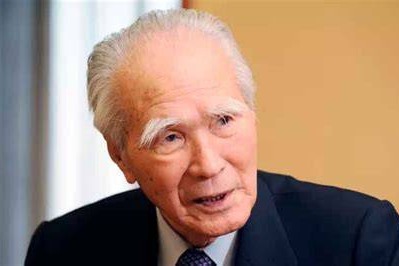
A memorial service for former Japanese Prime Minister Tomiichi Murayama, who passed away last October at the age of 101, brought together more than 400 political figures and peace advocates in Tokyo on Monday. The gathering centered on a shared call to honor Murayama’s landmark 1995 apology for Japan’s wartime aggression and push back against growing efforts to roll back the nation’s post-WWII pacifist constitutional framework, amid surging nationalist and militaristic rhetoric across the country.
Attendees included sitting Prime Minister Sanae Takaichi, former prime ministers Taro Aso and Yukio Hatoyama, and representatives from across Japan’s ruling and opposition political blocs, totaling around 450 guests. Murayama, Japan’s 81st prime minister and the first leader drawn from the Japan Socialist Party, died at his home in Oita Prefecture on October 17, 2025.
Murayama’s most enduring legacy remains the historic cabinet-endorsed statement he released on August 15, 1995, the 50th anniversary of Japan’s surrender in World War II. In the document, widely known as the Murayama Statement, the government formally acknowledged that Japan had pursued a mistaken national policy that led it into war, triggering a catastrophic crisis for the Japanese people. It also admitted that Japan’s colonial rule and military aggression inflicted massive harm and suffering on populations across Asia and the world, offering official “deep remorse and heartfelt apology” for these wartime atrocities.
Speaking at Monday’s memorial, Social Democratic Party leader Mizuho Fukushima emphasized the unshakable historical importance of the 1995 statement, recalling that Murayama repeatedly warned the Japanese public that the nation must “never again wage war.” Fukushima, who joined Murayama on a past visit to China, noted that in today’s fractious global climate, marked by intensifying domestic debates over constitutional revisions and security policy shifts, upholding and expanding the spirit of the Murayama Statement remains critical to keeping Japan out of conflict and preserving regional peace.
Takakage Fujita, secretary-general of the Association for Inheriting and Propagating the Murayama Statement, told China Daily that the statement, paired with Japan’s post-war pacifist constitution, represents one of Japan’s most valuable political assets. This commitment to confronting historical wrongdoing has allowed Japan to rebuild trust with neighboring Asian nations and laid the groundwork for decades of constructive Japan-China friendship, he said, adding that its significance will resonate for generations to come.
Fujita stressed that the statement is rooted in sincere, far-reaching reflection on the immense suffering Japan’s wartime aggression imposed on China and other Asian countries, serving as both a solemn pledge to never again initiate war and a formal declaration of peace for the entire Asia-Pacific region. “I will continue to uphold the spirit of the Murayama Statement and work tirelessly to promote Japan-China friendship,” Fujita added.
Throughout his decades in public life, Murayama was a consistent, prominent voice pushing Japan to confront its wartime history honestly and build constructive, people-centered ties with China. Even shortly before his death, he sent a message to an international symposium marking the 80th anniversary of victory in the Chinese People’s War of Resistance Against Japanese Aggression and the World Anti-Fascist War. In that message, he argued that Japan can only truly restore its national standing “through humble reflection on Japan’s past.”
On the topic of bilateral relations, Murayama wrote that a peaceful, friendly Japan-China relationship forms the foundational bedrock of overall stability across Asia. He reaffirmed his long-held belief that building enduring friendship between the two nations and strengthening this core pillar of regional peace is the only correct path to protecting and advancing Japan’s own national interests.