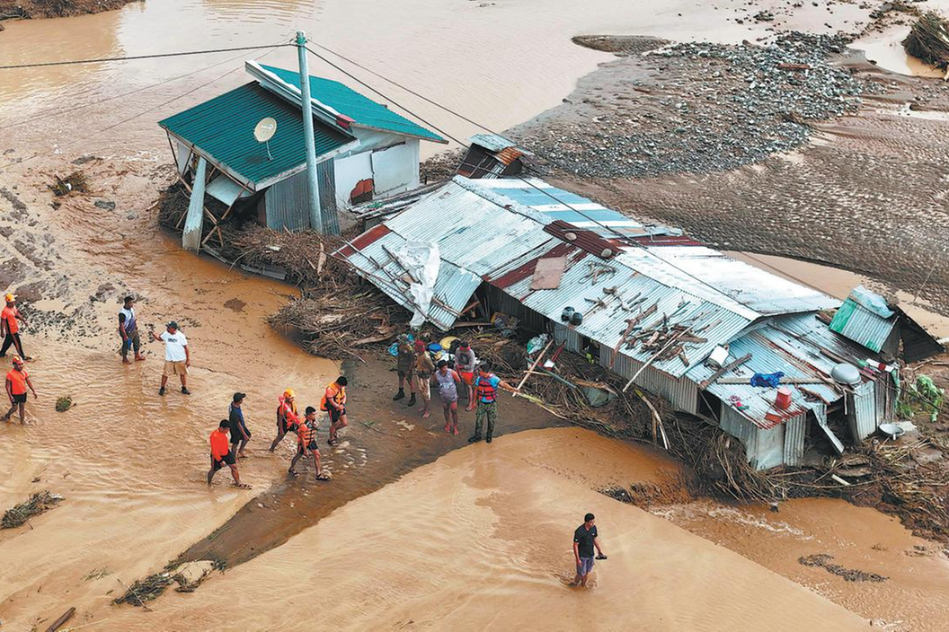
As the United Nations Economic and Social Commission for Asia and the Pacific (ESCAP) launched its 82nd annual session in Bangkok on Monday, the agency released a stark new report warning that nations across the Asia-Pacific region are facing rapidly intensifying economic, social, and environmental threats driven by accelerating climate change and growing global geopolitical friction.
Against a backdrop of unprecedented regional integration, the challenges facing Asia-Pacific economies have grown increasingly aligned, the report notes. These overlapping pressures range from muted post-pandemic economic growth and shifting global trade frameworks to the disruptive effects of rapid technological transformation. The five-day conference, centered on the theme “Leaving no one behind: Advancing a society for all ages in Asia and the Pacific”, brings together policymakers, academics, and stakeholders from across the region to address evolving demographic shifts and set shared socioeconomic priorities for the coming years.
The report outlines that after weathering a prolonged period of sky-high global commodity prices and soaring interest rates, the region now faces new headwinds: rising tariffs, persistent economic policy uncertainty, and a cascade of knock-on effects that have fueled broader economic slowdown, accelerating trade fragmentation, and growing fiscal and debt vulnerability across multiple markets. Beyond economic pressures, the region is also navigating uneven demographic transformation: some nations are grappling with rapidly aging populations, while others continue to manage large, growing youth cohorts. This divergent shift creates a critical policy imperative: policymakers must create quality formal employment, boost labor productivity, and build cohesive, inclusive societies while adapting to major global megatrends including climate change, rapid urbanization, widespread digitization, and the rise of artificial intelligence.
Despite these significant challenges, Armida Salsiah Alisjahbana, executive secretary of ESCAP, struck a cautiously optimistic tone in her opening remarks. “Despite external pressures, we have strong reasons for optimism as the Asia-Pacific is home to the world’s most dynamic economies and we have navigated past crises before and consistently emerged stronger,” she said. “Our leaders have demonstrated what is possible when countries learn from one another and co-develop solutions.”
Alisjahbana called for deepened regional collaboration to co-design locally tailored development models that can better withstand unexpected external shocks. “Sustained progress hinges on joint capacity-building, knowledge exchange across national experiences, the scaling of context-appropriate innovations and forward-looking institution-building,” she added.
In his keynote address to the opening session, Thailand’s Prime Minister Anutin Charnvirakul echoed the conference’s core theme, noting that the promise of leaving no one behind can only be fulfilled if all community members are empowered to reach their full potential. He emphasized the urgent need to reform regional education systems to build widespread adaptability, embedding lifelong learning as a universal social norm.
Chinese Vice-Foreign Minister Ma Zhaoxu also addressed the gathering, noting that international peace and development face growing threats from rising unilateralism and power politics that undermine global stability. “ESCAP member countries should deepen solidarity and cooperation to help forge an open, inclusive and mutually beneficial Asia-Pacific community of shared destiny, uphold the purposes and principles of the UN Charter, support UN reform and enhanced effectiveness, and strengthen performance through regional mechanisms,” Ma said. He added that the global community must retain a steadfast commitment to openness and the rules-based multilateral trading system, urging regional nations to capitalize on opportunities to expand cooperation and knowledge exchange in innovation and technology, with a particular focus on new materials, clean energy, and artificial intelligence.