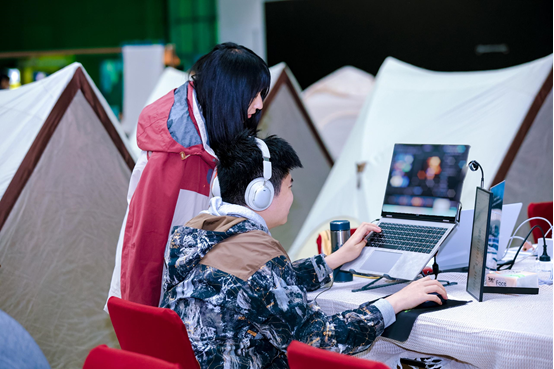
The 16th Beijing International Film Festival made a groundbreaking foray into the intersection of artificial intelligence, science communication and cinematic art on Monday, with the official launch of the first-ever AIGC-powered science film creation camp hosted at the China Science and Technology Museum. The launch kicks off a high-stakes 48-hour extreme creation challenge, designed to test and showcase how generative AI tools can reshape the landscape of science-focused filmmaking.
This initiative is not an impromptu experiment: it builds on a comprehensive five-day foundational training program held in late March, where more than 100 aspiring creators mastered the end-to-end workflow of AIGC science film production, ranging from structured scientific reasoning to final AI-generated visual output. From that early pool, 19 cross-disciplinary teams were selected to advance to the on-site challenge, where they will work under the expert mentorship of a diverse group including leading scientists, award-winning film directors, and top industry professionals. All teams are centering their projects around the provocative, forward-looking theme “My Brain-Computer Dog 2045”, which blends emerging technology, everyday life and speculative futurism.
At the official launch ceremony, Ren Hechun, head of the China Science and Technology Museum’s online science popularization department, welcomed participating creators, framing their work as a historic step for public science communication. “You are the first explorers in science popularization venues who hold new tools and define new languages,” Ren said, highlighting the transformative potential of AIGC to expand access to science filmmaking.
The creation camp was also featured at the opening of the Beijing International Film Festival’s dedicated Science and Technology Unit via a pre-recorded video link, where organizers shared an early look at participants’ innovative conceptual approaches and creative energy. On-site industry and academic experts have already begun offering formative feedback on teams’ interim work to guide their final projects.
To democratize access to this experimental process, the China Science and Technology Museum has launched a 48-hour uninterrupted panoramic slow livestream of the entire camp. This open broadcast allows global and domestic netizens to follow along in real time, watching as teams turn ideas and AI tools into completed science documentary projects, marking a new level of public transparency for creative innovation at the intersection of technology and art.
The core goal of the initiative is to explore how artificial intelligence generated content tools can lower long-standing barriers to entry for science film production. Traditionally, creating high-quality science content requires substantial production budgets, specialized technical crews, and access to expensive equipment – barriers that have limited the diversity of creators working in the science communication space. By leveraging AIGC, organizers hope to open the field to new voices, while also finding fresh, more engaging ways to present complex scientific knowledge to general audiences.