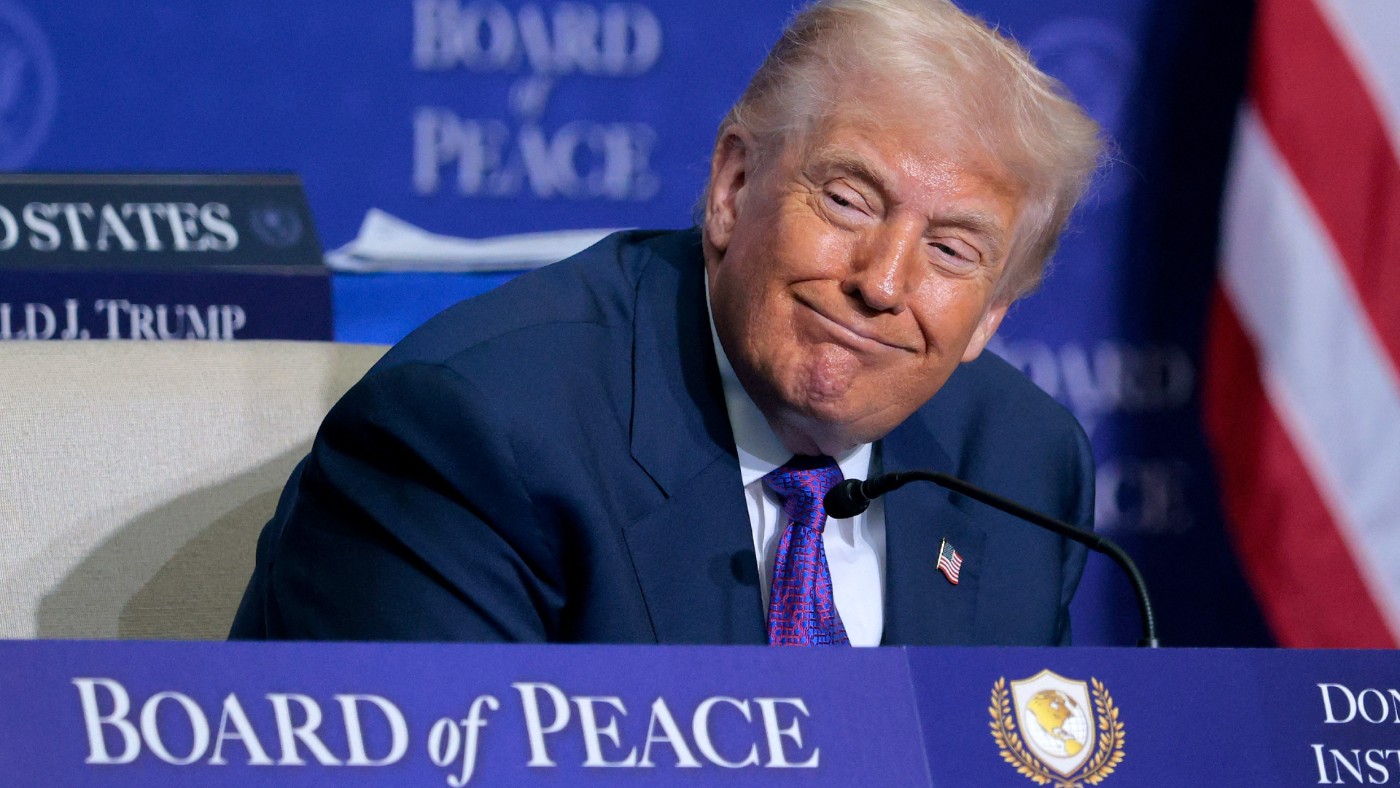
Plans to rebuild the war-ravaged Gaza Strip have moved forward with behind-the-scenes discussions between a US-led reconstruction body and one of the world’s largest port and logistics operators, multiple sources familiar with the negotiations have confirmed to the Financial Times. The talks center on a potential role for DP World, the Dubai-state-owned multinational logistics firm, in overhauling Gaza’s access to critical supplies and long-term economic development, as Donald Trump’s controversial post-conflict vision for the enclave begins to take tangible shape.
The Trump administration’s so-called Board of Peace, a Washington-aligned body launched in January to coordinate Gaza reconstruction, has held multiple communications with DP World representatives about a range of potential projects. The core proposal under discussion would task DP World with overseeing end-to-end supply chain management for humanitarian aid and commercial goods entering the blockaded territory. This includes planning for on-the-ground warehousing infrastructure, digital cargo tracking systems, and coordinated security arrangements for incoming shipments, the insiders say.
Negotiations have also explored larger, long-term infrastructure projects: options include constructing a new deep-water port either within Gaza’s territorial boundaries or along the adjacent Egyptian coastline, plus the development of a dedicated free trade zone within Gaza to drive private sector growth. A draft proposal reviewed by the FT outlines DP World delivering a “secure and traceable supply chain system”, a “port-led economic ecosystem”, and “employment-generating trade platforms” for the war-shattered enclave, where 70% of infrastructure has been destroyed by Israel’s military campaign.
This initiative aligns with long-stated priorities from Trump, who has repeatedly pushed for large-scale privatized redevelopment of Gaza in the wake of Israel’s military campaign. The former president turned current US leader has publicly shared AI-generated conceptual media depicting his vision for a “Gaza Riviera”, a proposal that sparked widespread outrage and mockery from Palestinian leadership, who argue the plan sidelined Palestinian sovereignty over their own territory.
The Board of Peace, which consists of heads of state aligned with US foreign policy in the Middle East, has faced widespread global pushback since its launch. Most of the world’s national governments have refused to join the body, with critics arguing it deliberately undermines the United Nations’ long-standing central role in governance and humanitarian coordination in the occupied Palestinian territories.
Insiders familiar with the talks emphasize that current entry arrangements for aid into Gaza are functionally unworkable for large-scale reconstruction. “You can’t rebuild Gaza like in their vision with 1,500 trucks a week being moved back-to-back through Israeli crossings,” one source told the FT. “You need bigger, more efficient and less bureaucratic entryways. Right now it’s like working through a straw.”
In a statement to the Financial Times, a Board of Peace spokesperson confirmed the outreach process, saying: “We are speaking to multiple potential partners across multiple lines of effort. We are conducting… market research focused on how to identify best-in-class operators and next-gen solutions.”
Any deal with DP World carries notable reputational and financial risks for all involved, however. The firm has been mired in controversy in recent months over long-concealed ties to disgraced convicted sex offender Jeffrey Epstein. Earlier this year, the company’s chairman stepped down after public revelations of his connections to Epstein, and a string of major international backers have suspended new investments. Thousands of emails exchanged between DP World CEO Sultan Ahmed bin Sulayem and Epstein were uncovered earlier this year, prompting investment firms in both the United Kingdom and Canada to halt future commitments to the company.
Quebec’s La Caisse pension fund, one of DP World’s largest financial partners that holds a 45% stake in DP World Canada, announced it would pause all new investments until the company implements targeted governance reforms. British International Investment, the UK government’s foreign development arm that co-owns the Berbera Port in Somaliland alongside DP World, followed suit with its own pause on new capital commitments. DP World remains fully owned by a Dubai government holding company, and the firm contributes more than 36% of Dubai’s total GDP and roughly 12% of the United Arab Emirates’ overall national output, according to the company’s public data.
The push for new infrastructure comes amid a persistent crisis for humanitarian aid operations in Gaza, even as Israel has rolled back some restrictive measures. Earlier this year, the Israeli Supreme Court ordered a freeze on a government ban targeting dozens of international aid groups, but the sector still faces crippling barriers to entry. The Israeli government had imposed strict new regulations requiring 37 nongovernmental organizations to turn over extensive personal information on all their Palestinian staff to continue operating. Alan Moseley, country director for the Danish Refugee Council in occupied Palestine, told AFP that both international staff and critical aid supplies continue to be blocked from entry. “Staff continued to be rejected, supplies continued to be rejected,” Moseley said, adding that almost no affected aid organizations have been able to deliver meaningful amounts of aid into Gaza over recent months.