March 2025 emerged as an unplanned, high-stakes stress test for U.S. counterterrorism authorities, with a rapid string of violent incidents that put years of warnings about eroded national security capacity to the test. The month began with a gunman wearing an Iranian flag shirt under his outer layer opening fire at a Texas bar, leaving three people dead. It continued with a homemade explosive attack outside the New York City mayor’s residence, followed by a fatal shooting on a Virginia college campus and a car-ramming targeting a Michigan synagogue, both occurring on the same afternoon in mid-March. By the end of the month, federal agents had taken a man into custody for threatening to carry out a mass shooting at an Ohio mosque.
For dozens of current and former national security officials who spoke to ProPublica on condition of anonymity over fears of administration retaliation, this string of attacks is not a random coincidence—it is the warning sign they predicted when President Donald Trump redirected massive amounts of counterterrorism resources to his mass deportation campaign shortly after returning to office in 2025. They had long cautioned that shifting personnel and cutting funding would leave the U.S. vulnerable if rising global tensions sparked domestic threats, a risk that has become immediate now that the U.S. is engaged in open war with Iran, a nation long designated a state sponsor of terrorism. Today, with leadership turnover widespread and critical institutional expertise gutted from security agencies, officials warn the country is facing a dangerous and underprepared standoff.
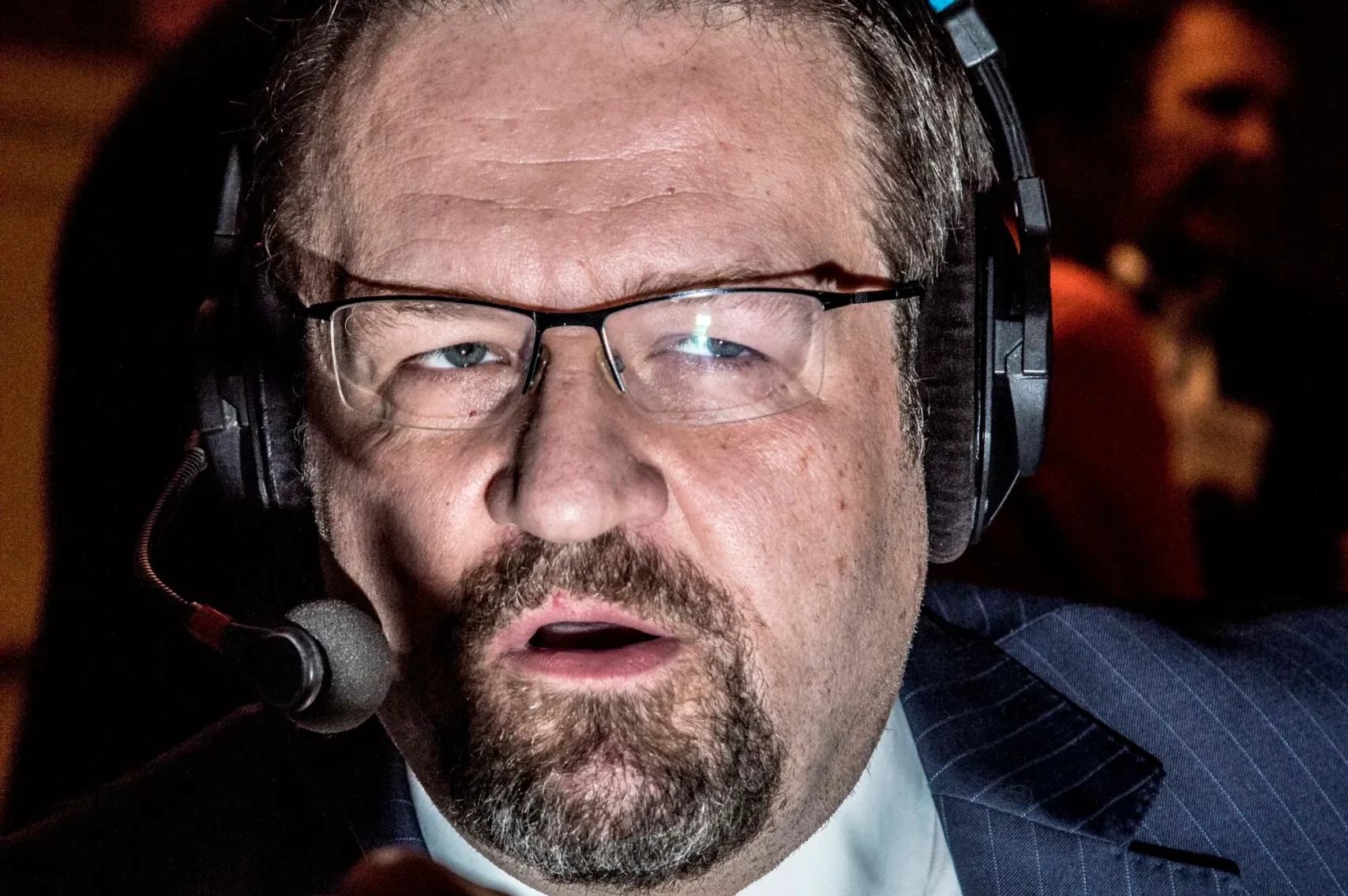
At the center of growing scrutiny is Sebastian Gorka, the White House counterterrorism adviser tapped to draft a national strategy to tackle both international and homegrown extremist threats. Gorka first promised the strategy was “imminent” nearly a year ago, repeatedly pushed back its release date—claiming it was “on the cusp” of being unveiled in July, October, and January—and as of mid-2025, no public document has been released, and no explanation for the delay has been offered.
Current and former counterterrorism personnel say when the strategy is finally released, it will likely prioritize political positioning over evidence-based intelligence, offering little actionable guidance to address threats that have grown sharper after a year of deep cuts across national security agencies. A former senior official who served in the first Trump administration summed up the widespread concern: “Strategies are only worth the amount of resources you put into them. We’re entering very dangerous territory.”
Gorka’s path to this high-stakes role is a study in the transformation of U.S. counterterrorism policy during Trump’s second term. Born in the United Kingdom to Hungarian parents, Gorka built his career in the post-9/11 cottage industry of self-styled terrorism experts, where he gained a reputation for hardline, often inflammatory rhetoric framing counterterrorism as a civilizational conflict between the West and Islamist militants. Civil liberties watchdogs and former colleagues have long criticized his framework for maligning Islam and targeting ordinary American Muslims, claims Gorka has repeatedly dismissed as absurd, framing his work as focusing on radicalization rather than the faith as a whole.
Gorka’s first stint in the first Trump administration ended after just seven months, when he was forced out by moderate White House staffers amid widespread criticism over his ties to a Hungarian far-right group with historic Nazi ties (ties he continues to deny) and questions over whether he could obtain a full security clearance. After leaving office, he hosted a right-wing podcast and appeared in commercial ads before the 2024 election that returned Trump to power paved the way for a phoenixlike comeback. His unwavering loyalty to the MAGA movement earned him the top counterterrorism role, a position he has called a 25-year dream job.
In the first year of Trump’s second term, Gorka largely flew under the radar as the administration focused on dismantling federal agencies and building a restrictive, heavily armed immigration enforcement force. But the outbreak of war with Iran has pushed his role back into the spotlight, as experts warn that depleted security capacity leaves the U.S. exposed to retaliatory attacks at home and abroad.
The extent of that depletion has become increasingly clear in recent weeks. CNN recently reported that just days before U.S. military operations against Iran began, FBI Director Kash Patel purged a dozen counterintelligence agents focused on monitoring Iranian threats, part of a wider purge that has removed roughly 300 counterterrorism specialists from the bureau. Former officials say losing this many trained experts at once has been devastating for the granular, relationship-driven work of preventing terrorist attacks.
A former senior Justice Department official explained: “I don’t think about it in raw numbers. I think about the wealth of expertise and knowledge that has been cut across all levels. What you lose is that nuance — with a smaller team, you can only go so deep.” An FBI spokesperson defended the bureau’s work, noting that agents disrupted four domestic terrorist plots in December 2024 alone and saying the bureau continuously realigns resources to protect the American public.
Leadership turnover has compounded the resource gaps. Gorka’s original supervisor, former National Security Adviser Mike Waltz, was reassigned to the U.S. mission to the United Nations following the Signalgate scandal, leaving oversight to Secretary of State Marco Rubio, who is already overwhelmed by managing the Iran war. Just last month, Joe Kent, director of the National Counterterrorism Center, resigned in protest of the Iran conflict, arguing it was pushing the U.S. toward decline and chaos. Gorka publicly condemned Kent as an “utter disgrace” and has since been reported by The Washington Post to be angling for the open role himself, a move that would give him expanded power but likely face a contentious Senate confirmation fight.
Government budget documents confirm the widespread strain: the Justice Department’s National Security Division has openly acknowledged it faces “unprecedented personnel constraints,” with a 40% drop in the number of national security prosecutors and growing struggles to keep up with rising caseloads. At the State Department, former officials say the entire dedicated counterterrorism Iran threat prevention team was eliminated, and remaining Iran specialists were reassigned to regional offices where counterterrorism is just one of many competing priorities. While some specialists shifted to immigration enforcement have been reassigned back to counterterrorism following the outbreak of war, experts say the sudden reshuffling has disrupted ongoing investigations, as personnel must spend weeks or months catching up on stalled cases.
Ben Connable, a former Marine Corps intelligence officer who now leads the nonprofit Battle Research Group, explained the risk: “If you’ve dropped all the cases and have taken people off the target set for an extended period of time, you can’t just drop back in and pick up where you left off. The men and women who are back on that portfolio are going to have to play catch-up, and that conveys risk.”
Even basic public transparency around threat levels has stopped. The Department of Homeland Security has not issued a public national terrorism advisory bulletin, the regular update that alerts the public to changing threat levels, since September 2024, and has not released its annual mandatory Homeland Threat Assessment since Trump returned to office. A DHS spokesperson blamed the delay on a Democratic-led shutdown of the department.
Gorka’s leadership style has deepened concerns among serving and former officials. A mercurial, bombastic figure with a thick British accent, Gorka has openly reveled in U.S. counterterrorism strikes, describing targeted militants as “human filth” and bragging about watching a 2025 strike in Somalia that turned a recruiter into “a cloud of red mist,” a description he has repeated dozens of times in public appearances. He often screens declassified footage of strikes for audiences, leaving multiple State Department staffers who attended one event horrified by what they described as glee over graphic violence.
Counterterrorism analysts say Gorka’s claims of massive battlefield success—including his claim that the administration has killed 759 “leading jihadis” since taking office—are heavily exaggerated. Colin Clarke, executive director of the Soufan Center, noted that there are fewer than 10 high-profile leading Islamist militants active globally, making Gorka’s count implausible, and most of those killed are likely low-level foot soldiers. Critics also note the administration eliminated the Pentagon office tasked with tracking civilian casualties from U.S. strikes, leaving uninvestigated reports of civilian harm in Somalia, Yemen, and other active operation zones.
When ProPublica reached out to Gorka for comment for this report, he declined, responding with insults on social media and calling the inquiry a “putrid piece of hackery.” He defended the administration’s record, noting it has rescued more American hostages in its first year than the Biden administration rescued in four full years. White House spokesperson Anna Kelly defended Gorka’s work and the administration’s restructuring, arguing that the changes have made the U.S. foreign policy apparatus more responsive to threats and claiming “our homeland is more secure than ever.”
Even as pressure builds to release his long-promised national counterterrorism strategy, Gorka has sidelined traditional interagency input, telling colleagues he is drafting the entire document himself with no input from partner federal agencies. One official briefed on an early draft described it as little more than a superficial listing of broad threat categories, with no actionable plans to address gaps in capacity. When asked most recently about the release date at an event hosted by the Council on Foreign Relations, Gorka said he had been told to cut the massive document down to a shorter length and would submit the revised draft for presidential approval, asking the audience to “keep your fingers crossed” for a timely release.
For national security analysts, the delay, depleted resources, and leadership chaos add up to a dangerous moment for U.S. homeland security. Writing in an op-ed, Clarke and terrorism scholar Jacob Ware noted that a clear public strategy could help address uncertainty at a time when “defenses are divided, disorganized and under-resourced.” As they put it: “In counterterrorism, inattention can be deadly.”