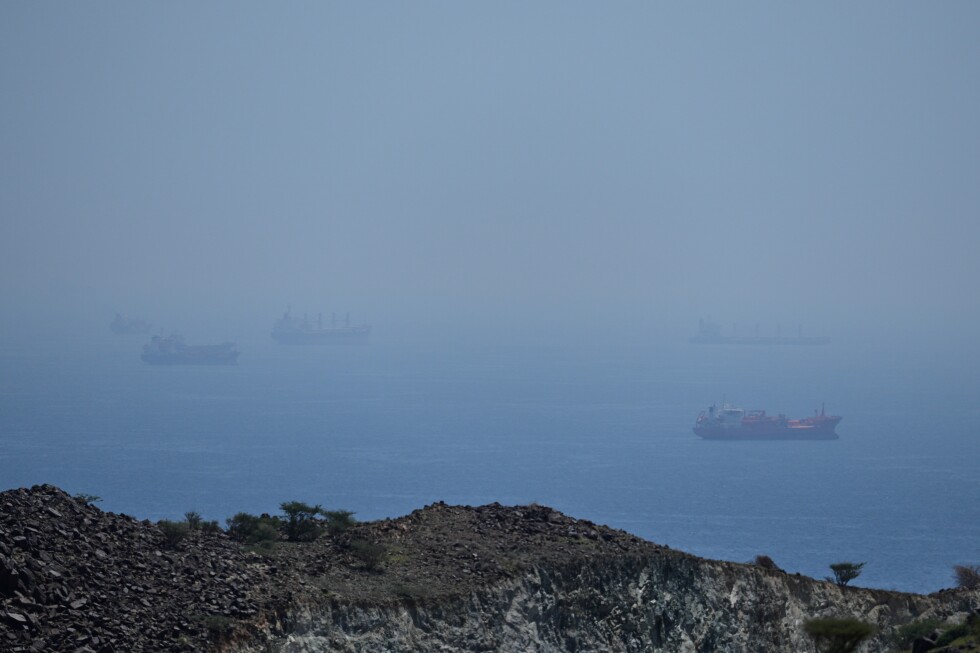
In a sudden escalation of maritime tensions in the Persian Gulf’s critical chokepoint, Iran’s paramilitary Revolutionary Guard launched an unprovoked attack on a commercial container vessel transiting the Strait of Hormuz on Wednesday, damaging the ship just days after the United States seized an Iranian cargo ship and boarded a Tehran-linked oil tanker in the Indian Ocean over the weekend.
The United Kingdom Maritime Trade Operations (UKMTO), the British military body that monitors commercial shipping activity across the region, confirmed the assault took place at approximately 7:55 a.m. local time in the strategic waterway, which handles roughly one-fifth of the world’s daily oil trade. According to UKMTO’s initial public advisory, the Revolutionary Guard gunboat that carried out the firing did not attempt to contact or hail the targeted container ship before opening fire, a departure from standard maritime protocols for stopping or inspecting vessels.
Fortunately, the incident did not result in any casualties among the ship’s crew, and preliminary assessments found no risk of environmental damage stemming from the attack, UKMTO added. As of Wednesday, Iranian officials had not issued any immediate statement or acknowledgment of the assault on the vessel.
The attack comes at a moment of already heightened friction between Iran and Western powers, and it comes on the same day that planned ceasefire talks between Iran and a group of armed militants based in Pakistan were expected to begin — talks that ultimately failed to materialize, creating another layer of instability across the broader Middle East. The assault also directly follows two separate U.S. actions targeting Iranian shipping over the preceding weekend: U.S. forces seized an Iranian container vessel after opening fire on it, and also conducted a boarding operation against an oil tanker linked to Iran’s sanctioned oil trade in the Indian Ocean. Analysts warn the tit-for-tat targeting of commercial shipping in one of the world’s most vital maritime chokepoints risks further escalating regional tensions and disrupting global energy supply chains already facing significant volatility.