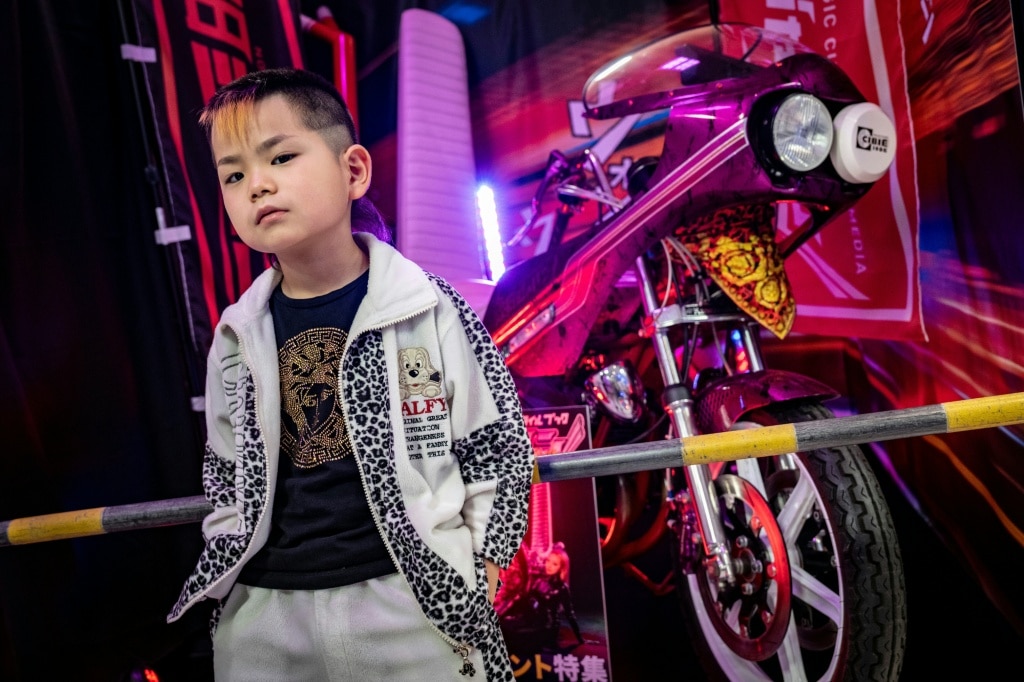
Decades after Japan’s iconic 1980s delinquent subculture faded from the streets, a surprise global hit reality dating series on Netflix has sparked a resurgence of fascination with the ‘yankii’ counterculture, drawing both new fans and enduring criticism across the country. Today, young Japanese enthusiasts like 15-year-old Reona are embracing the iconic aesthetic of the original yankii movement: towering Elvis-inspired pompadours, altered school uniforms that emphasize a rebellious silhouette, and baggy trousers designed to project an imposing, tough persona. For Reona, the allure lies in the unapologetic boldness of the 1980s generation of rebels. ‘I think their hardcore manliness on full display is so cool,’ he told reporters, drawing a sharp contrast between the original yankii movement and the shallow, online-focused delinquency that dominates modern youth culture. Born from the economic boom and social unrest of 1980s Japan, the original yankii movement was defined by hot-blooded teens who rejected rigid social conformity through reckless motorcycle rides, inter-school clashes, and large-scale street brawls. The movement’s signature ‘bosozoku’ motorcycle gangs, flamboyant custom bikes, and embroidered military-style ‘tokkofuku’ jackets became cultural symbols, alongside widely celebrated traits like loyalty to friends, chivalry, and unfiltered straightforwardness. Despite longstanding disapproval from Japan’s generally conformist mainstream society, yankii culture has remained a staple of Japanese pop fiction, spanning hit anime, manga, and feature films. Now, Netflix has broken new ground by bringing the subculture out of fiction and into unscripted reality with its series *Badly in Love*, which follows 11 young people with past delinquent ties, including former bosozoku members, as they navigate dating. To coincide with the show’s viral success, a yankii-themed exhibition is currently running in Tokyo, recreating the chaotic energy of the 1980s movement through displays of custom motorcycles and authentic tokkofuku garments. The resurgence of interest in classic yankii culture comes as many young Japanese people openly dismiss modern youth delinquency as cowardly and unprincipled. Unlike the 1980s rebels, who fought openly and faced consequences for their actions, modern delinquents are often criticized for chasing TikTok clout through petty pranks, engaging in online bullying, and running ‘black market part-time jobs’ that scam vulnerable elderly citizens. High-profile incidents like the so-called ‘sushi terrorism’ pranks, where teen customers posted viral videos of unhygienic stunts at conveyor-belt sushi restaurants, have drawn particular condemnation from classic yankii fans. ‘Getting arrested for riding around your motorcycle may have some honour, but getting arrested for those sushi pranks is plain lame,’ Reona said. Even many parents of young yankii enthusiasts draw clear lines between embracing the subculture’s aesthetic and endorsing harmful behavior. Hirotaka Sotooka, a 43-year-old Tokyo resident whose 8-year-old son has developed a fascination with gangster-style yankii fashion, says he tolerates the aesthetic and even appreciates the culture’s focus on loyalty, but sets firm boundaries. ‘I don’t want him to bully the weak, be violent toward women or do anything purely evil,’ Sotooka explained during a February visit to the Tokyo yankii exhibition, where he watched his son pose for photos in front of a vintage bosozoku-style motorcycle. ‘Otherwise it’s his life to enjoy.’ While interest in the yankii aesthetic has grown, the actual bosozoku biker gangs that defined the 1980s movement have all but disappeared. Official Japanese police data shows the total number of bosozoku members has plummeted nearly 90% from the 1982 peak, dropping to just 5,880 active members in 2024. Kenichiro Iwahashi, a former bosozoku biker who now works as a delinquency researcher, says widespread surveillance is the biggest driver of the decline. ‘Surveillance cameras are now everywhere and everyone films you on an iPhone and leaves proof of your act,’ he explained. As a result, the hardcore, unlicensed, helmet-free bosozoku gangs that dominated 1980s streets are ‘almost non-existent today.’ In mainstream Japanese society, real-world yankii culture still remains deeply stigmatized, with many critics arguing that it normalizes rule-breaking and can lead to lifelong criminal activity. Satoru Saito, a popular 33-year-old comedian who performs under a yankii persona complete with a towering quiff, shaved eyebrows, and authentic tokkofuku, says he regularly faces online harassment from people who condemn his ‘anti-social’ aesthetic. ‘For some people, this is a hard no,’ he said. ‘Most of these yankii folks are doing things like fighting or committing crimes, and the act of riding motorcycles at midnight can be extremely noisy, so I get why they are hated.’ That stigma makes *Badly in Love* a particularly audacious project that no mainstream Japanese TV network would have agreed to produce, according to veteran entertainment journalist Motohiko Tokuriki. While yankii-themed fiction like *Tokyo Revengers* and *Crows* has long been popular as escapist fantasy, airing unscripted content featuring real former delinquents would have ‘risked exposing TV stations to criticism from the public that they are endorsing the yankii culture,’ Tokuriki explained. Aware of the public backlash risk, Netflix took extra steps to avoid sensationalizing or glorifying delinquency, going far beyond basic legal compliance to contextualize cast members’ past mistakes. ‘We had extensive internal discussions… to ensure the production would not be perceived as glorifying or condoning the violence,’ said Dai Ota, the show’s executive producer. The gamble has paid off: *Badly in Love* has spent weeks on Netflix’s global top 10 most-watched list, earning large audiences across South Korea, Taiwan, Hong Kong, and other international markets, with a second season set to premiere later this year. Ota says the show’s core goal is not to celebrate delinquency, but to humanize young people who have long been marginalized as social outcasts. ‘Our hope was to show that these young people — who have often been marginalised or labelled as ‘social outcasts’ — are simply youths who worry, struggle and genuinely grow,’ he explained. For many cast members, that framing aligns with their own perspective on their pasts. Otoha, a 23-year-old Season 1 participant who has the tough, heavily tattooed exterior stereotypical of yankii culture, says she is actually an introvert who now sees her past delinquent behavior as embarrassing. ‘I’d like people not to admire us, but take us as their anti-role model,’ she told reporters.