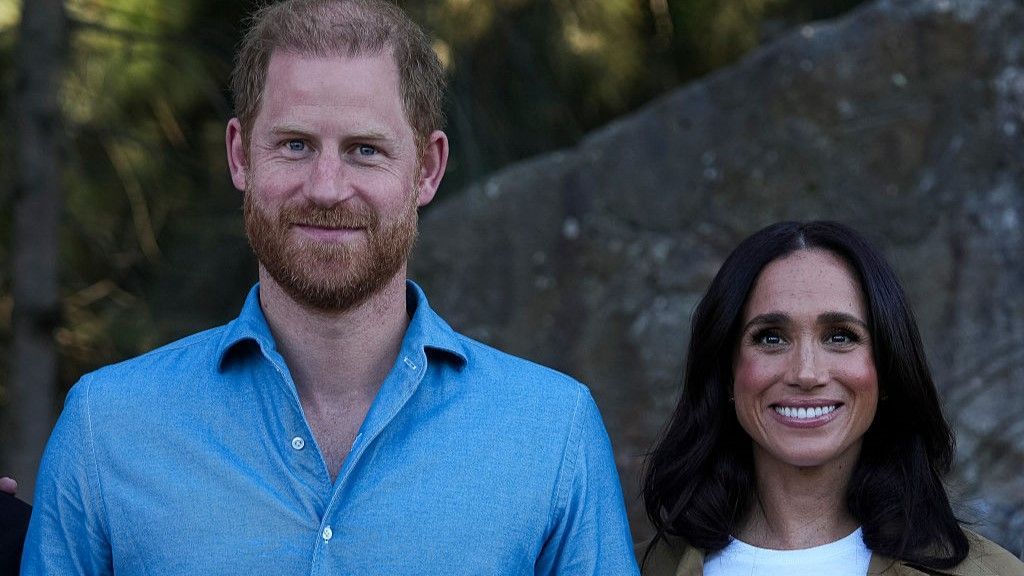
After four days of tightly curated engagements mixing charity work, cultural outreach and private commercial ventures, the Duke and Duchess of Sussex have concluded their first private visit to Australia’s east coast, a trip that stands in stark contrast to their high-profile 2018 royal tour when the pair still served as working members of the British monarchy.
In 2018, a nine-day cross-country official tour drew tens of thousands of well-wishers lining streets across the nation. This time around, as private citizens, the tour followed a far quieter script: most Australians surveyed by the BBC said they had little to no awareness of the visit, and public turnout for unscripted public appearances remained minimal. Despite its low profile, the trip has sparked heated debate over two key issues: potential taxpayer-funded security costs for the couple’s public events, and the blurred line between charitable outreach and commercial money-making activities amid Australia’s ongoing cost-of-living crisis.
The itinerary echoed the structure of traditional royal tours, with stops to engage with Indigenous Australian communities, honor fallen service members at the Australian National War Memorial, celebrate national sporting culture, and advance the couple’s longstanding focus on mental health advocacy. Unlike official royal tours, every engagement was planned and executed by the Sussexes’ private team, with a deliberate focus on controlled, low-risk encounters to avoid public backlash or confrontation.
Giselle Bastin, an associate professor at Flinders University specializing in Australian-monarchy relations, noted the tour’s carefully curated format was designed to minimize negative pushback. “They didn’t organize large, publicly advertised walkabouts where crowds could turn out to see them, so they’ve managed to cut down the risk of negative reactions, heckling or booing,” Bastin explained. “It’s been very carefully controlled, with spontaneous-seeming appearances at pre-vetted locations.”
Even with the controlled structure, the pair displayed their characteristic warmth in small, personal interactions that aligned with their public brand. The BBC witnessed multiple warm encounters, including a meeting at the Sydney Opera House between Prince Harry and Michelle Haywood, daughter of Daphne Dunne — a 99-year-old war widow and long-time royal acquaintance who died in 2019. Haywood had waited days to present Harry with a vintage photo of her mother posing with him in army fatigues from a 2015 visit. “He just said, ‘Oh my gosh’ and then he gave me a big hug,” Haywood recalled. “He went through every time he’d met her, and even remembered the meeting where it was pouring rain. He remembered it perfectly.”
Meghan similarly connected with attendees at multiple stops: she listened compassionately to survivors of the 2024 Bondi Beach attack, and chatted with a young boy about her children’s love of the popular Australian children’s book *Diary of a Wombat*. A review of daily press releases from the Sussexes’ media team found the word “connection” was used 30 times across post-day briefings, while “community” appeared 21 times and “wellbeing” eight times. Notably, the word “royal” only appeared once — in the official name of the Royal Children’s Hospital in Melbourne, which the couple visited at the start of the tour.
Mental health advocacy formed a core pillar of the public agenda, including a roundtable with young people focused on the harms of online bullying. During that discussion, Meghan opened up about her decade-long experience as what she called “the most trolled person in the world,” sharing personal stories of persistent online harassment and abuse.
The couple’s 8.7 million-follower @sussexroyal Instagram platform remains a major asset, and the tour comes as the pair actively pursue new commercial opportunities following the end of their high-profile content deals with Spotify and Netflix. This shift to independent income has left the public with little clarity around which engagements are charitable and which are paid commercial appearances.
Prince Harry headlined a high-profile mental health summit where he spoke candidly about grieving his mother Princess Diana while serving as a working royal. While tickets were heavily discounted, they still cost nearly AU$1,000 per person. Organizers repeatedly declined to confirm whether Harry received a speaking fee, only noting that all ticket proceeds were donated to Australian mental health charity Lifeline. Meghan did confirm a paid appearance at an exclusive, women-only luxury retreat, where VIP entry cost AU$3,199 per person. She also publicly announced her investment in OneOff, an artificial intelligence fashion platform that curates celebrity-inspired style recommendations, with creators and celebrity investors earning a small commission on sales generated through their profiles. The Duchess’s profile already features clothing she wore during the Australian tour.
Compared to the 76 engagements the couple completed across 16 days of the 2018 tour (which also included stops in New Zealand, Fiji and Tonga), this four-day visit had significant gaps in the public schedule. Most notably, Meghan had no public appearances on the Wednesday of the tour, and it was later revealed she had been filming a guest spot on *MasterChef Australia*. It is understood she received no payment for the appearance, though she has a food-focused lifestyle brand, As Ever, which holds Australian trademarks for a range of products including cookware and table linens.
The only mention of commercial activity on the tour came in a footnote of a five-page pre-tour briefing, which stated: “As with many visits of this nature, a small number of private engagements are included to support broader commercial, charitable, and community objectives.” As private citizens, the couple are under no legal obligation to disclose earnings or publicize every private engagement.
Critics have argued the commercial focus of the trip is out of step with Australia’s current economic struggles. Bastin described many of the commercial ventures as “tone deaf in a cost-of-living crisis,” while a Sydney Morning Herald columnist wrote that “Australia was good to Harry and Meghan. Now they want to use us as an ATM.”
Supporters push back against that framing, however. Michael Hartung, chief executive of Invictus Australia, the national arm of Harry’s Invictus Games for wounded and ill veterans, said the criticism overlooks the tangible positive impact of the couple’s charitable work. “A lot of criticism is thrown their way, but what we’ve seen this past week is they do an enormous amount for charity and for organisations like ours,” Hartung told the BBC. “Their presence here has moved our work years forward, something that would have taken us countless hours of outreach and effort to achieve on our own. It really does make a difference.”
Fans who met the couple during the tour echoed that sentiment, noting the pair are entitled to earn a living as private citizens. “They’ve chosen their path in life and if that’s their brand and they need to make a living and do it how they wish, they should be allowed to do so,” said Lisa Perry, a Sydney visitor who got a selfie with the couple. Vida Benic, who met the pair in Melbourne, said she avoided negativity around the visit. “They’re welcome to come here any time. Our big Australian arms and hearts are fully open to them – and to their children hopefully one day.”