Against the backdrop of escalating regional tensions and disrupted global energy flows after weeks of restricted access through one of the world’s most critical maritime chokepoints, UK Prime Minister Keir Starmer has announced a new UK- and French-led multinational mission designed to protect commercial shipping in the Strait of Hormuz, set to launch once active hostilities in the region conclude.
Speaking following a gathering of representatives from 51 nations, Starmer emphasized that the initiative would operate exclusively as a strictly peaceful and defensive deployment. The strait, which carries roughly a fifth of the world’s daily oil trade, was effectively blocked by Iran after joint strikes by the United States and Israel in late February — a disruption that sent global energy and fuel prices soaring across international markets.
In a surprising development on Friday, both Iranian Foreign Ministry and U.S. President Donald Trump confirmed the waterway was now fully open to commercial traffic. But Trump used the announcement to launch a fresh attack on NATO, dismissing the alliance as “useless when needed”. The U.S. president revealed he had received a formal offer of assistance from NATO on Friday, but took to his Truth Social platform to write that he “TOLD THEM TO STAY AWAY, UNLESS THEY JUST WANT TO LOAD UP THEIR SHIPS WITH OIL”.
Trump has repeatedly lashed out at NATO throughout the ongoing Iran conflict, with the UK drawing particular criticism from the commander-in-chief. For his part, Starmer has maintained a cautious stance throughout the crisis, repeatedly confirming the UK would not be dragged into active conflict and previously stating London would not back any blockade of Iranian shipping.
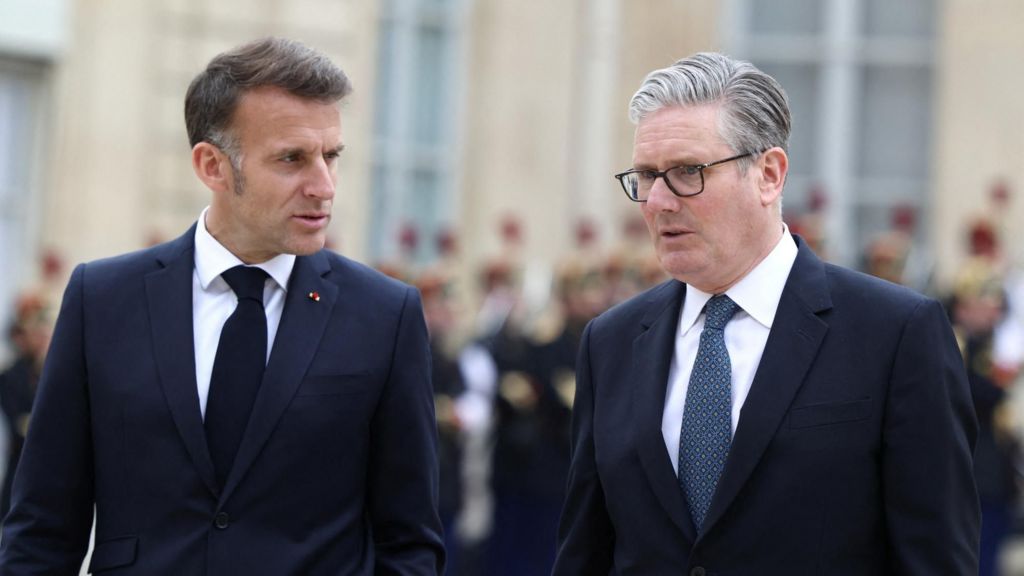
Standing alongside French President Emmanuel Macron during the announcement, Starmer added that dozens of countries have already pledged to contribute military and logistical assets to the joint mission. “This will be strictly peaceful and defensive, as a mission to reassure commercial shipping and support mine clearance,” he said. “We invite all nations with an interest in the free flow of global trade to join us. Some have already indicated their readiness to contribute.”
Full operational details of the mission will be unveiled next week following a military planning conference scheduled to take place in London, Starmer confirmed.
Tehran has given assurances that the strait will remain open to commercial shipping until the mid-point of next week, when the temporary ceasefire between the U.S. and Iran is set to expire. For his part, Trump has made clear that his own naval blockade of vessels entering and exiting Iranian ports will remain in place despite the temporary opening of the strait.
While Friday saw a surge of vessel activity across the broader Persian Gulf, maritime tracking data still shows only a handful of ships completed full transits through the strait, indicating lingering uncertainty among shipping operators about the security of the route.
Macron echoed Starmer’s remarks, noting that the weeks-long closure of the strait had inflicted “very severe consequences” on “the whole of the planet and the global economy”. “Recent events are encouraging, even if we have to remain prudent,” he added.
German Chancellor Friedrich Merz also backed the initiative, saying Germany “stands ready to play its part in ensuring freedom of navigation” through the critical waterway. Speaking after the multilateral meeting, Merz added that it would be “desirable” for the United States to join the UK-French led mission.