After nine days of evading hundreds of search personnel, roaming through wooded and urban areas of South Korea’s Daejeon, and triggering a series of public disruptions and official missteps, a young escaped gray wolf named Neukgu has been safely recaptured and returned to his home zoo, local authorities confirmed Friday.
The 2-year-old male wolf, weighing 30 kilograms, first broke free from his Daejeon zoo enclosure on April 8 by digging an escape tunnel under his compound fence and breaking through an outer boundary. What followed was one of the most high-profile fugitive searches in the region in recent years: local officials mobilized a joint team of hundreds of police officers, firefighters, and military troops, deploying drones equipped with thermal imaging cameras and encouraging residents to report any potential sightings to authorities. But for nearly a week and a half, the young wolf repeatedly avoided capture, slipping out of search cordons even after multiple confirmed sightings across the city.
The search concluded in the early hours of Friday, after officials received a credible citizen tip that the wolf had been spotted resting in a local Daejeon park, according to South Korea’s Yonhap News Agency. Search teams moved in quickly, firing a tranquilizer dart to subdue the animal without injury, taking him into custody alive.
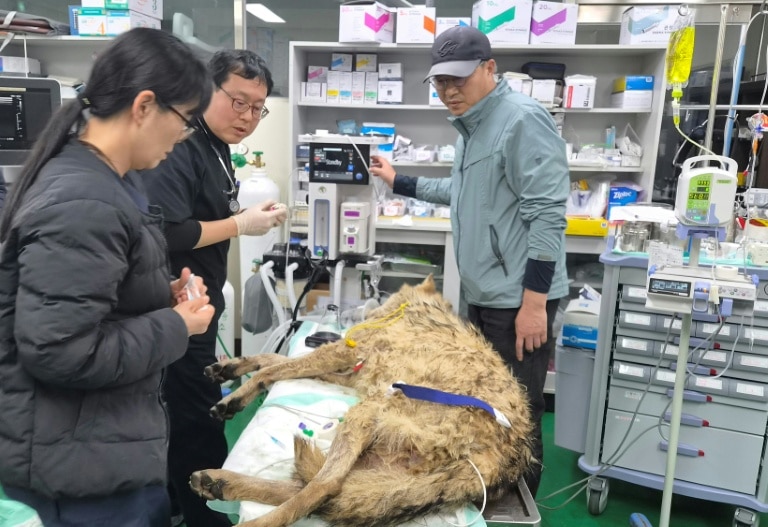
In a celebratory post on the social platform X shortly after the capture, the Daejeon Metropolitan City government wrote: “Welcome back, #Neukgu!” The city also released official footage and photos of the capture, showing search teams carrying a sedated, sleepy Neukgu in a canvas sack before moving him into a secure transport crate. Subsequent images released by the city showed the shaggy-furred wolf sedated and resting on a veterinary examination table, fitted with a soft muzzle to protect medical staff.
Preliminary veterinary checks completed after the capture confirmed Neukgu is in good condition, with normal pulse and body temperature readings, the city government added in an official statement. “We would like to thank everyone who offered their support to ensure Neukgu’s safe and healthy return. We also apologise to the public for the anxiety and concern this incident has caused,” the statement read.
Neukgu’s escape sparked immediate public safety concerns across Daejeon, prompting a local elementary school to suspend in-person classes for at least one day out of caution. The incident also drew embarrassment for city officials after a fake AI-generated image, purporting to show Neukgu trotting across a busy Daejeon intersection, was widely shared by the city government and multiple major South Korean and international media outlets, including AFP, which later withdrew the image after an AFP analysis confirmed it was inauthentic.
Now that Neukgu has been returned to the zoo, South Korean animal welfare advocates are calling for sweeping reforms to captive animal safety standards, pointing to a 2018 escape from the exact same Daejeon facility that ended in tragedy. In that earlier incident, a puma named Bborong escaped the zoo and was shot and killed by responding authorities.
“The fact that Neukgu has returned to his cage at the zoo does not signify a ‘happy ending’ to the incident,” the Korean Animal Welfare Association said in a statement following the recapture, arguing that repeated escape incidents point to systemic failures in enclosure safety and captive animal care at the facility.