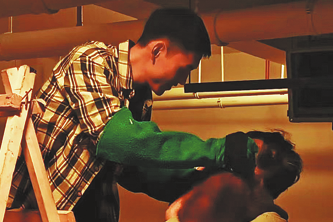
In an era where pets have become cherished members of millions of households across China, a unique niche profession has emerged to solve one of pet owners’ greatest crises: missing animals. Zhang Zhanfei, one of the country’s growing cohort of professional pet detectives, stumbled into the line of work several years ago, after watching a viral short video featuring desperate pet owners searching for their lost companions.
Intrigued by the urgent need for this service, Zhang searched online for opportunities, eventually connecting with a hiring team and launching his new career. In the years since he began, Zhang and his team have successfully recovered more than 1,900 lost animals, bringing relief to countless distraught owners who view their pets as irreplaceable family members.
When anxious pet owners reach out to Zhang’s team, they almost always convey a frantic sense of urgency, Zhang explained. For most of these clients, losing a pet is equivalent to losing a child, and the emotional weight of the loss can feel overwhelming.
Unlike service models that require full payment only for a successful recovery, Zhang’s team charges a daily rate that clients pay regardless of the final outcome. “We charge for the work we put in, not for the outcome we deliver,” he said.
When Zhang first entered the industry, only a handful of teams across China offered similar pet detective services. Today, that number has ballooned to hundreds, transforming the once-obscure niche into a crowded market with cutthroat competition. This rapid expansion has not only created opportunity but also opened the door for widespread problems that damage the reputation of legitimate operators.
The most harmful issue, Zhang noted, is the proliferation of scammers who exploit the anxiety of grieving pet owners. These fraudsters guarantee a 100% success rate for finding lost pets, collect large upfront deposits, and then vanish without completing any work. For the profession to work, responsibility is the most critical requirement, Zhang emphasized, a trait that unethical scammers completely lack.
Over years of working in the field, Zhang has refined specialized strategies for different types of cases, as search protocols for lost cats and lost dogs differ dramatically. For missing dogs, which can roam 10 kilometers or more from their home, the work requires extensive neighborhood canvassing, reviewing public and private surveillance footage, and posting hundreds of flyers across a wide search area.
By contrast, most lost cats stay within 500 meters of their home, but they instinctively hide in small, hard-to-reach spaces when they feel frightened. “You have to think like a scared cat — where would you hide if everything felt unfamiliar and dangerous?” Zhang said.
Technological innovation has reshaped the work of modern pet detectives, with Zhang’s team now integrating tools like drones, thermal imaging cameras, and specialized pipe inspection equipment to expand their search capabilities. Even with these high-tech advances, however, the core skills of the job remain unchanged: patience, sharp observational skills, and the ability to spot subtle clues that untrained searchers would overlook.
“A clump of cat fur caught on a door latch, a faint paw print someone would just step over — those small details are the clues that point you straight to where the pet is hiding,” Zhang explained.
For Zhang, working closely with grieving pet owners has only deepened his commitment to the profession, as he sees first-hand how critical his work is to people who consider their pets family. Even so, one particularly memorable case left a lasting mark on him, and it ended in tragedy rather than a happy reunion.
The case involved a 24-year-old female fitness trainer living in Liuzhou, Guangxi Zhuang Autonomous Region, who lost her 9-year-old cat — a constant companion that had moved with her through multiple jobs and apartment changes as she built her life alone. “She lived by herself, and that cat was her only companion,” Zhang recalled.
Immediately after taking the case, Zhang traveled by train from Shanghai to Liuzhou to lead the search. Clues from paw prints led him to the fifth floor of the woman’s apartment building, directly above her unit. There, he detected a strong scent of blood, found visible bloodstains on the apartment’s white walls, and spotted cat hair on the windowsill.
When confronted, the fifth-floor resident admitted that she had seen the cat on her window ledge and called property management to remove it, claiming she suffered from rhinitis and could not tolerate cat hair. According to Zhang, the property management staff hit the cat so hard that it died from its injuries, and a security guard later disposed of the cat’s body to cover up the incident.
When the cat’s owner received the devastating news, she collapsed from shock. “She was sobbing so hard she couldn’t catch her breath, and she looked like she was going to faint,” Zhang said.
To ease the woman’s overwhelming grief, Zhang made the decision to tell a gentle white lie, telling her that the cat had only been injured and had escaped alive to somewhere nearby. “I knew it wasn’t true, but she needed that false hope to get through that moment,” he explained. A full year after the tragedy, Zhang still sees the woman posting about her lost cat on social media, marking its birthday and sharing how much she longs for its return.
As pet ownership continues to grow across China, the demand for pet-focused services like pet detective work has expanded rapidly, turning once-unthinkable niche jobs into viable career paths for people like Zhang — who balance the thrill of solving clues with the heavy weight of supporting clients through one of their hardest emotional trials.