While the United Kingdom has drawn public attention to potential domestic food shortages linked to threats blocking the Strait of Hormuz, a far more devastating crisis is unfolding for the world’s most vulnerable populations, whose access to life-saving support has been crippled by the ongoing US-Israeli war on Iran. The conflict has thrown global humanitarian logistics into disarray, and the international community has moved far too slowly to address the cascading harms hitting at-risk communities across the Middle East, South Asia and the Horn of Africa.
One of the least visible but most damaging outcomes of the conflict has been a sharp surge in the cost of delivering aid to crisis zones. As global oil prices skyrocket in the wake of regional instability, already tight international aid budgets have been squeezed even further, eroding the capacity of humanitarian organizations to reach people in need. In a new analysis released this week, UK-based international charity Save the Children laid out the staggering human cost of these rising costs: every $5 increase in global oil prices driven by Middle East conflict eliminates enough funding to deliver one month of life-saving aid to nearly 40,000 children. For Save the Children alone, the organization now needs an extra $340,000 per month just to cover the cost of shipping critical aid supplies.
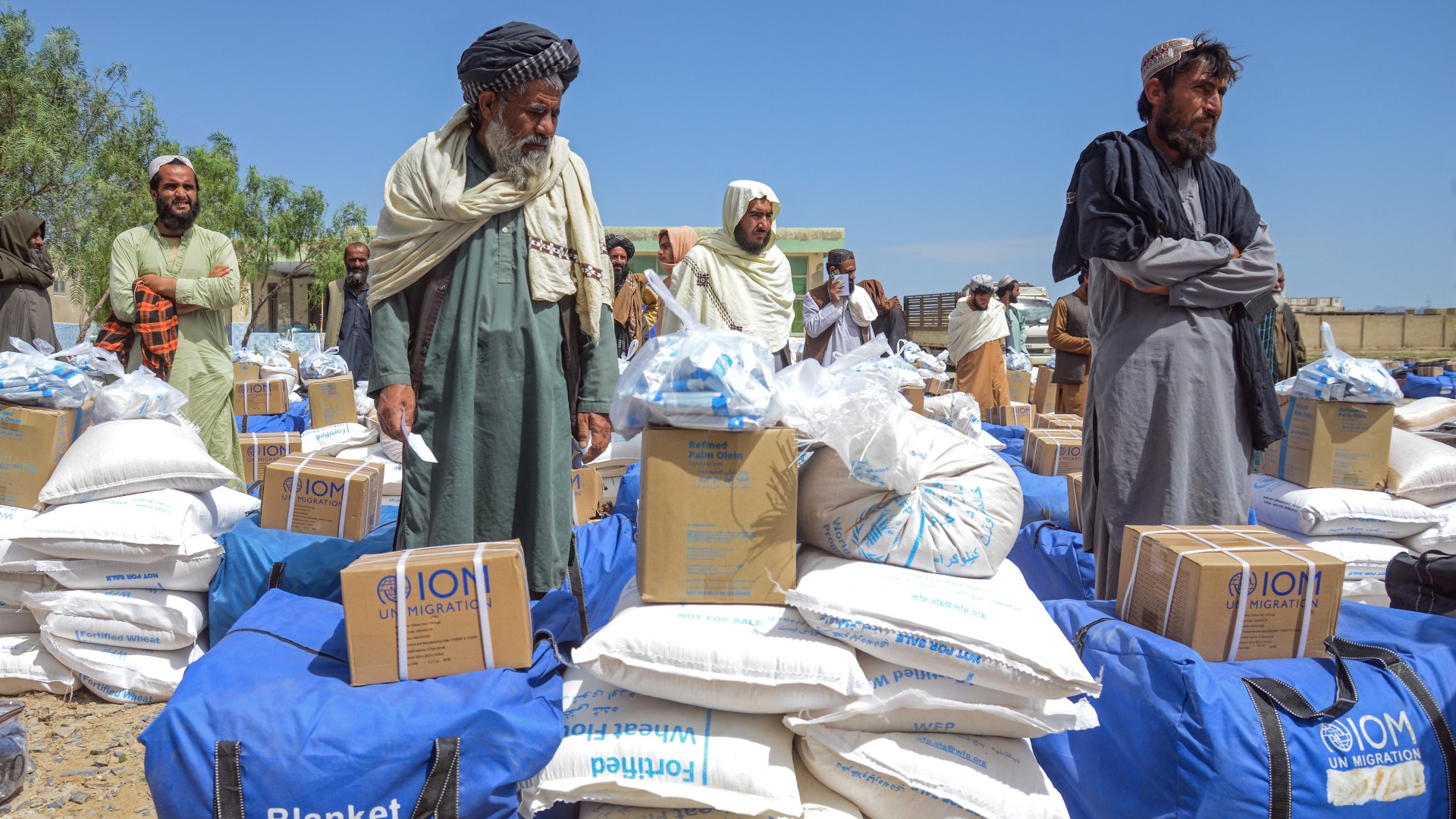
One urgent case already unfolding is a stalled shipment of nutritional support bound for Afghanistan, where more than 21.9 million people rely on humanitarian assistance. The supplies, meant to serve 5,000 children and 1,400 pregnant and breastfeeding women, were sourced from a New Delhi supplier but have been held up by war-related disruptions to global shipping. Since March, air freight costs for the shipment have jumped from $240,000 to $435,000 — now more than double the actual value of the nutritional supplies themselves. Save the Children teams are currently scrambling to lock in lower-cost delivery options, but Willem Zuidema, the organization’s global supply chain director, warned that Afghanistan could run out of critical life-saving supplies by the end of the month. “This is a race against the clock,” Zuidema told Middle East Eye.
While the recent ceasefire in the region has offered a small measure of relief, Save the Children stressed that the economic and logistical ripples of the war will linger for months. Even if commercial shipping through key chokepoints like the Strait of Hormuz returns to normal, freight operators have made clear that oil carriers will receive priority loading and routing, leaving humanitarian aid shipments waiting at ports. Compounding these pressures is the Trump administration’s “trade over aid” policy framework, which prioritizes private business opportunities over humanitarian resourcing, forcing non-profit organizations to adapt rapidly to shrinking budgets and growing logistical barriers.
Facing these constraints, aid groups have been forced to rethink longstanding supply chain routes to get critical support to where it is needed. For example, medical equipment and supplies bound for Yemen and Sudan — where Sudan hosts what the United Nations describes as the world’s worst ongoing humanitarian crisis — are currently stuck in Dubai. Save the Children is now pursuing alternative routes: driving aid overland into Yemen, or moving supplies across the border to Jeddah, Saudi Arabia, before arranging final shipment to Sudan.
Even though U.S. officials have given repeated assurances that humanitarian aid will be exempt from its regional blockade, the indirect impacts of the conflict are still driving sharp increases in food and essential commodity prices worldwide. In Somalia, where 70 percent of the country’s food supply comes from imports or international aid, the World Food Programme reports that prices of essential goods have jumped by at least 20 percent since the war began, with the cost of key agricultural fertilizers such as urea surging by as much as 70 percent in just a few weeks.
This week, the international community pledged 1.3 billion euros (equivalent to $1.53 billion) in new aid for Sudan, as the country’s own internal civil conflict enters its fourth year. While the pledge was broadly welcomed by humanitarian groups, it comes as global aid efforts are already failing to keep up with the exploding demand for support across multiple crisis zones. Long before the outbreak of the war on Iran, global humanitarian funding had already fallen by almost a third since 2023, with major donor nations including France, Germany and the United Kingdom all scaling back their official aid commitments. The war has accelerated this crisis dramatically: in Iran alone, 3.2 million people have been displaced by the conflict since attacks began, and the first large shipment of aid to the country since February 28 only arrived this Tuesday, with aid workers on the ground reporting overwhelming unmet need.
Amid these growing gaps, independent observers note that the cascading effects of regional conflict are hitting vulnerable populations that are already reeling from years of underfunded crises, raising the risk of widespread hunger, preventable illness and child mortality in the coming months if the international community does not step up emergency support.