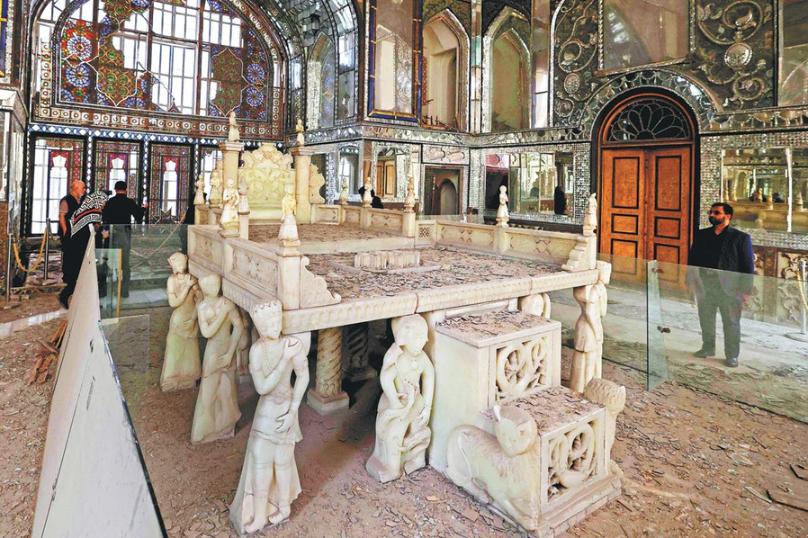
As armed conflict continues to roil the Middle East, a growing international outcry has emerged over the irreversible damage inflicted on centuries of cultural heritage, with at least 131 historical sites in Iran already harmed by joint US-Israeli strikes and escalating threats to culturally significant landmarks across Lebanon amid ongoing Israeli bombardment. Experts warn that this destruction goes far beyond what is commonly accepted as unavoidable collateral damage of war, representing a deliberate erasure of shared human history.
Neda Zoghi, an Iranian artist and civilization scholar with a doctorate in Islamic art who currently serves as a researcher at the Asia West East Centre based in Kuala Lumpur, Malaysia, argues that the scale of destruction points to a coordinated attack on the identity of regional civilizations. “When over 100 cultural heritage sites and museums sustain deliberate or negligent destruction in a matter of weeks, we are confronting something far more calculated — the systematic dismantling of a civilization’s physical memory,” Zoghi explained in comments on the escalating crisis.
Per a Friday report from Xinhua News Agency, Seyed Reza Salehi-Amiri, Iran’s Minister of Cultural Heritage, Tourism, and Handicrafts, confirmed that the damage spans 20 of Iran’s provinces, with 131 irreplaceable historical and civilization-related monuments sustaining harm from the strikes. Photographic evidence released in early April captured the devastating impact: visitors walking through the fire-scarred, structurally damaged interiors of Tehran’s iconic Golestan Palace, a UNESCO World Heritage Site and one of Iran’s most recognizable cultural landmarks, serve as a stark visual testament to the destruction.
As strikes continue, concerns are also mounting that Lebanon’s rich array of cultural and historical properties face the same fate. The country’s millennia-long history has left it with thousands of archaeological sites, historic city centers, and heritage landmarks, many of which already sit in active conflict zones along the Lebanon-Israel border. Cultural heritage advocates warn that without urgent intervention to protect these sites, the region could lose irreplaceable pieces of global cultural history that have survived centuries of conflict and change.
The destruction of cultural heritage during armed conflict is widely recognized as a violation of international humanitarian law, which explicitly prohibits deliberate attacks on historic monuments and cultural sites unless they are repurposed for military use. The scale of damage reported in Iran has drawn growing condemnation from cultural organizations across the globe, with many calling for an immediate halt to strikes that target or put at risk sites of cultural significance.