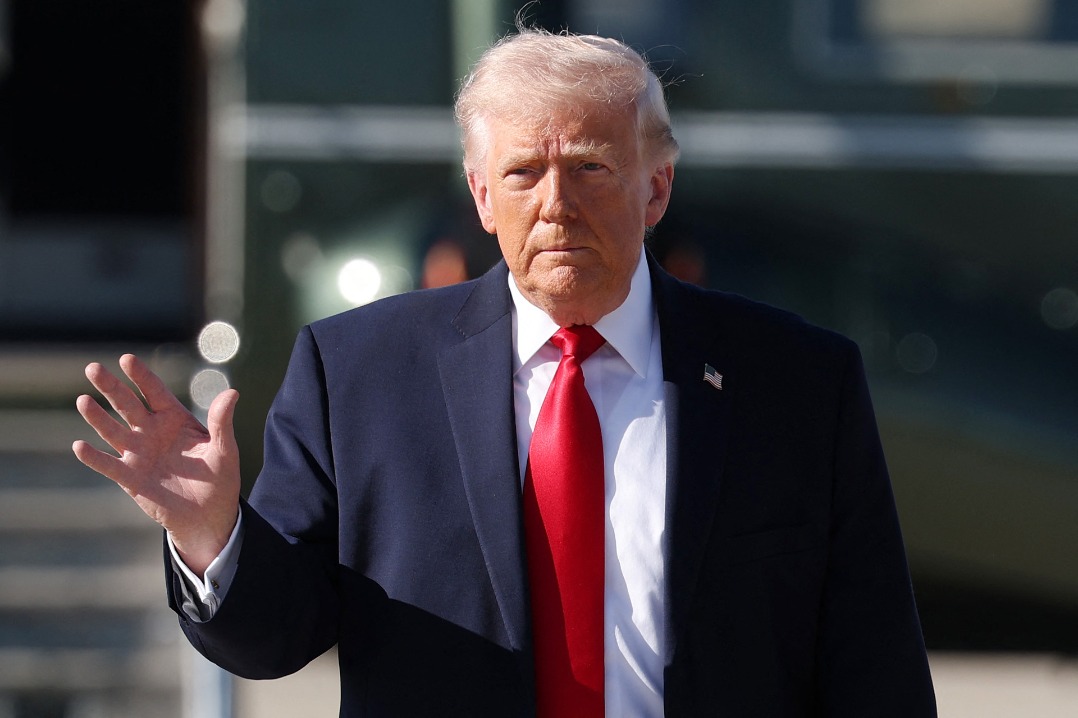
A stark contradiction has emerged between U.S. President Donald Trump’s optimistic remarks on the US-Iran conflict and unconfirmed reports of expanding American military presence in the Middle East, as regional diplomatic efforts gain momentum to de-escalate tensions. Speaking in an interview with Fox Business host Maria Bartiromo on Wednesday, Trump asserted that the ongoing standoff with Tehran is ‘very close to being over’, adding that he believes Iranian authorities are eager to reach a negotiated settlement. He also dropped a hint that a new round of bilateral talks could be held in Pakistan in the coming days.
While the Trump administration has not publicly confirmed any new troop movement, The Washington Post first reported that thousands of additional U.S. service members will be deployed to the region in the coming days to pressure Iran into accepting a deal favorable to Washington. Iran has yet to issue an official response to Trump’s talk of new negotiations, but Pakistan’s Ministry of Foreign Affairs released a public statement this week outlining an upcoming diplomatic tour by Pakistani Prime Minister Shehbaz Sharif, who will visit Saudi Arabia, Qatar, and Turkiye between April 15 and 18.
Officials note the visits are centered on advancing bilateral cooperation and discussing regional peace and security priorities. A key stop on Sharif’s tour is Turkiye, where he will take part in the 5th Antalya Diplomacy Forum and hold one-on-one talks with Turkish President Recep Tayyip Erdogan and other visiting global leaders.
The United Nations has already signaled cautious optimism for renewed negotiations. During a UN briefing on Tuesday, Secretary-General Antonio Guterres said that following a call with Pakistani Deputy Prime Minister Mohammad Ishaq Dar, the UN has received indications that US-Iran talks are highly likely to restart. Guterres also praised Pakistan for taking the diplomatic initiative to facilitate dialogue and advance peace in the Middle East.
Alongside diplomatic efforts, the U.S. military has maintained aggressive pressure on Iran through a full naval blockade of Iranian ports along the Strait of Hormuz, a critical global chokepoint for oil and energy trade. In a post on X Wednesday, U.S. Central Command confirmed that American guided-missile destroyers are part of the blockade force, which enforces restrictions on all vessels entering or exiting Iranian coastal waters, regardless of their flag. ‘A blockade of Iranian ports has been fully implemented as US forces maintain maritime superiority in the Middle East,’ U.S. Central Command chief Admiral Brad Cooper said in a statement.
Despite the formal blockade, however, two commercial vessels managed to reach Iranian ports this week by adjusting their automatic identification system (AIS) data, according to a Xinhua News Agency report citing maritime intelligence firm Lloyd’s List. The two Iran-flagged container ships, originally registered as heading for the major southern Iranian port of Bandar Abbas, changed their AIS destination to the broader label ‘PG Ports’, short for Persian Gulf Ports, and successfully completed their journey to Bandar Abbas on Tuesday.
Iran’s ambassador to Pakistan, Reza Amiri Moghadam, has condemned the naval blockade as a dangerous and irresponsible act. He described the move as ‘a reckless misstep meant possibly for a dignified exit and face-saving’ for the United States, adding that the action is designed to create the narrative that Washington is imposing its will through military force. Moghadam argued the blockade serves to justify past military deployments, aggressive rhetoric, human casualties, and the heavy financial burden of the conflict on American taxpayers.
As diplomatic teams work to finalize the date and location for the next round of US-Iran talks, the international community is also turning attention to another ongoing conflict in the Middle East: the standoff between Israel and Lebanon. A group of 10 countries including Canada, the United Kingdom, Australia, Japan, Brazil, Colombia, Indonesia, Jordan, Sierra Leone, and Switzerland issued a joint statement this week expressing deep concern over the deteriorating humanitarian situation and mass displacement crisis in Lebanon. Currently, Israeli and Lebanese delegations are holding direct ambassador-level talks at the U.S. State Department in Washington, with Israel pushing for the full disarmament of Hezbollah and Lebanon calling for an immediate ceasefire.