As the 2026 FIFA Men’s World Cup kicks off, the tournament’s opening Group Stage clash between defending runner-up France and Senegal at New Jersey’s MetLife Stadium carries far more than just preliminary points – it revives one of the biggest upsets in World Cup history. Twenty-four years ago, at the 2002 tournament’s Seoul opener, Senegal’s “Lions of Teranga” stunned defending champion France 1-0, a result that sparked chaotic, joyful street celebrations across Dakar that are still remembered by soccer fans worldwide.
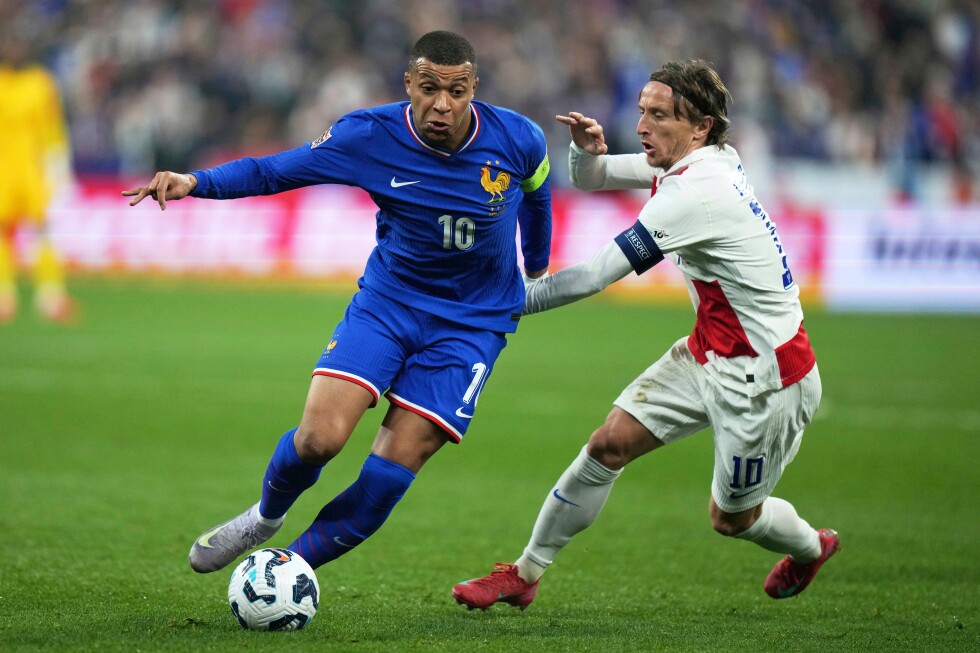
Heading into the 2026 tournament, France enters as one of the clear title favorites, chasing its third World Cup crown following victories in 1998 and 2018. Led by 27-year-old superstar Kylian Mbappé – currently in the peak of his career – Les Bleus’ roster boasts a deep lineup of elite talent, including strikers Hugo Ekitike, winger Ousmane Dembélé and attacking midfielder Michael Olise. In their final pre-tournament warm-up matches before June, France turned in strong performances, beating Brazil 2-1 and Colombia 3-1 to build momentum.
Mbappé, who claimed the 2022 World Cup Golden Boot after scoring eight goals in Qatar, made history in that tournament’s final by becoming just the second men’s player ever, after England’s Geoff Hurst in 1966, to net a hat trick in a World Cup final. Heading into the 2026 June friendlies, Mbappé sits on 56 international goals, just one goal away from breaking Olivier Giroud’s all-time French scoring record. The emotional sting of France’s 2022 penalty shootout loss to Argentina remains fresh for the star. “Personally, I’m never going to get over it,” Mbappé has said of that final defeat.
Since lifting the World Cup trophy in 2018, France has endured a string of near-misses and early exits in major tournaments: they fell to Switzerland in the Euro 2020 round of 16, lost the 2022 World Cup final to Argentina, and were knocked out by Spain in the Euro 2024 semifinal. A third World Cup title in 2026 would cement France’s place among the global soccer elite, making it just the fifth nation to earn three or more World Cup championships, joining Brazil (five), Germany and Italy (four each) and Argentina (three).
Longtime head coach Didier Deschamps, who has led the French national team since 2012, has confirmed he will step down from his role following this tournament. During the team’s preparation in the United States, Deschamps publicly raised concerns about logistics affecting the team’s readiness, particularly highlighting frustrating delays caused by heavy traffic and overlong security lines. During a March friendly against Brazil held in Foxborough, Massachusetts – the same city that will host France’s first-round match against Norway – Deschamps noted, “The hardest part is the roads that take a long time, too long, and so to come to the stadium it took us an hour and 15 minutes before a match. It’s not easy.”
France’s first-round opponent Norway is making its first World Cup appearance in 28 years, having last qualified in 1998, and just its fourth trip to the tournament overall. The side is led by 25-year-old Erling Haaland, one of the most prolific strikers in world soccer, who has scored more than 30 goals in four consecutive club seasons for Manchester City. Heading into June 2026, Haaland already holds Norway’s all-time international scoring record with 55 national team goals. Haaland has acknowledged the heavy weight of expectation on his shoulders as his country’s driving force toward a deep run. “It’s a great responsibility to bring Norway to the World Cup,” he said. “It’s a lot on my shoulders and that’s what I’ve been working to do.” Haaland follows in his father Alfie’s footsteps – the elder Haaland represented Norway at the 1994 World Cup, which was also hosted by the United States.
Norway’s attacking depth is bolstered by 30-year-old striker Alexander Sørloth, another consistent goalscorer, while captain and star midfielder Martin Ødegaard has been hampered by knee and shoulder injuries through the 2025-26 club season. This tournament marks Norway’s first major international competition since it exited in the group stage of its only European Championship appearance in 2000.
Senegal, for its part, is heading to its third consecutive World Cup, but enters the tournament mired in controversy over its 2025 Africa Cup of Nations title. The Lions of Teranga defeated Morocco in the AFCON final in January 2025, but were stripped of the championship title after Senegal’s coach Pape Thiaw pulled his team off the pitch for 15 minutes to protest a late penalty awarded to Morocco. The Confederation of African Football ruled the move a forfeit, and Senegal has since filed an appeal to reverse the decision. Regardless of the ongoing title dispute, Senegal remains one of the top-ranked teams in African soccer, having won the 2021 AFCON title, when it beat Egypt on penalties after a scoreless draw. That decisive penalty was scored by 32-year-old veteran Sadio Mané, who is still Senegal’s all-time leading scorer with 53 international goals, including five goals in 2026 World Cup qualifying. Other key players for Senegal include goalkeeper Édouard Mendy, midfielder Idrissa Gueye and defender Kalidou Koulibaly.
Completing the four-team group, Iraq is making its first World Cup appearance in 40 years, having last qualified for the 1986 tournament in Mexico, where the side lost all three of its group stage matches. The “Lions of Mesopotamia” secured their 2026 spot with a playoff win over Bolivia, and are led by coach Graham Arnold, a native Australian who is serving his third stint with the side. Iraq’s top threats include 30-year-old striker Aymen Hussein, who ranks fifth on the country’s all-time scoring list with 33 international goals, forward Mohanad Ali, and midfielder Amir Al-Ammari.
As kickoff at MetLife Stadium approaches, all four teams will look to turn preparation into results, with France aiming to exorcise the demons of 2022 and Senegal hoping to repeat its historic 2002 upset against Les Bleus.