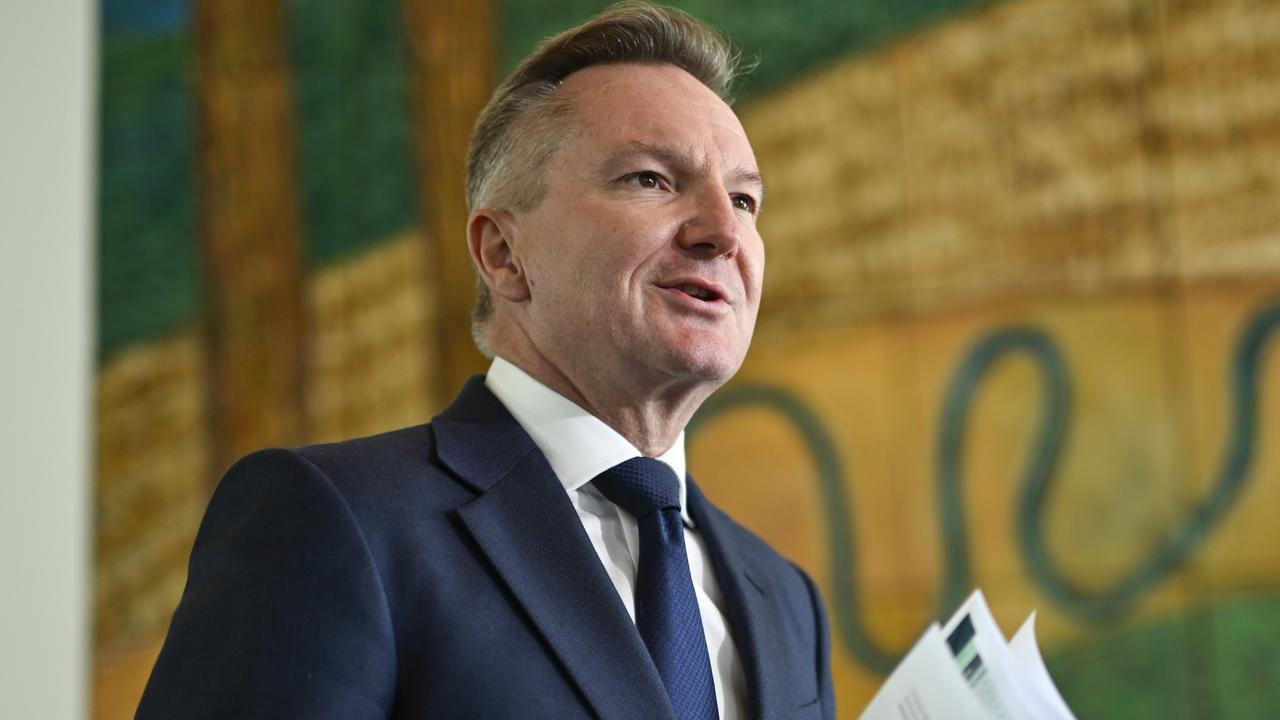
As the Israel-US conflict with Iran sends global energy markets into chaos, Australia is far better positioned to weather resulting price volatility and supply disruptions than it was during the 2022 Russian invasion of Ukraine crisis – and progress in renewable energy adoption deserves much of the credit, Australia’s Energy Minister Chris Bowen has said.
Following Tehran’s closure of the Strait of Hormuz, a critical maritime chokepoint through which roughly one-fifth of the world’s total oil supply passes, global energy markets have been roiled by extreme volatility. International benchmark Brent crude has seesawed wildly around the $100 per barrel mark in recent trading sessions, while damage to liquefied natural gas (LNG) infrastructure in the Persian Gulf – most notably in major exporter Qatar – has tightened global gas supplies and pushed prices sharply upward.
Bowen pushed back Wednesday against claims made by Amos Hochstein, a former energy security official in the Biden administration, who argued that renewable energy sources are incapable of resolving ongoing global energy crises. When pressed by Australian journalists on whether he shared Hochstein’s view, Bowen made clear he holds a sharply different perspective, pointing to tangible progress in Australia’s energy transition that has reduced national exposure to global fossil fuel price shocks.
“One of the reasons we are better placed in this international energy crisis than we were even in 2022, for the last one, was that we are using a lot less gas,” Bowen explained, noting that Australian gas generation fell to 1.5 terawatt-hours last summer, down from 2.7 terawatt-hours in the summer of 2022. “That means that if the gas price goes up, we are less vulnerable to that – it will still have impact, but less vulnerable than we were because we’re using less gas. And one of the big reasons we’re using less gas, is we’re using more batteries to get through the night. So I think renewables are part of a common sense, careful, calibrated approach to a more reliable energy system.”
As of Saturday, Bowen confirmed Australia’s national fuel stockpiles have remained stable amid the crisis, though localized supply shortages persist across the country. Approximately 2% of Australian service stations – equaling 156 locations – still report being out of diesel, with every state recording at least a small number of dry petrol outlets.
Alongside his assessment of national preparedness for global energy shocks, Bowen also announced new emissions data this week showing that on-site carbon pollution from Australia’s largest industrial facilities has fallen by 12%, or 5.8 million metric tons, under the federal government’s signature safeguard mechanism policy. That reduction is equal to removing 2 million passenger vehicles from Australian roads, or roughly 60% of the nation’s total annual domestic aviation emissions, Bowen noted.
“This is good policy working well, providing that investment certainty for industry to make the investments they need to make sure that their operations are viable on an ongoing basis, but also reducing emissions as they go,” he said.
The safeguard mechanism requires large industrial emitters to cap and gradually cut their greenhouse gas output, a policy that the opposition Liberal-National Coalition has repeatedly promised to abolish, framing it as an unfair, punitive regulation on Australian business. Critics have also argued that the policy’s allowance for carbon offsets creates a loophole that lets major polluters continue emitting at unchanged levels while purchasing offsets to comply with rules.
Bowen pushed back against that critique, clarifying that the 12% reduction reported this week counts only direct on-site emissions cuts from facility operations, not emissions reductions achieved through offset purchases. “We’re not talking about offsets. We’re talking about firms making investments and new solutions,” he said.