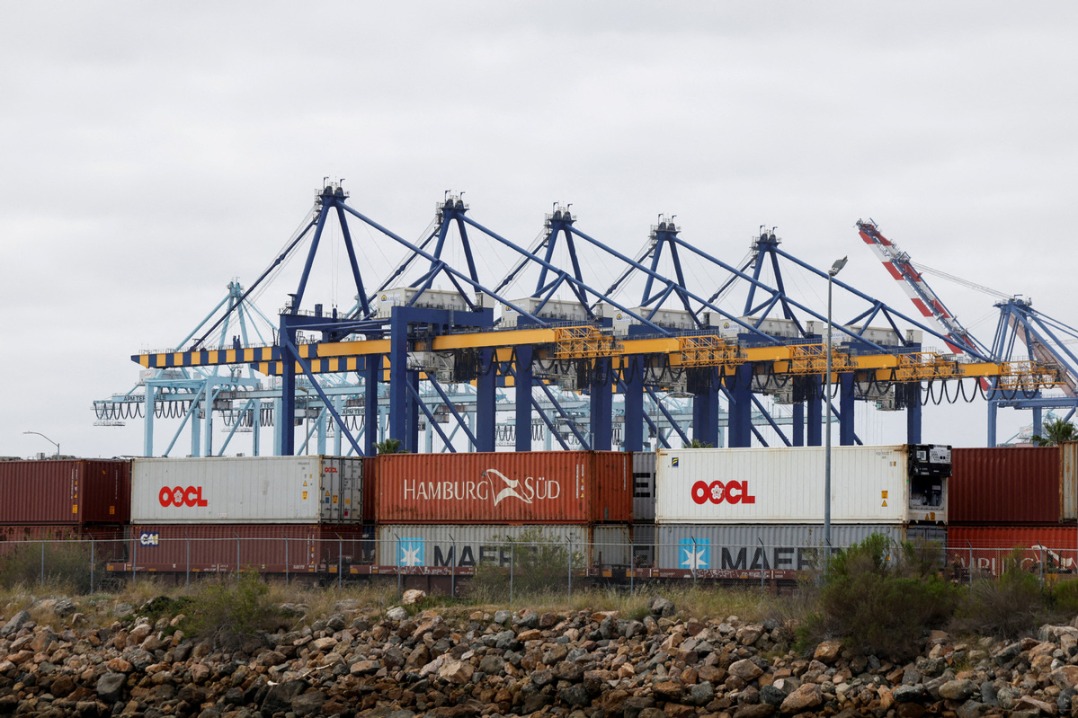
Escalating geopolitical friction in the Middle East, compounded by shifting U.S. trade policies, has injected unprecedented uncertainty into global supply chains, industry leaders and policy analysts warned during a briefing at the Port of Los Angeles Monday. Top shipping executives and international relations experts say the ongoing volatility in diplomatic relations and energy markets is permanently reshaping global trade routes, raising operational costs, and forcing businesses to rewrite long-term investment strategies.
Speaking at the event, Port of Los Angeles Executive Director Gene Seroka outlined the direct impact of strained U.S.-Iran relations and regional instability on one of the world’s most critical maritime chokepoints: the Strait of Hormuz. Before late February, 100 to 110 commercial vessels transited the 21-mile strait daily; today, only a handful of ships have been able to complete the passage, Seroka said. This blockage has sent ripple effects through already fragile global logistics networks that have yet to fully recover from post-pandemic disruptions.
Jerrold Green, a senior fellow at the UCLA Burkle Center for International Relations, criticized the lack of meaningful progress in recent high-stakes U.S.-Iran negotiations. A 21-hour round of talks led by U.S. Vice President JD Vance over the weekend ended without any agreement, a outcome Green says is unsurprising given the lack of good-faith negotiation. “That is really not a negotiation. That’s a reading of terms that were not accepted,” Green said, noting that productive diplomacy requires reciprocal compromise and flexible bargaining—elements that have been entirely absent from the current diplomatic process.
The extended disruption to Middle Eastern shipping lanes has already triggered major shifts in global trade patterns. Traffic through the Suez Canal, another core artery of global maritime commerce connecting Asia to Europe and North America, has dropped sharply as carriers reroute vessels to avoid regional risk. With fuel costs spiking and routing uncertainty growing, more cargo flows are being redirected to U.S. West Coast ports including Los Angeles, disrupting long-standing logistics workflows and creating unexpected congestion at these gateways, Seroka explained.
When asked about the future of the Trans-Pacific Green Shipping Corridors, a 2023 initiative launched to speed up zero-carbon shipping between Asia and North America, Seroka noted that large-scale infrastructure and sustainability transformation operates on far longer timelines than volatile political cycles. “Most of this work that we do here at the port … takes years, and in some cases, decades. It’s never a straight line,” he said. While the Port of Los Angeles remains committed to advancing its decarbonization targets and long-term environmental goals, Seroka acknowledged that shifting trade policies and geopolitical upheaval have drastically altered the trajectory of these efforts. “All of that gets thrown into the soup, and it makes it taste very different than it did before,” he said, adding that rising energy costs and trade uncertainty have made the push for decarbonization far more complex than initially projected.
The economic shockwaves of these supply chain disruptions are already being felt across Southern California, where the Port of Los Angeles serves as an economic anchor for the region. Local diesel prices have surged to between $7 and $8 per gallon, placing extreme financial pressure on the small trucking companies that form the backbone of last-mile port logistics. Beyond logistics, U.S. agricultural exports have also come under strain: soybean shipments from the U.S. to China have declined amid ongoing tariff tensions and evolving global sourcing strategies.
Green, who has decades of on-the-ground experience working across the Middle East including Egypt, Iran, and Israel, warned that the current instability has permanently altered the global trade landscape. “It seems to me that the Middle East and therefore the world has changed permanently, and even if we try and go back to where we were, it simply won’t be possible,” he said. Prolonged regional unrest has already removed thousands of vessel transits from key global shipping lanes, creating massive uncertainty that carries direct economic costs. “There are massive uncertainties,” Green said. “And for me, a massive uncertainty is a potential loss. It’s not a good thing.”
Green described the Port of Los Angeles as a strategic linchpin of California’s economy, which ranks as the fourth largest economy in the world by GDP. Mounting global uncertainty, he emphasized, directly translates to slower regional economic performance. Volatility in energy prices has also created whiplash for consumer and industrial trends, most notably in electric vehicle demand. “Electric cars are out of fashion … back and forth, caroming back and forth. Now they’re back because of the price of petroleum,” he said, noting that these constant shifts impact not just U.S. domestic industries, but consumers in every country across the globe.
Persistent policy and geopolitical uncertainty has also put a damper on business planning across all sectors tied to trade, Seroka added. Hiring at port-related businesses has remained soft for more than 12 months, and while inflation has not spun out of control, it remains above target levels, pushing corporations to adopt a far more cautious approach to capital investment. Even the steady U.S. consumer spending that has propped up economic growth in recent months may not hold, Seroka warned: “The American consumer seems to be so consistent in their buying patterns. At some point, I would think that’s going to tip, too.”
Green echoed these concerns, noting that the unexpected outbreak of conflict in the Middle East underscores the fundamental fragility of long-term economic planning in today’s geopolitical climate. “This war came out of nowhere. Nobody predicted it, nobody expected it, and it was a body blow,” he said. Reiterating the core risk of prolonged uncertainty, he added: “There are massive uncertainties … and massive uncertainty is a potential loss.”