Nearly two months after Iran came under coordinated air strikes from the United States and Israel, the region remains at a dangerous geopolitical crossroads, with a new US naval blockade of Iranian ports threatening to upend a fragile two-week ceasefire and raise the stakes for upcoming diplomatic talks.
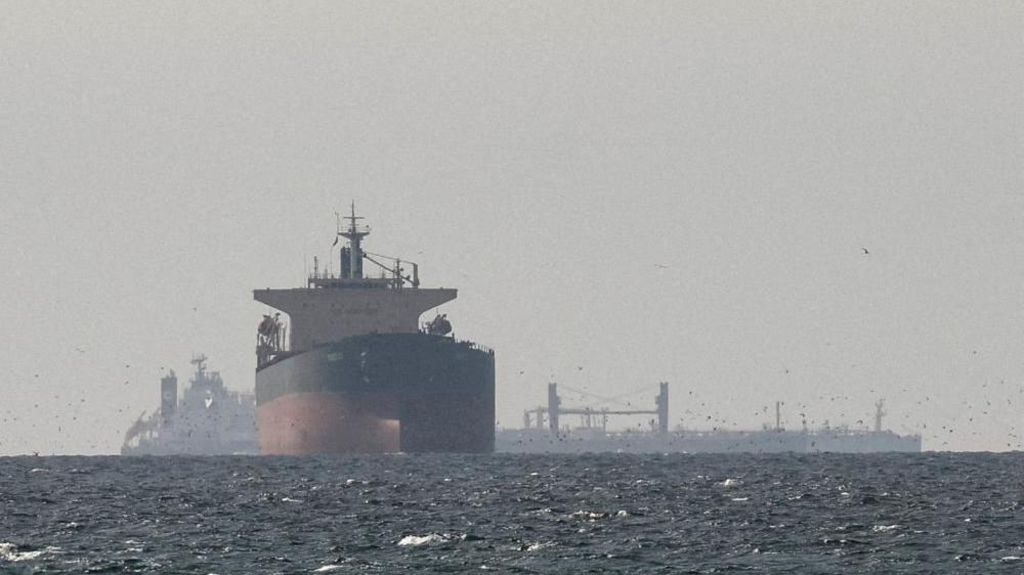
The current crisis traces back to collapsed weekend negotiations hosted in Islamabad, Pakistan, that failed to bridge deep divides between Washington and Tehran, primarily over the future of Iran’s nuclear program. In the wake of the failed talks, US President Donald Trump ordered the full enforcement of a maritime blockade targeting all commercial traffic entering or exiting Iranian coastal areas, a move designed to cut off two of Tehran’s most critical revenue streams: crude oil exports and shipping tolls collected for passage through the Strait of Hormuz. As of Tuesday, more than a dozen US warships and roughly 10,000 American military personnel are deployed to enforce the blockade.
US Central Command, which oversees American military operations across the Middle East and Central Asia, confirmed that in the first 24 hours of the blockade going into effect, six commercial merchant vessels complied with US orders to turn back toward Iranian ports. But independent verification by BBC Verify’s ship-tracking analysis tells a more complicated story: at least seven vessels, four linked directly to Iranian shipping interests and three foreign-flagged ships, successfully crossed the Strait of Hormuz despite the US operational order.
The military escalation has thrown the future of the existing two-week ceasefire, which is scheduled to expire next week, into serious question. Even so, there have been tentative signals from multiple stakeholders that negotiations between the US and Iran could restart as soon as this week. In an interview with the *New York Post*, President Trump suggested that a resumption of talks was likely within 48 hours, noting that US negotiators remain positioned in the region to reconvene. “You should stay there [Islamabad], really, because something could be happening over the next two days, and we’re more inclined to go there,” Trump told the outlet.
United Nations Secretary-General António Guterres has also voiced cautious optimism, saying he considers it “highly probable” that talks will get back on track. Separate anonymous official sources from Gulf states, Pakistan and Iran confirmed to Reuters that both US and Iranian negotiating teams are expected to return to Islamabad later this week, though a firm starting date has not yet been finalized. Tehran has not yet issued an official public response to Trump’s latest remarks on restarting talks.
The core sticking point that derailed the previous round of talks remains Iran’s nuclear program. A senior US official told CBS News, a partner outlet of the BBC, that Washington has demanded a 20-year full suspension of all Iranian uranium enrichment activities. But Tehran has only offered a five-year halt to enrichment, according to sources cited by other US media outlets, leaving a significant gap between the two sides’ opening positions.
The economic fallout of the ongoing standoff has already rippled through global commodity markets. For weeks, the conflict has disrupted global energy supplies, after Iran effectively closed the Strait of Hormuz—one of the world’s most critical chokepoints for global oil and natural gas transportation—shortly after the February air strikes. On Tuesday, however, growing hopes that diplomatic talks would resume calmed volatile oil markets, pushing benchmark crude prices below the $100 per barrel threshold for the first time in recent weeks.
Global powers have already begun weighing in on the US blockade, with starkly differing views. The International Monetary Fund has already warned that the protracted conflict could push the entire global economy into a recession, but US Treasury Secretary Scott Bessent defended the strategy in comments to the BBC, arguing that a “small bit of economic pain” is a reasonable tradeoff for long-term global security. China, a key diplomatic and economic partner of Iran, has taken a far harder line, calling the blockade “dangerous and irresponsible” on Tuesday and warning that it would only inflame regional tensions and irreparably damage the fragile ceasefire agreement.
In a separate, unrelated development in regional diplomacy, Israel and Lebanon announced Tuesday that they will launch the first direct official negotiations between the two nations since 1993, following a day of talks in Washington DC. The talks stem from ongoing cross-border tensions triggered by Israeli air strikes targeting the Iran-backed militant group Hezbollah in southern Lebanon. Both sides described the initial meeting at the US State Department as a positive step: Lebanon’s ambassador to the US called the discussions “productive”, while his Israeli counterpart said the talks open a path to a “new era of peace.” A senior unnamed US official emphasized to the BBC that the Israel-Lebanon negotiations are completely separate from the ongoing US-Iran talks in Pakistan, with no overlapping agenda or linkage.