For hundreds of years, one of the most persistent unanswered questions in human biology has confounded researchers across the globe: why do approximately 90% of people worldwide naturally favor their right hand? This long-elusive puzzle has finally been cracked by a team of Chinese scientists from the Chinese Academy of Sciences (CAS), whose groundbreaking findings were recently published online in the *Journal of Genetics and Genomics*.
To unpack the origins of hand preference, the research team designed a series of controlled animal experiments that challenged existing assumptions about handedness being an innate human trait. Their work led to the proposal of a new framework: the Hypothesis of Acquired Conservation of Right-Hand Preference, which redefines how we understand the development of limb preference.
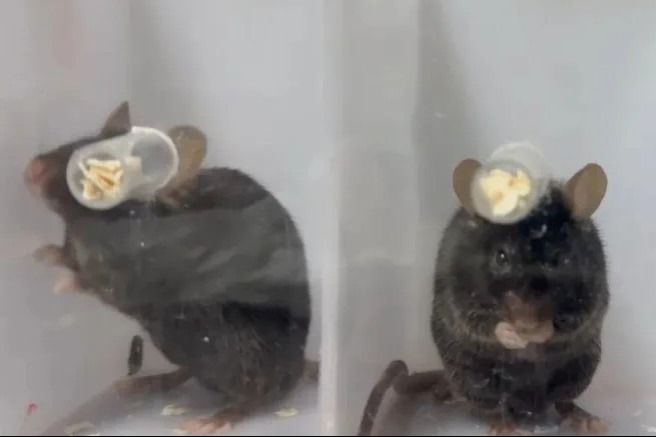
In initial observations, the team confirmed that untrained laboratory mice show no inherent bias toward using one paw over the other when feeding, demonstrating equal usage of both limbs. To test how preference develops, scientists engineered a specialized experimental cage with a food access hole positioned in a way that forced mice to reach for food using only a single designated paw — either the left or the right.
Within just five to seven forced feeding trials, the mice developed a lasting preference for the trained paw. Mice trained to use their right paw retained this “right-pawed” bias for more than a month even after all movement restrictions were lifted, and the same pattern held for mice trained on the left. This experiment provided clear evidence that limb preference can be formed rapidly through repeated practice rather than being present from birth.
A subsequent follow-up experiment uncovered a critical asymmetry that mirrors real-world human handedness distribution. After mice had established a solid paw preference, researchers attempted to force them to switch their habits. What they found was striking: right-paw preferences were far more persistent and resistant to change, while left-paw preferences could be readily redirected to right-paw use.
Even when mice were forced to alternate between paws repeatedly over the course of the experiment, the vast majority ultimately settled into a stable right-paw preference, leaving only a small minority of consistent left-paw users. This outcome almost exactly replicates the 9-to-1 split of right- to left-handedness seen in human populations worldwide.
Drawing on these consistent experimental results, the research team concluded that human handedness is not a genetically predetermined innate trait, but instead is established quickly during early childhood through repeated, consistent use of one hand for daily tasks. “A right-hand preference, once formed, is more stable and easier to sustain than a left-hand one, granting it a cumulative advantage in individual development,” explained Sun Zhongsheng, a lead researcher from the CAS Institute of Zoology. “Reinforced by a right-hand-dominant social environment, where tools, infrastructure, and social norms are built around right-handed use, this cumulative tendency ultimately creates the predominantly ‘right-handed world’ we see today.”
Beyond resolving a centuries-old behavioral mystery, the study opens new avenues of research into broader questions of human brain asymmetry and the plasticity of human behavioral traits, offering a new foundational perspective for future work in developmental biology and neuroscience.