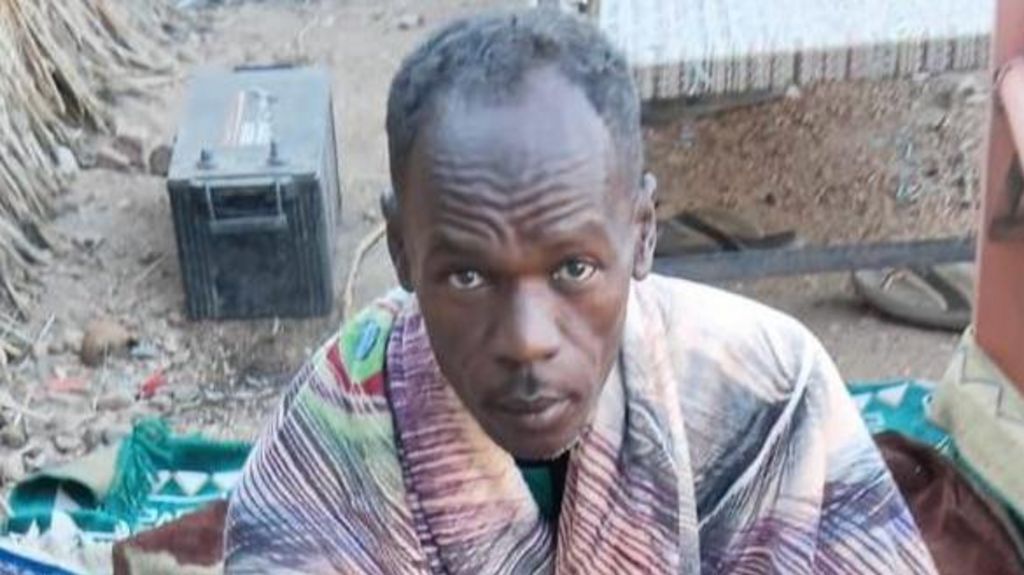
On April 15, 2026, Sudan’s devastating civil war marks the end of its third year and slides into a fourth year of unrelenting violence – a milestone that survivor and journalist-academic Mohamed Suleiman says is a damning indictment of global failure to end the crisis.
Suleiman’s journey to safety in the coastal city of Port Sudan, which he completed in January 2026 after a two-month trek through Chad, ended three years of entrapment in el-Fasher, the capital of Sudan’s western Darfur region. For 18 of those years, el-Fasher was held under a brutal tight siege by the Rapid Support Forces (RSF), the paramilitary group that has been locked in a power struggle with Sudan’s regular army since the war first erupted in Khartoum in April 2023. Cut off from all outside contact by a total communications blackout, Suleiman found himself unable to share the full horror of what he watched unfold on the city’s streets.
It was only when he stepped into a Port Sudan telecom office in January that he reconnected to the digital world, a moment that brought immediate, overwhelming tears. “Throughout the past three years, my phone was silent. After I inserted the SIM card, my tears flowed,” he told the BBC. Three years of unread messages flooded his device, each one a record of staggering loss: updates of colleagues killed in the violence, desperate pleas from friends begging for confirmation he was still alive. He recalled one caller who refused to believe he had survived until they spoke via video call, breaking down in tears when the connection confirmed Suleiman was alive.
For Suleiman, the silence of the blackout was nearly as deadly as the open violence of the war. “It was a suffocating feeling because I was watching systematic killings through drone strikes and bombs or deadly killing through the tight siege” imposed by the RSF, he said. When the RSF finally seized full control of el-Fasher in October 2025, he described the scene as nothing less than “the Day of Judgment on Earth.”
The fall of el-Fasher stands as one of the war’s most brutal chapters. The conflict, sparked by a falling-out between the army and its former ally the RSF, quickly spread from Khartoum across the country, with Darfur emerging as the epicenter of some of the worst violence. As the war enters its fourth year, Sudan has been effectively partitioned into separate territories held by the two warring parties. More than 12 million Sudanese have been displaced, creating the world’s worst active humanitarian crisis, with millions scattered across refugee camps inside the country and across neighboring borders.
Civilians trapped in el-Fasher during the siege endured unthinkable conditions: a UN-backed food monitor officially declared famine in the city as food and water supplies dwindled to nothing. When the RSF advanced to take full control of the city, the chaotic escape attempt that followed left dead children abandoned in streets, and starving women too weak to carry their own children forced to leave them by the roadside. “You cannot do anything. So you step over them, jump over them, cry, and continue walking,” Suleiman recounted.
Countless dead and injured were left abandoned along the road to the nearby safe haven of Tawila, a tragedy Suleiman says could have been mitigated if only trapped residents had been able to call for outside help. He argues the full scale of what unfolded in el-Fasher remains unknown to the global public and even to Sudan’s transitional government, because the communications blackout and danger faced by journalists prevented any accurate, widespread reporting from the city.
Both warring sides have been accused of systematic war crimes, including mass civilian casualties from airstrikes and drone attacks. The RSF has acknowledged that isolated individual violations took place during the takeover of el-Fasher but claims these are under investigation and argues that the scale of atrocities has been exaggerated by its political opponents.
Communications infrastructure in el-Fasher collapsed almost immediately after the war began, damaged by fighting and crippled by fuel shortages that cut power to the entire city. The blackout was solidified once the RSF laid full siege to the city in May 2024. A small number of residents managed to smuggle in Starlink satellite internet devices, but the hardware was prohibitively expensive, restricted by the army when it controlled the city, and immediately confiscated by the RSF if discovered. Journalists who managed to access satellite connections faced deadly accusations of espionage from both sides: the RSF claimed users worked for foreign security agencies, while the army accused journalists of acting as enemy target spotters to direct artillery fire. These risks silenced most attempts to get news out of the city.
Suleiman himself nearly died in the siege: in July 2025, an artillery shell landed less than two meters from him as he walked home. He escaped unharmed, but lay trapped on the ground for half an hour, unable to call for any help even if he had been injured. Drones patrolled the skies constantly, and even turning on a disconnected phone to check the time put users at risk, as the screen light could draw targeted fire. Residents were forced to hide for hours at a time under beds, in trenches, or in makeshift shelters during heavy shelling, sweltering in extreme heat, unable to speak or share their situation with the outside world. “You remain silent, unable to speak. And you cannot convey what you are seeing,” he said.
Amid the daily horror, Suleiman says residents clung to their faith, gathering to read the Quran in between rounds of shelling, moving from room to room to avoid incoming fire. When he finally arrived in Port Sudan, the military-backed government’s de facto headquarters for most of the war, he prostrated himself at the airport and cried, unable to believe he had reached safety.
Even in safety, however, Suleiman has faced new struggles. He lost all his official identification documents during his escape, and navigating Sudan’s bureaucracy to replace them has been a grueling, weeks-long process. He notes that special procedures for war survivors announced by officials have failed to materialize, pointing out that the requirements for witnesses and family verification leave many displaced survivors with no path to restore their identity documents. He is calling on the government to issue free replacement identification to all people fleeing conflict zones.
Now reconnected to the global world, Suleiman says the world has failed Sudan at every turn. He is scathing in his criticism of international bodies and global powers, arguing that ongoing diplomatic efforts to end the war have achieved nothing. US-led diplomatic initiatives have collapsed entirely, while both warring sides continue to receive military backing from competing regional powers that allow the fighting to continue. A September 2025 peace plan drafted by the Quad grouping – the U.S., Saudi Arabia, the United Arab Emirates and Egypt – has stalled completely, and current efforts by U.S. envoy Massad Boulos to negotiate even a limited humanitarian ceasefire have yet to deliver results.
The UN’s 2026 humanitarian appeal for Sudan, which totals $2.87 billion, has only received 16.2% of its required funding to date, leaving aid organizations unable to meet the overwhelming need for food, medical care and shelter across the country. Humanitarian access is also blocked by ongoing fighting and bureaucratic restrictions imposed by both the army and RSF.
Today, Sudan is a fragmented nation, its people scattered across borders and displaced within its own territory. For Suleiman, however, telling the story of what happened to el-Fasher and its people gives him a clear purpose. “There are events that happened that no-one is left to narrate, and the memory remains only with us… until we die, we will convey the truth to correct the situation for the next generation, so they live dignified and honoured in their homeland,” he said.