DUBLIN — Ireland’s sitting government has emerged with a narrow win in a critical confidence vote, but the political fallout from last week’s widespread fuel price protests has left the administration significantly weakened, with two ruling coalition lawmakers abandoning the government mid-vote. The crisis unfolded after widespread public demonstrations over soaring fuel costs led to disruptive blockades at national fuel depots, critical motorway routes, and key infrastructure across Ireland, grinding cross-country travel to a halt and sparking intense public anger at the ruling coalition’s response.
The largest opposition party, Sinn Féin, tabled a no-confidence motion on Tuesday targeting the government over its handling of the protests. In a procedural move common in Irish parliamentary politics, the government introduced its own pro-confidence motion to override the opposition’s challenge, setting the stage for hours of fiery debate inside the Dáil, Ireland’s national parliament.
When the final vote was counted, the government secured a 92-78 majority. The victory was overshadowed, however, by a high-profile rebellion from the Healy-Rae brothers, two TDs (Irish members of parliament) who had previously backed the coalition as part of a post-election confidence and supply agreement. The breakaway cost the government one junior cabinet minister: Kerry TD Michael Healy-Rae resigned his post in the Department of Agriculture immediately after voting against the administration.
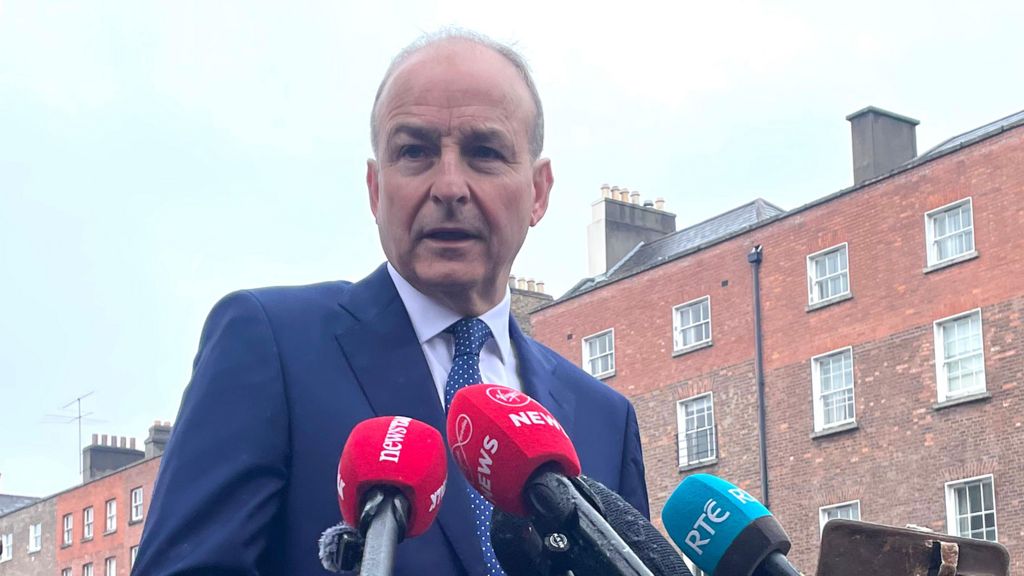
Speaking to reporters outside the Dáil following his resignation, Healy-Rae condemned Taoiseach Micheál Martin’s debate speech as condescending, arguing the ruling government had fundamentally lost touch with Irish voters. “I could not be true to the people of Kerry and stand behind this government,” he said, raising his fist in solidarity with protesters gathered outside the parliamentary chamber during the vote.
The debate itself was marked by bitter partisan clashes, with government and opposition lawmakers trading sharp criticism over the government’s response to the fuel crisis. Addressing the chamber, Taoiseach Martin defended his administration’s track record, noting that since 2022, targeted government measures have shielded Irish consumers from the worst impacts of global fuel price hikes. He pushed back hard against Sinn Féin’s claim that the Irish state is the “biggest profiteer” from elevated fuel costs, calling the assertion “flat out untrue.”
“Right now, the government is spending far more on support for household fuel costs than it is collecting in additional fuel taxes,” Martin said. He also condemned last week’s blockades as inherently destructive, rejecting protesters’ claims to speak for the Irish public. “Nobody has the right to appoint themselves as the voice of the people,” he stated, adding that he condemned threats against gardaí, lorry drivers, and elected officials, warning that “we should all be concerned with the attempts to import extreme ideologies here.”
Deputy Prime Minister Tánaiste Simon Harris doubled down on the government’s defense, noting that Ireland’s response to global economic shocks has outpaced action from other regional administrations, including the devolved government in Northern Ireland. “We entered 2026 with strong relative economic fundamentals, and while growth will be slower than previously projected, the Irish economy is still on track to expand this year,” Harris said, echoing Martin’s rejection of blockades as an illegitimate protest tactic. “Nobody in this Republic gets the right to restrict the movement of anybody else,” he added, as Sinn Féin lawmakers heckled from the opposition benches.
For the opposition, Sinn Féin leader Mary Lou McDonald used the debate to call for an immediate general election, arguing the current government had lost all mandate to rule. “It is your time to go,” McDonald told the coalition. “This crisis did not start last week. The seeds were sown in your Budget last October.” She criticized the government for allowing the Dáil to adjourn for a 20-day Easter recess as fuel prices climbed, arguing Martin was “completely out of touch” with the struggles of ordinary households. “People everywhere are calling for real action and real leadership, and this government has failed to deliver,” she said.
Sinn Féin’s finance spokesperson Pearse Doherty further expanded on the opposition’s criticism, arguing the government had shown “no real leadership” on the growing cost of fuel. “When struggling people took to the streets to protest last week, this government’s instinct was not to listen — it was to threaten them,” Doherty said. Even with the confidence vote win, the rebellion of two sitting coalition lawmakers and the sustained public anger over fuel costs leave Martin’s administration facing a deeply uncertain political future heading into the next general election cycle.