Escalating tensions between the United States and Iran reached a new critical juncture this Tuesday, after Washington announced a full blockade of Iranian ports, Tehran issued sharp threats of retaliation across the Middle East, and Pakistan has ramped up urgent diplomatic outreach to bring the two warring parties back to the negotiating table.
While a fragile ceasefire reached last week has so far held across most frontlines, the escalating standoff centered on the strategic Strait of Hormuz has stoked widespread fears that open hostilities could reignite, worsening the already devastating economic shockwaves the seven-week conflict has sent across the global economy.
The conflict, which erupted on February 28 when the U.S. and Israel launched coordinated strikes against Iranian targets, saw an initial round of peace talks held last weekend fail to reach a breakthrough agreement. Pakistan, which led the first mediation effort, has tabled a proposal to host a second round of negotiations in the coming days. Two Pakistani officials, speaking on condition of anonymity due to restrictions on speaking to media about the sensitive diplomatic process, confirmed the first round of talks was never intended as a one-off attempt, but rather the opening step of a sustained diplomatic push.
U.S. officials confirmed Monday that internal discussions over scheduling a new negotiating round are still ongoing, and a diplomat from a third-party mediating country confirmed that both Tehran and Washington have formally agreed to participate in the next talks. According to two U.S. officials, the most likely target date for the new negotiations is Thursday, though final details on venue, timing, and delegation composition have not been locked in. Both Islamabad and Geneva are currently under consideration as potential host cities. All parties involved have requested anonymity due to the sensitive nature of ongoing private negotiations.
Over its seven weeks, the conflict has already caused massive disruption to global markets and sent shockwaves through the world economy, as key shipping lanes have been cut off and widespread airstrikes have destroyed critical military and civilian infrastructure across the region. The human cost of the fighting has been staggering: at least 3,000 people have been killed in Iran, more than 2,000 in Lebanon, 23 in Israel, over a dozen in Gulf Arab states, and 13 U.S. service members have also lost their lives.
The newly imposed U.S. port blockade is designed to cut off a key source of revenue for Iran, which has exported millions of barrels of oil largely to Asian markets since the conflict began. Most of these exports have moved via so-called “dark transit” operations that evade international sanctions and oversight, generating critical cash flow that keeps the Iranian government functioning.
On Tuesday, the first full day of the blockade, key details remained unclear about how the measure will be enforced and how commercial shipping operators will comply. Tankers approaching the strait on Monday turned around shortly after the blockade took effect, though one vessel reversed course again and successfully transited the waterway early Tuesday. That tanker, the Rich Starry, had been waiting off the coast of the United Arab Emirates, according to shipping data from Lloyd’s List, which drew on tracking information from energy cargo monitoring firm Vortexa. While it was not immediately confirmed if the vessel had previously docked at an Iranian port, the U.S. Treasury’s Office of Foreign Assets Control already lists the Rich Starry as linked to Iranian shipping interests. Lloyd’s List data, pulled from ship registry and tracking records, shows the tanker is owned by a Chinese shipping firm and is ultimately bound for a Chinese port. U.S. Central Command, which oversees American military operations in the region, has not yet responded to requests for comment on the Rich Starry’s passage. A day before the transit, Central Command confirmed the blockade applies to all vessels traveling to and from Iranian ports.
Even before the formal U.S. blockade, the conflict had severely curbed maritime traffic through the Strait of Hormuz, with most commercial ships choosing to avoid the waterway entirely. Iran’s de facto closure of the strait, which normally carries one-fifth of all globally traded oil during peacetime, has already caused global crude oil prices to skyrocket, driving up the cost of gasoline, food, and other essential commodities far beyond the Middle East.
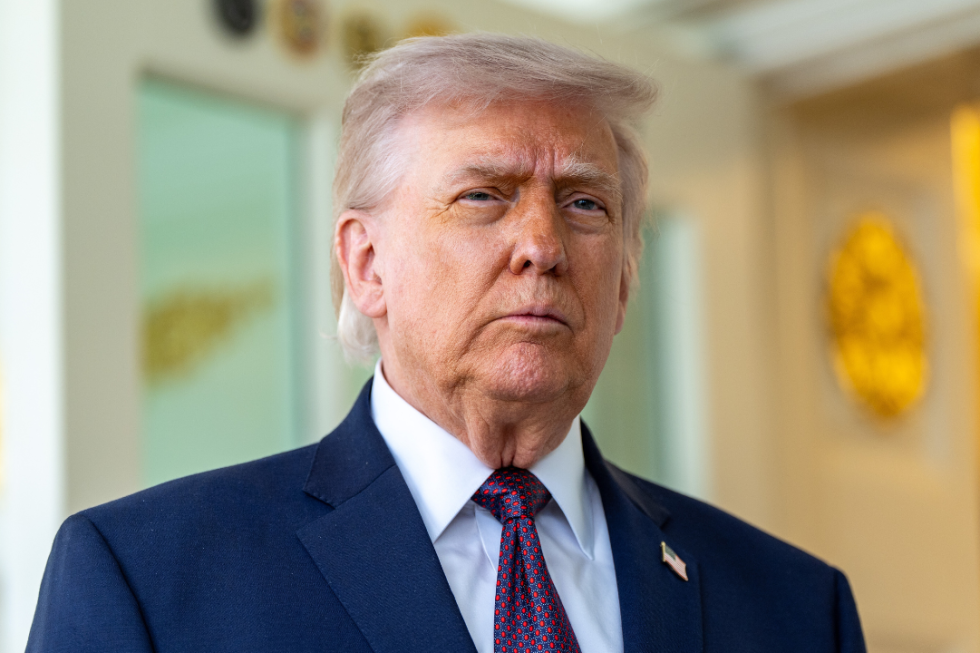
U.S. President Donald Trump framed Iran’s control over the strait as “blackmail and extortion” in comments Monday, as the U.S. blockade went into effect. In a social media post, Trump claimed Iran’s navy had been “completely obliterated” while acknowledging the country still retains fast attack craft. He issued a stark warning: “if any of these ships come anywhere close to our BLOCKADE, they will be immediately ELIMINATED.”
Iran quickly responded with threats of retaliation against ports across the Persian Gulf if the country comes under further attack. “If you fight, we will fight,” Iran’s parliamentary speaker Mohammad Bagher Qalibaf said in a direct statement addressing Trump.
In a separate diplomatic development, France and the United Kingdom announced Tuesday that French President Emmanuel Macron and British Prime Minister Keir Starmer will co-host a conference this Friday for nations willing to deploy warships to escort commercial oil tankers and container ships through the Strait of Hormuz. A spokesperson for Macron said the escort deployment will move forward “when security conditions allow.”
Parallel to the U.S.-Iran negotiations, long-awaited direct talks between Israel and Lebanon are set to get underway Tuesday in Washington, marking the first formal direct negotiations between the two countries in decades.
Israel has continued its air and ground offensive in Lebanon even after last week’s ceasefire deal with Iran, with Israeli officials emphasizing the truce does not apply to operations against Lebanese militant group Hezbollah. Israel has however halted airstrikes on central Beirut since April 8, after a deadly bombardment hit multiple crowded commercial and residential areas in the capital. That attack sparked international condemnation and a threat from Iran that it would exit the ceasefire agreement if strikes on Beirut resumed.
Hezbollah launched daily rocket attacks into northern Israel starting more than a year ago, and Israel dramatically escalated its ground and air offensive in southern Lebanon in the opening days of the broader U.S.-Iran war. According to Lebanese government data, the fighting has left a trail of destruction from border agricultural towns all the way to Beirut, killing more than 2,000 people and displacing over 1 million others.
Tuesday’s opening talks are expected to be preliminary, focused on setting negotiating parameters rather than resolving long-standing core disputes. Lebanese officials have made a full ceasefire their top priority, while Israel has framed the negotiations around demands for Hezbollah’s full disarmament and a potential long-term peace deal, without publicly committing to a permanent halt to hostilities or a full withdrawal of Israeli forces from Lebanese territory.
Israel is demanding that the Lebanese government take formal responsibility for disarming Hezbollah, a framework originally outlined in a 2024 November ceasefire agreement. But the militant group, which has survived decades of international and regional efforts to curb its power, issued a statement Monday confirming it will not be bound by any agreements that emerge from the Washington talks.