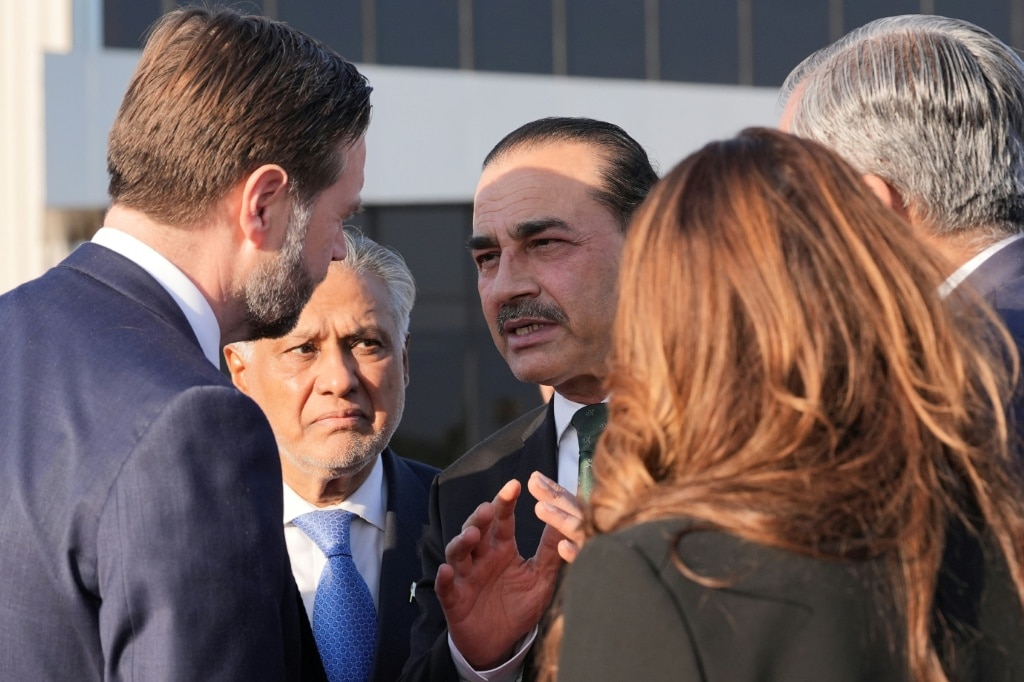
As the United States and Iran edged toward full-scale conflict last week, with a hard deadline set by former US President Donald Trump looming over the region, an unexpected actor stepped forward to de-escalate tensions: Pakistan. In a matter of hours, Pakistani Prime Minister Shehbaz Sharif secured a critical two-week ceasefire between the two adversarial powers, setting the stage for the first round of direct talks hosted in Islamabad. Now, following the conclusion of the initial negotiations, Pakistan is embracing its newfound identity as a reliable regional peace broker, even as work continues to arrange a second round of talks.
This diplomatic breakthrough marks a striking shift in global perceptions of Pakistan. For decades, the South Asian nation has been framed largely through the lens of regional security instability – grappling with domestic armed extremism and separatist movements, while facing longstanding international accusations of backing the Taliban in Afghanistan. Just last year, Pakistan itself was engaged in brief but intense armed conflicts: a high-stakes border clash with India in May, and two separate rounds of hostilities with neighboring Afghanistan, where Islamabad accuses the Taliban-led government of sheltering anti-Pakistan militant groups.
Analysts argue that Pakistan’s firm military responses to those 2024 conflicts laid critical groundwork for its current diplomatic success. “In international politics, the currency is power. When you have demonstrated it operationally, and now you are just building it up diplomatically,” explained Raja Qaiser Ahmed, an international relations professor at Islamabad’s Quaid-i-Azam University. Michael Kugelman, senior South Asia fellow at the Atlantic Council, echoed that assessment, noting Pakistan is keen to build on the momentum of its new role as a critical mediator.
Kugelman also highlighted Pakistan’s trailblazing strategic autonomy, calling it an “unsung success story” in this regard. For Pakistani leadership, the diplomatic push is as much about rebranding the nation’s global image as it is about securing regional peace. “Pakistan is looking to change global perceptions about its capacities as a global player,” Kugelman told AFP. “It does not like the fact that it has a poor global image and wants to essentially push back against its critics and show that it has the capacity to affect change and be influential on the global stage.”
Pakistan’s unique geopolitical position makes it an ideal neutral broker for the US-Iran conflict. From the outbreak of hostilities between Washington and Tehran, Islamabad intentionally avoided aligning with either side, a calculated choice that preserved its ability to mediate. Ties between Pakistan and the US have warmed considerably during the Trump administration, after Islamabad credited Trump with helping mediate an end to its 2024 border conflict with India – a claim New Delhi has repeatedly denied. A high-profile visit to Washington by Sharif and Pakistan’s powerful army chief Asim Munir followed the ceasefire, with Trump now openly referring to Munir as his “favourite field marshal.”
At the same time, Pakistan maintains deep, longstanding ties with Iran: it shares a 900-kilometer porous border with the country, and the two nations share extensive cultural and trade links, despite occasional diplomatic frictions. Pakistan also enjoys close diplomatic and economic ties with China, a key ally of Iran that both diplomats and Trump have credited with helping persuade Tehran to join negotiations. Additionally, Islamabad holds strong partnerships with Gulf nations including Saudi Arabia – with whom it has a mutual defense pact – many of which have been drawn into the conflict by Iranian retaliatory strikes.
After 21 hours of marathon negotiations in Islamabad, US Vice President JD Vance took the podium Sunday to announce no final deal had been reached. Even so, he was quick to praise Pakistan’s hosting and mediation efforts, thanking Sharif and Munir by name: “They did an amazing job and really tried to help us and the Iranians bridge the gap and get to a deal.” Iran’s top negotiator Mohammad Bagher Ghalibaf offered similar gratitude to Pakistani officials. Asif Durrani, former Pakistani ambassador to Tehran, noted that the first round of talks had already cemented Pakistan’s status as a consequential regional power, regardless of the final outcome. “I think Pakistan is a power to be reckoned, and very much Pakistan is a player,” Durrani said. “Its geography is so unique that it cannot be ignored.”
As of Monday, Sharif confirmed that diplomatic efforts are ongoing to organize a second round of negotiations. Vance, however, has struck a harder line, telling Fox News that while further talks are not off the table, Washington retains “no flexibility” on its demands regarding Iran’s nuclear program. Even if negotiations collapse and hostilities resume, analysts say Pakistan will still walk away with tangible diplomatic gains. Kugelman argues that Pakistan faces no reputational risk from a failed deal, and has already secured a significant boost to its global standing. “If anything, it’s enjoyed reputational boost because it’s been able to push back against criticism that it doesn’t have the capacity to pull off this type of diplomacy,” he said. “It’s also strengthened its image. It’s been able to project itself as a peacemaker.”