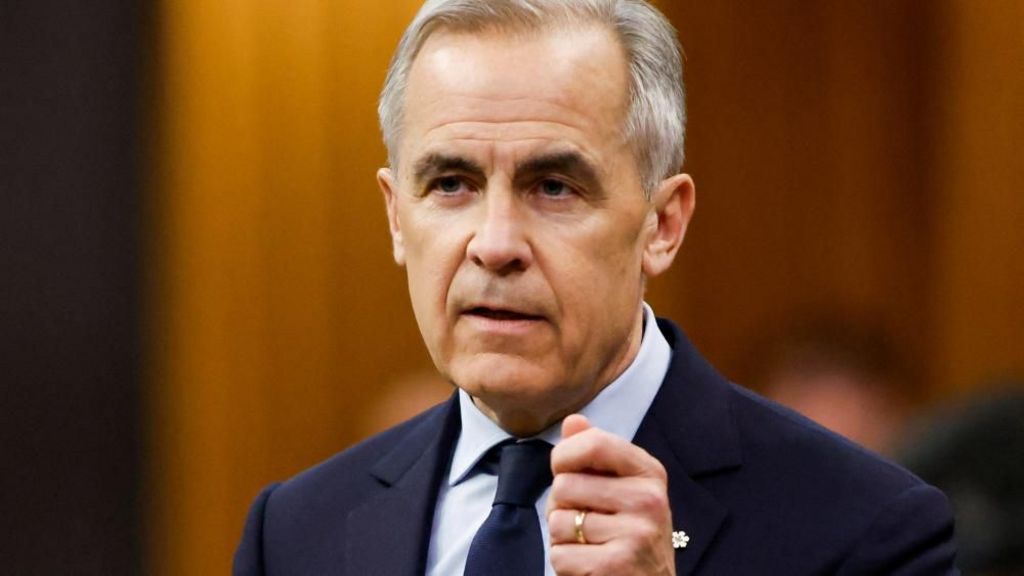
One year after Mark Carney took office as Canada’s Prime Minister, his Liberal Party has locked in a narrow majority in the House of Commons, cementing its hold on federal power following projected by-election wins in two critical ridings on Monday.
Major Canadian news outlets including CBC, CTV and The Globe and Mail project the Liberals will claim victory in two Greater Toronto Area constituencies: Scarborough Southwest and University-Rosedale. Both seats were left vacant in recent months after two senior former Liberal politicians stepped down to take new roles: ex-Defence Minister Bill Blair was appointed Canada’s ambassador to the United Kingdom, and former Deputy Prime Minister Chrystia Freeland (who served under previous Prime Minister Justin Trudeau) took a position as an advisor to the Ukrainian government.
As of 22:30 local time Monday, results for the third by-election held in the Quebec riding of Terrebonne remained too close to call. With roughly 30% of ballots counted, Liberal candidate Tatiana Auguste held a thin lead over Bloc Quebecois contender Nathalie Sinclair-Desgagné. This race is a rerun of a previous election where Auguste won by a single vote, before the Supreme Court of Canada nullified the result earlier this year over a clerical error affecting a mail-in ballot.
Monday’s projected wins, combined with five recent cross-floor defections from opposition lawmakers to the Liberals, push the party to 173 of the 343 total seats in the House of Commons. This narrow majority gives Carney far greater flexibility to advance his policy agenda, allowing his government to pass legislation without securing support from opposition parties and enabling him to delay the next federal election until 2029.
This parliamentary majority marks a dramatic reversal of fortune for the Liberals. Just over a year ago, the party was widely projected to lose the general federal election, when former long-time leader Justin Trudeau stepped down in January after nearly a decade in power. Trudeau’s resignation cleared the path for Carney to win the party leadership contest, and he went on to lead the Liberals to a minority government victory in April 2024. A surge in public support for the Liberals at the time was largely driven by widespread pushback against aggressive trade and policy rhetoric from U.S. President Donald Trump.
This is an unprecedented shift in Canadian federal politics: it marks the first time a governing party has secured a parliamentary majority through a combination of by-election gains and opposition defections, rather than a general election win. The last full Liberal majority government was formed by Trudeau after his landslide 2015 general election victory, though his government was later reduced to a minority in subsequent elections.
In the five months leading up to Monday’s by-elections, Carney had already strengthened his parliamentary caucus with five opposition defectors: four sitting Conservative members of Parliament and one from the left-wing New Democratic Party. Canadian media has also reported in recent days that the Liberals are actively courting several additional opposition MPs to cross the floor to the governing party.
Conservative Party leader Pierre Poilievre issued a sharp rebuke of the Liberal majority win in a post on X Monday night. He argued that the majority was not earned through a general election or Monday’s by-elections, but through backroom deals with politicians who betrayed the constituents that elected them. Poilievre added that the Liberals expect Canadians to stay complacent and allow Carney to consolidate unaccountable total power, but that his party would continue to fight, saying “our country and its people are worth fighting for.”