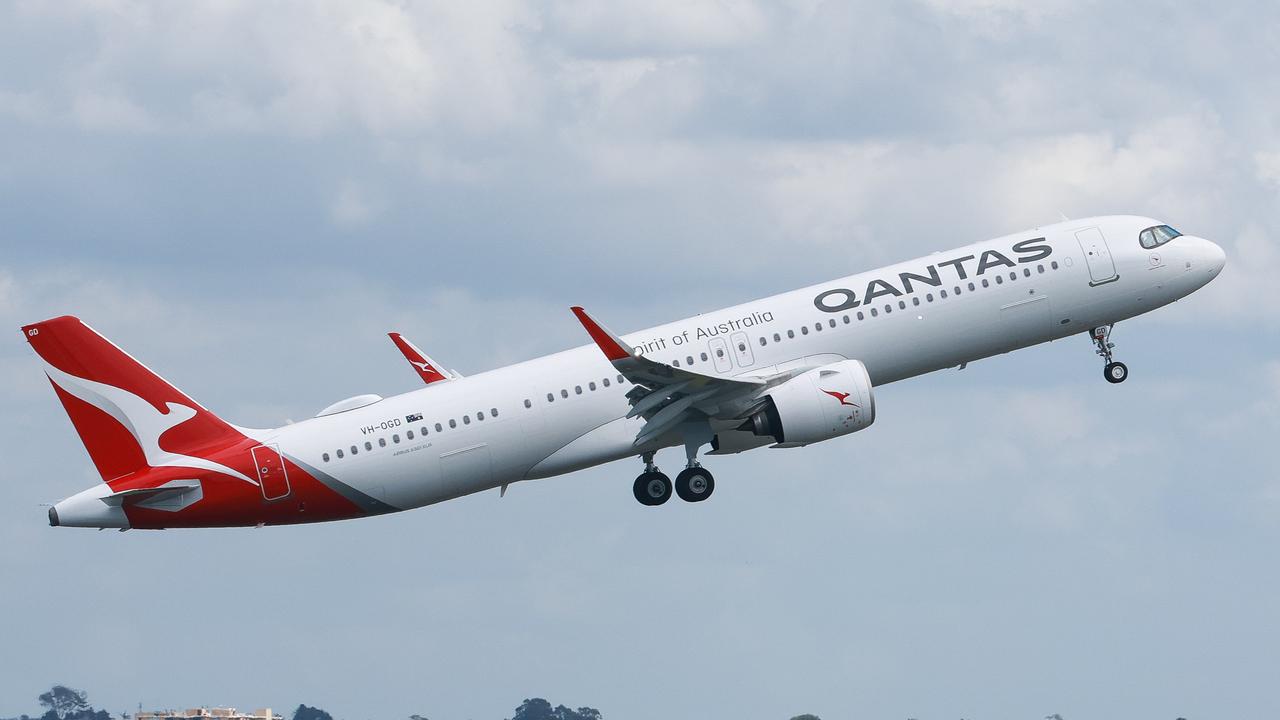
The ongoing geopolitical turbulence stemming from the Middle East conflict has sent global oil markets into a state of extreme volatility, triggering cascading disruptions for Australia’s aviation industry and leaving leisure and business travellers facing steeper costs and fewer travel options. Australia’s flag carrier Qantas Airways has become the first major airline to roll out sweeping operational adjustments to offset the unexpected surge in jet fuel expenses, announcing deep cuts to domestic flight capacity, targeted changes to its international route network, and immediate passenger fare increases.
Before the outbreak of the latest hostilities in the Middle East, global benchmark crude traded at roughly $56 per barrel, equivalent to around 80 Australian dollars. In just weeks of escalating tensions, that price has jumped to trade near the $100 per barrel mark, or 143 Australian dollars. Most dramatically, Qantas reports that jet fuel refinery margins have exploded from an already elevated $20 per barrel ($28 AUD) to as high as $120 per barrel ($169 AUD). Looking ahead to the June quarter, the airline now projects that unhedged jet fuel prices will sit between 185 and 200 Australian dollars per barrel.
The revised fuel cost projection for the second half of Qantas’ current financial year now lands between $3.1 billion and $3.3 billion, representing a $600 million to $800 million increase from the company’s earlier guidance. In an official media statement, Qantas noted that its leadership team continues to closely monitor the fast-evolving geopolitical and market environment, maintaining flexible contingency plans to implement additional cost mitigation measures if oil prices continue their upward trend.
To balance its budgets amid the price shock, Qantas is cutting domestic flight capacity by 5% and reshuffling its international network. The airline confirmed it is reallocating aircraft and crew capacity pulled from U.S. routes and the shrunken domestic network to boost flight frequencies to Paris and Rome, where it has recorded sustained strong demand from international travellers. Despite the capacity cuts, Qantas emphasized that overall travel demand remains robust across its network, and projects that revenue per available seat kilometre will double from prior period levels.
Passengers booked on affected Qantas and Jetstar (Qantas’ low-cost subsidiary) flights will be contacted directly by the airline, with options to rebook onto alternative services or claim a full refund for unused tickets. On the supply front, Qantas says it is coordinating closely with federal government regulators and its network of jet fuel suppliers, who have guaranteed consistent fuel availability through the rest of April and well into May. Even so, the airline cautioned that ongoing uncertainty surrounding global energy supply chains means the situation remains fluid.
In additional financial adjustments released alongside the operational changes, Qantas announced that it will cap its total capital expenditure for the 2026 financial year at or below $4.1 billion, which falls at the lower end of its previously released guidance range. The airline confirmed that its previously announced $300 million interim dividend, equal to 19.8 cents per share, will still be distributed to shareholders on April 15, as scheduled. However, the company has scrapped a planned $150 million share buyback program to preserve cash amid heightened market uncertainty.