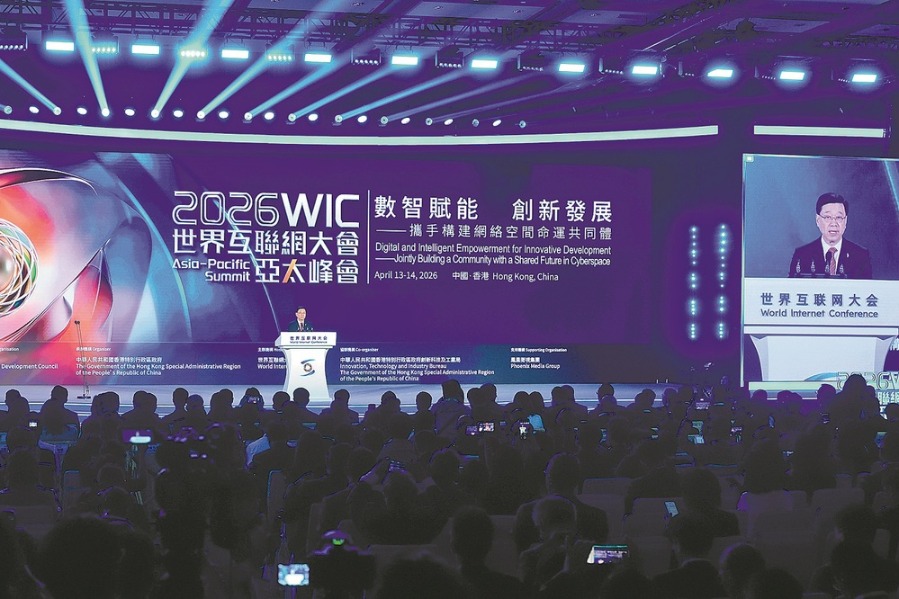
As artificial intelligence continues to transform global industries and deepen existing digital gaps between developed and developing regions, Hong Kong is emerging as a critical linchpin to drive collaborative AI advancement across the Asia-Pacific and advance more equitable, inclusive digital growth, according to senior policymakers and industry leaders gathered at the World Internet Conference Asia-Pacific Summit. The high-level event kicked off Monday at the Hong Kong Convention and Exhibition Centre, bringing together global stakeholders to chart a cooperative path forward for responsible AI development.
Zhuang Rongwen, director of the Cyberspace Administration of China and chairman of the World Internet Conference, highlighted that the Hong Kong Special Administrative Region (HKSAR) holds unparalleled advantages for advancing cross-border digital exchange and partnership. Built on Hong Kong’s longstanding status as a global hub for shipping, international trade and finance, its unique position as a strategic gateway connecting mainland China with the global economy creates natural synergies for AI collaboration that no other regional center can match.
“Across the Asia-Pacific, nations and regions have universally embraced digital transformation as a core strategy to unlock new growth opportunities and strengthen their global competitive edge,” Zhuang noted, adding that the fast-expanding digital economy has become one of the most dynamic bright spots driving regional integration and cooperation. “China remains fully committed to sharing the opportunities created by its own digital development with countries around the world,” he said.
Hong Kong Chief Executive John Lee Ka-chiu emphasized that hosting the WIC Asia-Pacific Summit underscores the city’s growing global reputation as an international innovation and technology hub, while strengthening the city’s deep integration into national development strategies.
Lee shared that the Hong Kong Park of the Hetao Shenzhen-Hong Kong Science and Technology Innovation Cooperation Zone, which opened to the public last December, has already drawn more than 70 tenants specializing in high-growth sectors including artificial intelligence and data science. Spanning 0.87 square kilometers on the Hong Kong side and 3.02 square kilometers in Shenzhen, the cross-boundary cooperation zone is pioneering new frameworks to enable seamless movement of research materials and other critical innovation resources across the Hong Kong-mainland border, unlocking new potential for collaborative AI research and development.
Artificial intelligence sits at the core of Hong Kong’s broader innovation and technology development strategy, Lee noted, pointing to the city’s third-place global ranking in the Global AI Competitiveness Index, behind only New York and London. Even as the city leverages its competitive advantages in AI, Lee cautioned that the transformative power of the technology must be balanced by a commitment to responsible, inclusive deployment. “Technology is ultimately a tool, and it can only deliver maximum public benefit when rooted in a spirit of cross-border cooperation and shared creativity,” he said.
John Hoffman, CEO of GSMA Ltd, echoed this perspective, stressing that the future trajectory of AI will not be shaped by a single organization, industry, region or individual. Cross-border collaboration, he argued, is the most effective path to closing the persistent digital and economic divides that threaten to leave vulnerable communities behind in the AI transition. Hoffman added that China, including the HKSAR, holds a unique position to take a global leadership role in AI development, and its decades of experience driving innovative digital growth can serve as a model for nations around the world.
Sun Dong, Secretary for Innovation, Technology and Industry of the HKSAR, observed that AI is entering an unprecedented new frontier driven by the rapid rise of autonomous AI agents, and the Hong Kong government is closely tracking the technology’s rapid evolution. While AI agents hold great promise for expanding AI applications across every major industry, Sun noted that they also introduce new, untested security risks that require proactive governance. “The Hong Kong SAR government’s approach to AI development and regulation is clear: innovation and progress must go hand in hand with thoughtful, risk-based regulation,” he said.
Samuel Migal, Minister of Investments, Regional Development and Informatization of Slovakia, echoed the call for coordinated global governance, noting that as digital and AI technology advances at breakneck speed, the shared global challenge is building fit-for-purpose new governance frameworks to guide development. While Migal acknowledged that different countries and regions will naturally adopt tailored regulatory models that match their own needs, he stressed that regulatory fragmentation cannot be the end result of global AI governance.
The summit has positioned Hong Kong to capitalize on its unique geographic, economic and technological advantages to bring together diverse AI stakeholders from across the Asia-Pacific and beyond, laying the groundwork for more inclusive, responsible AI growth that benefits all regions.