KUALA LUMPUR, Malaysia — A 39-year-old Vietnamese national entered a guilty plea in a Malaysian court on Friday to charges of unlicensed possession of protected wildlife components, according to his defense counsel.
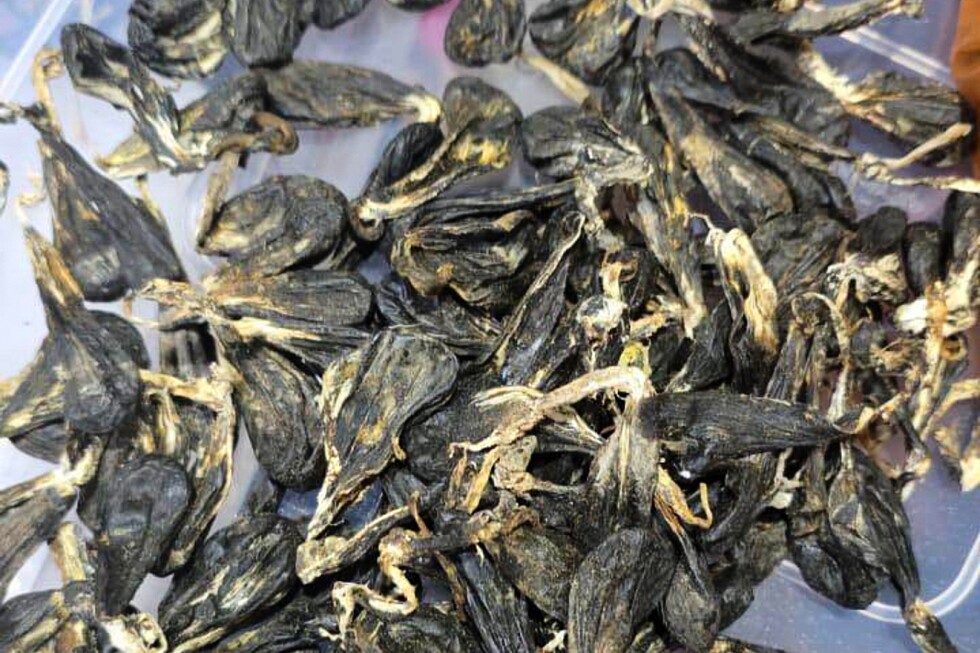
Hoang Van Thai faces criminal charges linked to a large-scale seizure of contraband carried out early this April, where authorities recovered 1,022 python gallbladders and 195 python tongue sections taken from the reticulated python, a species listed as protected under Malaysian conservation law. The contraband was uncovered during a April 4 raid on a private property in Johor, a southern Malaysian state bordering Singapore.
The haul of wildlife parts found in the operation totaled an estimated 37 million Malaysian ringgit, equal to roughly $9.3 million. Beyond the python parts that form the basis of Hoang’s charges, the seizure also included bear bile, suspected tiger body parts, primate remains, and animal reproductive organs that investigators have linked to transnational illegal wildlife trafficking networks. To date, authorities have not publicly explained why Hoang faces charges only for the python components, despite the broader range of contraband recovered at the site.
Reticulated python parts are highly sought after on black markets, driven by persistent traditional beliefs: python bile stored in gallbladders is falsely attributed with unproven medicinal benefits, while python tongues are sold for use in traditional cultural rituals or marketed incorrectly as an aphrodisiac.
Hoang’s defense attorney, Mohamad Fazaly Ali Mohamad Ghazaly, confirmed to reporters that his legal team has challenged the valuation of the contraband provided by Malaysia’s Department of Wildlife and National Parks, arguing that the agency failed to provide official supporting documentation for the $9.3 million estimated value. He also told the court that Hoang had entered Malaysia last November, was working locally as a driver, and that his two children were enrolled in schools in the country.
Sentencing in the case has been scheduled for a later date. Hoang faces a maximum penalty of three years imprisonment, a fine, or both penalties if convicted. The court scheduled a April 20 hearing to review Hoang’s immigration status before ruling on a bail application. Prosecutors have formally opposed granting bail, arguing that the massive volume of contraband recovered points to Hoang’s involvement in a coordinated organized criminal operation.
Vincent Chow, senior advisor for the Johor branch of the Malaysian Nature Society, told local English-language outlet *The Star* that the circumstances of the case suggest Hoang was likely operating as a storage agent for a much larger international trafficking syndicate.
“Most of the wildlife parts seized had already been processed, and some were even packed for shipment, likely waiting to be moved out to either local black markets or international buyers,” Chow explained.
Malaysia has long been identified as a critical hub for the global illegal wildlife trade, functioning both as a source country for native endangered species and as a key transit point for contraband moving between Southeast Asian suppliers and consumer markets across East Asia and beyond. Criminal networks exploit the country’s porous borders and logistics infrastructure to move protected animal parts, fueled by persistent unregulated demand for exotic wildlife products.