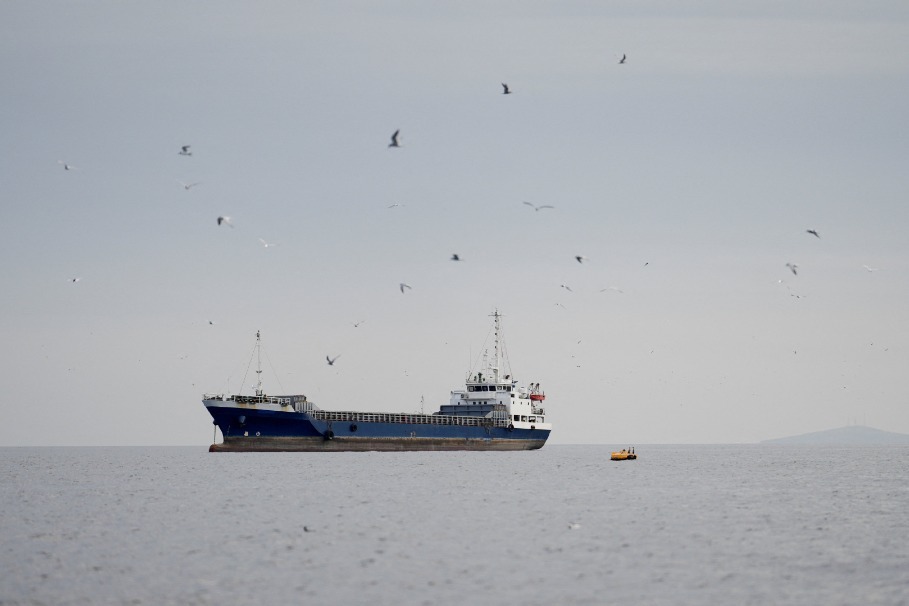
Tensions have flared again in the strategically critical Strait of Hormuz just days after a fragile ceasefire between Iran and the United States went into effect, with Iran’s Islamic Revolution Guard Corps (IRGC) Navy issuing a stark public warning that any miscalculated move by hostile forces in the waterway will be met with deadly consequences.
The warning was published Saturday on the social media platform X, where the IRGC Navy also shared drone-collected surveillance footage purporting to show the full operational landscape of the strait. The branch emphasized that every movement—whether active or stationary—of foreign vessels within the strategic waterway is under constant, full surveillance by Iran’s armed forces. “Any erroneous maneuver will trap the enemy in deadly whirlpools in the strait,” the post read.
The escalation of rhetoric follows conflicting accounts of a U.S. naval operation in the region one day prior. U.S. Central Command (CENTCOM) announced Saturday that two American warships had completed a transit through the Strait of Hormuz and launched mine-clearing operations in the Persian Gulf. Iran’s top military body, Khatam al-Anbiya Central Headquarters, immediately pushed back against the claim, issuing a strong denial that any American vessels had entered the strait’s territorial waters.
In an exclusive Sunday report, Iran’s state-owned Press TV framed the U.S. military’s attempted deployment of the two destroyers—identified as the USS Michael Murphy and USS Frank E. Peterson—as a botched propaganda exercise timed to coincide with newly resumed Tehran-Washington negotiations in Islamabad. Press TV reported that Iranian naval forces forced the two American destroyers to retreat before they could reach the strait.
Expanding on its stance Sunday, the IRGC released an official statement clarifying that any foreign military vessel seeking to approach the Strait of Hormuz under any pretext will be classified as a violation of the ongoing ceasefire and will face harsh, decisive retaliation.
The current standoff comes against a backdrop of sharply escalated regional conflict that began in late February 2026, when Israel and the United States launched joint airstrikes targeting Tehran and multiple other Iranian cities. The strikes killed Iran’s then-Supreme Leader Ali Khamenei, alongside a number of senior Iranian military commanders and civilian bystanders. In response, Iran launched a massive retaliatory campaign of missile and drone attacks targeting both Israel and U.S. military assets across the Middle East, and moved to tighten its control over the Strait of Hormuz by banning passage for all vessels owned or affiliated with Israel and the United States.
A two-week ceasefire between Iran and the United States entered into force on Wednesday, paving the way for extended bilateral negotiations between the two delegations in the Pakistani capital. As of Sunday, those talks had not resulted in any breakthrough agreement, leaving the fragile truce at growing risk of collapse amid the latest naval dispute.