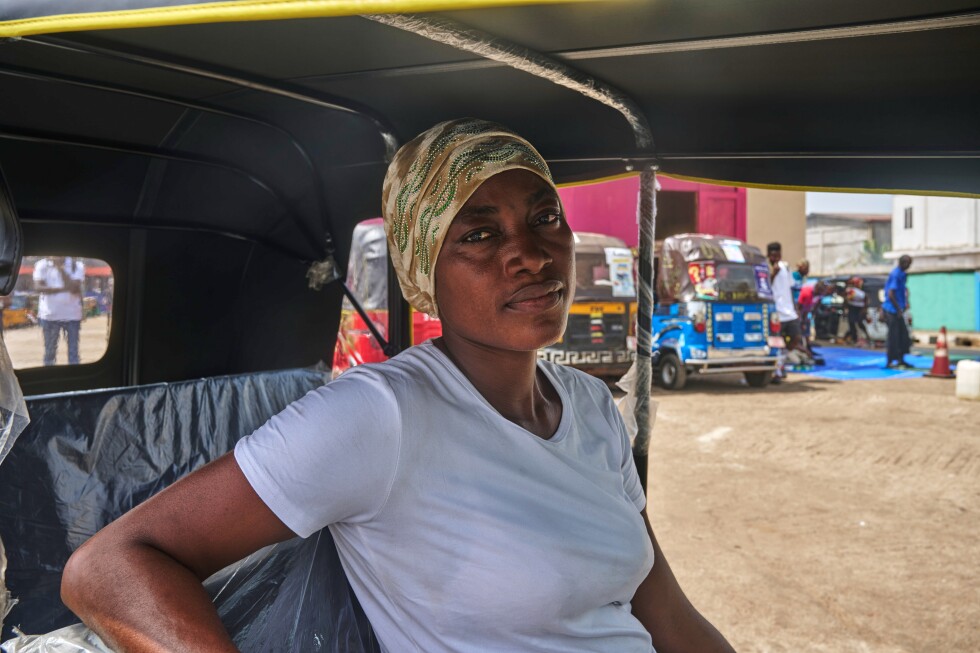
On a late afternoon in Freetown, Sierra Leone’s bustling capital, 27-year-old single mother Hawa Mansaray pulls her motorized three-wheeled auto-rickshaw—locally called a kekeh—into the main transit park, stepping away for a short break and a moment of prayer. Mansaray is part of a small but steadily growing cohort of women entering a sector long dominated exclusively by men: Sierra Leone’s commercial transport industry.
Decades after Sierra Leone’s devastating 1991–2002 civil war, the West African nation continues to grapple with rebuilding core infrastructure, and its public transport system has been stretched to breaking point. Freetown’s current population has swelled to more than 1.5 million, roughly three times the size the city’s original infrastructure was designed to accommodate. This gap has created surging demand for flexible, accessible private transport options, pushing motorcycles and kekehs to the forefront of urban mobility. Even though these rickshaws are often rickety, operate at low speeds, and carry higher safety risks due to their open-air design, commuters favor them for their widespread availability, ample ventilation, and comparative comfort for short trips across the city.
For many women in Sierra Leone, this growing demand has opened an unexpected path out of systemic economic disenfranchisement. The country ranks among the lowest in Africa for access to formal financial services, leaving women and rural communities particularly vulnerable to economic shocks. Deeply entrenched patriarchal norms have long confined most women to low-stability petty trading that keeps them financially dependent on male partners, where income control translates to full decision-making power for men, according to women’s rights advocates.
Marfoh Mariama Samai, a women’s rights advocate with Plan International Sierra Leone, explains that deep-seated cultural biases still frame women as unfit for many types of manual or commercial work. “When a young woman ventures into a certain type of job, they are stigmatized,” she says. But for women who have broken into the kekeh driving trade, the stigma has been outweighed by the promise of stable, independent income.
Mansaray knows firsthand the costs of financial dependence. Born in Kailahun District at the height of the civil war, she was forced to drop out of primary school amid the conflict. After separating from her husband, she cycled through a series of small informal businesses to support herself and her child, none of which provided the stability kekeh driving has. She initially never planned to become a driver, but after seeing other women succeed in the trade, she paid for training and earned her spot behind the wheel. Today, she works for a local company that requires a 350 leone ($14 USD) daily return, leaving her with an average daily wage of 175 leones ($7 USD)—enough to support her family and well above the typical income for most working people in the country. “I have done different jobs since I came to Freetown but kekeh has done more for me,” Mansaray says. “I will advise my fellow women who aren’t employed to come into the game.”
Alimatu Kamara, another female kekeh driver, shares Mansaray’s experience. Unemployed for years before entering the sector, she says the work has been life-changing, though challenges remain: most female drivers report frequent harassment from aggressive male colleagues, and many express ongoing safety concerns about working night shifts. “Some women can panic,” Kamara notes. “It takes mind and determination to continue.” Even so, she is already planning to expand her business by purchasing additional kekehs. “We can’t just sit, waiting for office jobs. With jobs like kekeh, you can even make more money,” she says.
Union leaders in Freetown say while the number of women in the sector is still small, the growth is promising. The Sierra Leone Kekeh Riders Union counts more than 1,000 registered members in western Freetown, and only around 20 are women—but that number is steadily climbing. District chairman Mustapha Thoronka is a vocal supporter of expanding access for women, backing training programs and advocating for microloans to help cover the upfront cost of vehicles, which remains a major barrier for women with limited access to capital. “Whatever men can do, women can do better,” Thoronka says, adding that he hopes the sector will help more women support themselves and their families without relying on male income. He is now urging the Sierra Leonean government to step in with targeted support to make it easier for more women to enter the trade, noting the high upfront capital required puts it out of reach for many.
Many commuters also favor female drivers, saying they bring a more careful approach to navigating Freetown’s crowded streets. Mariama Barrie, a regular commuter, says the growing presence of women in the sector sends a powerful message to women who rely on outside support. For Barrie, it is a call to action: “If you know how to ride, take kekeh … rather than sitting and waiting for handouts.” What began as a solution to Freetown’s broken public transport system has become a quiet movement, challenging gender norms and opening a new door to economic freedom for women in one of West Africa’s poorest nations.