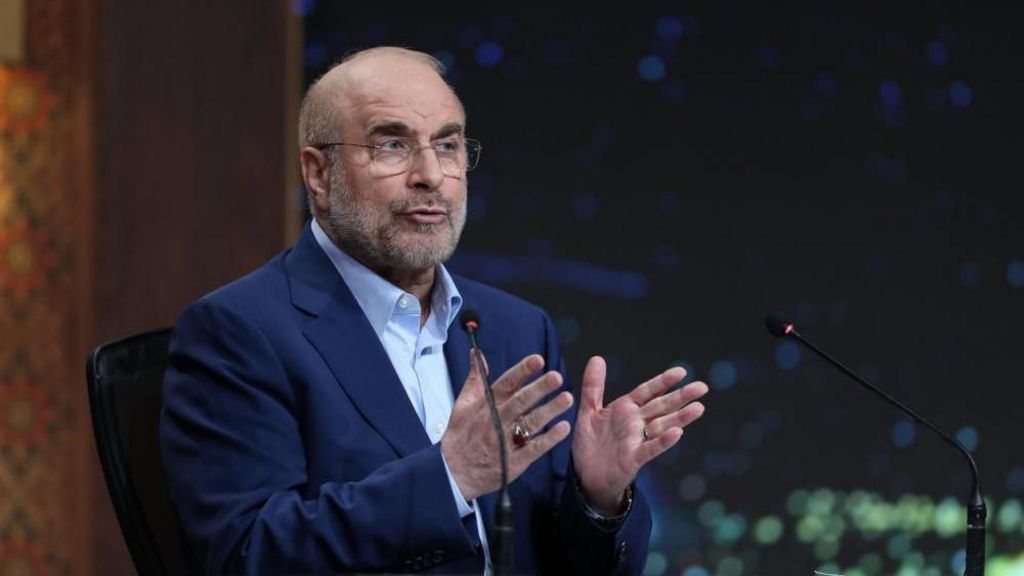
Forty-seven years after the 1979 Islamic Revolution severed what was once a robust strategic partnership between the United States and Iran, a potential groundbreaking moment is approaching in Islamabad this weekend. If US Vice President JD Vance and Iranian Parliamentary Speaker Mohammad Bagher Ghalibaf meet face-to-face as planned, it will mark the highest-level direct diplomatic encounter between the two nations since relations collapsed in 1979.
Even if the encounter lacks ceremonial warmth—with no handshakes or public smiles expected—the meeting will carry profound symbolic and strategic weight. It sends a clear signal that both sides are ready to pursue diplomatic efforts to end a regional war that has sent shockwaves through global markets and security frameworks, and avoid a dangerous escalation that could draw in major global powers.
This opening of high-level dialogue comes eight years after then-President Donald Trump withdrew the US from the 2015 Joint Comprehensive Plan of Action (JCPOA), the landmark nuclear agreement reached between Iran and world powers during the Obama administration, which Trump dismissed as the “worst deal in history.” That 2015 deal, negotiated over 18 months of on-again-off-again talks between then-US Secretary of State John Kerry and Iranian Foreign Minister Mohammad Javad Zarif, capped years of diplomatic effort to limit Iran’s nuclear program in exchange for sanctions relief. Since Trump’s 2018 withdrawal, nearly a decade of follow-up efforts, including during the Biden administration, have failed to produce meaningful progress.
Current talks come amid a fragile two-week ceasefire between US-aligned forces and Iran, a truce that has been contested and violated almost from the moment it was announced. Even in the final hours ahead of the Islamabad meeting, Iran left global observers guessing about its participation, as Israel refused to extend the ceasefire to its front in Lebanon. President Trump has predicted a full “peace deal” could be reached within the ceasefire window, but experts and insiders overwhelmingly dismiss that timeline as unrealistic.
Iran pushed explicitly for a meeting with Vice President Vance, rejecting the US’ initial negotiating team of special envoy Steve Witkoff, a former real estate developer, and Jared Kushner, Trump’s son-in-law and lead Middle East negotiator during his first term, who helped broker the Abraham Accords between Israel and several Arab states. Iran views both men as far too close to Israel, and sees Vance—an established skeptic of the current military campaign within Trump’s inner circle—as a more credible, authoritative interlocutor with formal standing in the US government.
Even with the upgrade in diplomatic representation, major barriers remain. Iran has insisted that most negotiations proceed indirectly through Oman, its long-trusted regional mediator, a framework that limited progress during earlier talks in Geneva earlier this year. Direct exchanges that did occur in Geneva were hampered by hardline opposition within Iran that restricted negotiators’ flexibility, while Witkoff’s unorthodox negotiating style—often attending meetings alone and refusing to take notes—fueled deep Iranian suspicion and left talks spinning in circles.
This negotiating dynamic stands in stark contrast to the 2015 JCPOA talks, which included large delegations of seasoned diplomats and technical nuclear experts from both sides, backed by senior representatives from the UK, France, China, Russia and the European Union. While early 2026 talks in Geneva made limited progress narrowing gaps on the nuclear file—with Iran offering new concessions including the dilution of its stockpile of highly enriched uranium—those talks were cut short when the US and Israel launched military strikes on Iran.
Years of broken negotiations and sudden military attacks have left distrust between the two sides deeper than ever. Ali Vaez, an Iran analyst with the International Crisis Group who has tracked the diplomatic process for decades, notes that the presence of senior officials and the catastrophic stakes of a failed talks process could open new opportunities that did not exist in prior rounds. Still, Vaez cautions that today’s negotiations are exponentially more difficult than the 2015 talks, with far wider gaps and far deeper animosity.
The ongoing regional war has shifted the security calculus for all stakeholders. Today, Iran insists on retaining its ballistic missile arsenal for self-defense and maintaining its influence over the Strait of Hormuz, a critical global chokepoint for oil trade that provides Tehran significant leverage and a vital economic lifeline. But Gulf Arab states, which have recently endured missile attacks launched from Iran, are now demanding that the missile program be added to the negotiating agenda. Israeli Prime Minister Benjamin Netanyahu has already made clear he will pressure the Trump administration to address Israel’s core security concerns about Iranian capabilities.
The current round of talks echoes a historic decision made 13 years ago by Iran’s late Supreme Leader Ayatollah Ali Khamenei, who approved a policy of “heroic flexibility” to allow direct nuclear talks with the US, convinced by reformist President Hassan Rouhani that crippling economic sanctions left Iran no other choice. Today, the green light for talks has come from Mojtaba Khamenei, who rose to power following his father’s assassination in the opening days of the current war. But Mojtaba Khamenei was injured in the attack, leaving the extent of his authority and influence unclear; hardline factions, led by the powerful Islamic Revolutionary Guards Corps, now hold dominant sway over Iranian policy.
Iran’s domestic context is far more fraught than it was in 2013. The country’s economy is mired in a far deeper crisis than it was a decade ago, and widespread nationwide anti-government protests in January were brutally crushed, leaving thousands dead and deep public dissent across the country. A nation shaken by six weeks of open war is now clinging to faint hope for any path toward economic relief and de-escalation.
President Trump has argued that the six weeks of war have already achieved de facto regime change in Iran, claiming the country’s new leadership is “less radical, much more reasonable” than its predecessor. But as both sides prepare for the Islamabad meeting, core gaps mirror those of decades past. Thirteen years ago, the two sides were divided over Iran’s demand for recognition of its right to enrich uranium; today, the US has indicated it will only recognize that right if all enrichment activity takes place outside Iran’s borders.
As the moment of truth approaches for both nations, the old adage holds true: history may not repeat itself, but it certainly rhymes.