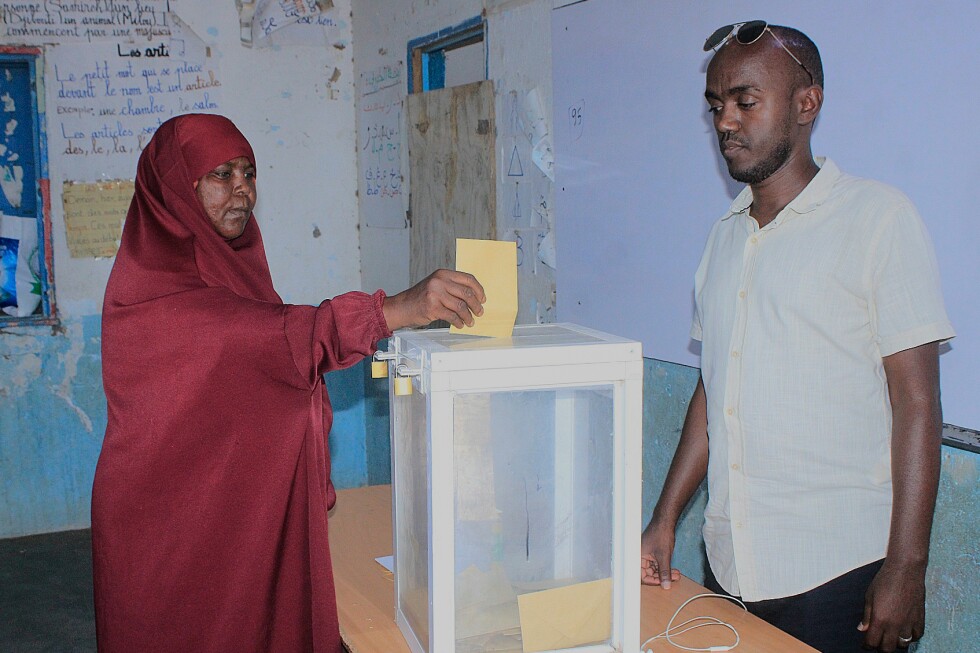
In the tiny Horn of Africa nation of Djibouti, presidential polling got underway on Friday, setting the stage for what analysts widely predict will be another term in office for the country’s 26-year incumbent leader Ismaïl Omar Guelleh. The 78-year-old Guelleh, who has governed Djibouti’s population of roughly 1 million since 1999, stands poised to claim a sixth consecutive term after national legislators eliminated the country’s previous presidential age cap last year.
Guelleh’s path to reelection has been largely unobstructed. In the 2021 presidential contest, he secured nearly 99% of the popular vote, and this year he faces only one challenger: Mohamed Farah Samatar, a one-time member of Guelleh’s ruling party. Political analysts widely characterize the race as lacking meaningful competitive tension, a pattern that has defined Djibouti’s electoral politics for years. Opposition blocs have regularly boycotted national elections, citing systemic restrictions on political organizing and civil liberties. Critics maintain that the country’s political system is tightly controlled by the ruling establishment, while government officials counter that centralized governance has delivered consistent stability to a region plagued by conflict and unrest.
Guelleh’s rise to the presidency followed the retirement of his uncle, founding leader Hassan Gouled Aptidon, cementing a decades-long family-led political order that remains the backbone of Djibouti’s public life today.
Beyond its internal politics, Djibouti holds outsized global strategic importance, thanks to its location along the critical shipping corridor connecting the Red Sea and the Gulf of Aden. It currently hosts foreign military bases for major global powers including the United States, China, France, and Japan. Economic activity in the country relies heavily on two core revenue streams: income from hosting these military installations, and port service fees for landlocked neighboring Ethiopia, which depends on Djibouti’s infrastructure for nearly all its international trade.
Yet this narrow economic model leaves Djibouti uniquely vulnerable to external disruptions. Overreliance on Ethiopia’s port usage means any economic or political volatility in Addis Ababa directly impacts Djibouti’s national income. The ongoing crisis of shipping insecurity in the Red Sea has further amplified these risks, while growing great power geopolitical competition in the region and high levels of national debt, much of it owed to China, have added long-term uncertainty to the country’s outlook.
The election was monitored by regional observer delegations from the African Union and the Intergovernmental Authority on Development, the Horn of Africa’s leading regional bloc. Speaking to the Associated Press, Mohamed Husein Gaas, a senior analyst with the Raad Peace Research Institute, framed the elimination of presidential age limits as a move rooted in preserving the status quo rather than expanding democratic contestation. Gaas noted that while the change has sparked widespread concern about democratic backsliding in Djibouti, foreign powers are almost certain to prioritize political stability over democratic progress, given the country’s non-negotiable role in securing Red Sea trade routes and regional security at a time of escalating Middle East tensions.