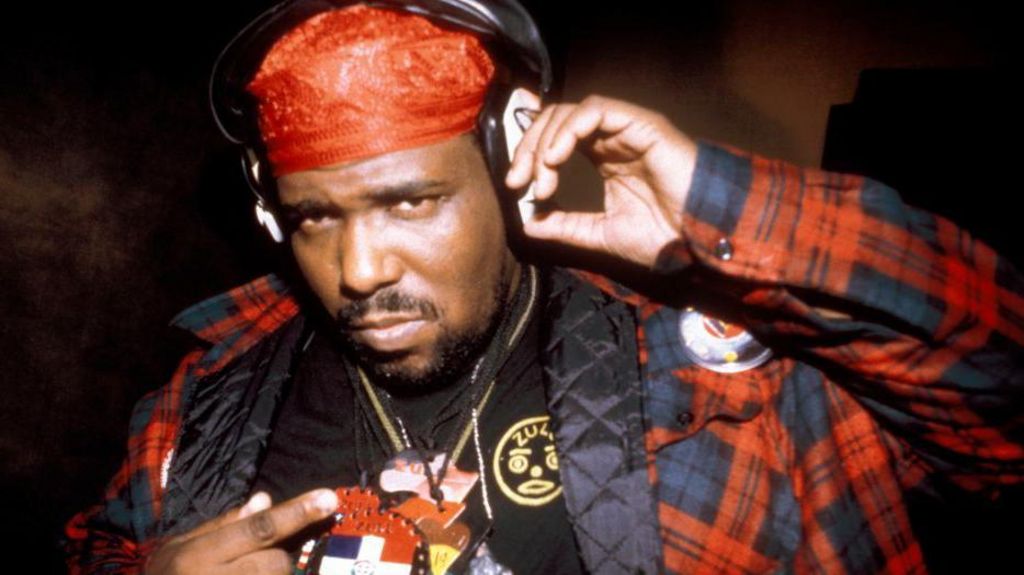
The global hip-hop community is mourning the passing of one of its foundational pioneers, Afrika Bambaataa, who died at age 67 from cancer complications, the Hip Hop Alliance has officially confirmed. First to break the news was celebrity news outlet TMZ, which reported that the iconic cultural figure passed away on Thursday in a medical facility in Pennsylvania.
Born Lance Taylor to Jamaican and Barbadian immigrant parents in the Bronx, New York, Bambaataa grew up immersed in the turbulence of 1960s and 70s New York, coming of age alongside the rising Black liberation movement. As a teenager, he was an active member of the street gang the Black Spades, where he honed the leadership skills that would later shape the future of global youth culture. In 1973, the same year DJ Kool Herc held the back-to-school party widely cited as the birth of hip-hop, Bambaataa co-founded the Universal Zulu Nation, an international collective dedicated to redirecting young people away from street violence and toward creative expression through music, art, and dance.
Bambaataa rose to global fame in 1982 with his groundbreaking hit *Planet Rock*, a genre-defying track that blended electronic production, hip-hop breaks, and funk influences that redefined the sound of 1980s hip-hop and cemented his status as an innovator. Over the following decades, he built an extensive collaborative resume, working alongside legends ranging from soul icon James Brown to punk pioneer John Lydon, and contributed to high-profile politically charged projects including 1985’s anti-apartheid charity single *Sun City*.
In a statement honoring Bambaataa’s contributions, the Hip Hop Alliance highlighted his role in building a global cultural movement rooted in the core values of peace, unity, love, and joy. “His vision transformed the Bronx into the birthplace of a culture that now reaches every corner of the world,” said Reverend Dr. Kurtis Blow Walker, the organization’s executive director.
But Bambaataa’s legacy has long been complicated by serious controversy. In 2016, decades-old allegations of child sexual abuse and trafficking from the 1980s and 1990s became public, prompting Bambaataa to step down as head of the Universal Zulu Nation. The artist repeatedly denied all accusations, calling them baseless attacks designed to destroy his reputation and legacy in hip-hop. In 2025, Bambaataa lost a civil suit related to the allegations after he failed to appear in court, according to reporting from *The Guardian*.
The Hip Hop Alliance acknowledged this complexity in its official tribute, noting that the abuse claims have sparked important, ongoing conversations about Bambaataa’s legacy within the global hip-hop community. For many, he remains a visionary who turned a local Bronx youth movement into a global cultural force; for others, his groundbreaking contributions can never be separated from the serious accusations that shadowed the final decades of his life.