China’s ambitious sponge city initiative, designed to build climate-resilient urban flood control systems, is facing an unforeseen public health challenge: many of its core assets may be acting as unintended breeding grounds for disease-carrying mosquitoes, according to a recent perspective piece published in *China CDC Weekly*. The analysis identifies a critical gap in the national standards governing sponge city design, which currently omit public health requirements for standing water management targeted at vector-borne disease control.
Industry experts broadly agree that the underlying concept of sponge city infrastructure is hydrologically sound. The initiative, which integrates permeable pavements, bioretention basins, rain gardens, constructed wetlands, and sunken green spaces into urban landscapes, has delivered proven results in reducing urban flood risk by absorbing and filtering stormwater. China’s existing national evaluation framework for these projects is highly sophisticated when it comes to hydrological performance, tracking key metrics such as runoff volume control ratios, pollutant removal efficiency, and overall water quality improvement. However, the framework completely overlooks critical biological risk factors. Specifically, it does not mandate a maximum post-storm dry-down time — the critical window within which standing water must drain to prevent mosquito larvae from completing their life cycle — nor does it require a formal linkage between routine infrastructure inspections and coordinated vector control responses, the perspective notes.
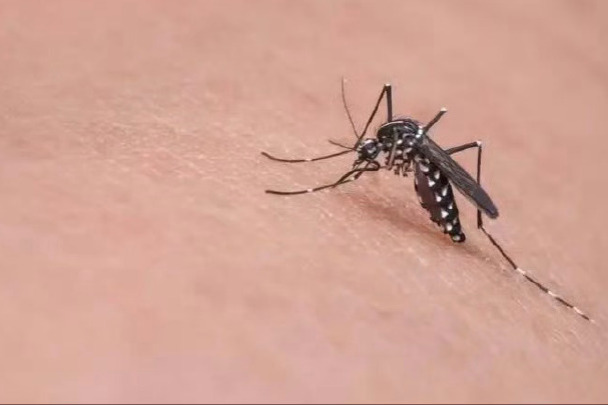
This public health warning arrives amid an unusually early start to China’s 2026 mosquito season, driven by shifting climate conditions that have expanded the range and active period of high-risk mosquito species. *Aedes albopictus*, more commonly known as the tiger mosquito and ranked among the world’s 100 most invasive species, overwinters in egg form with hardened egg shells that can survive months of cold and drought before hatching once temperatures and moisture levels become favorable. China’s National Disease Control and Prevention Administration (NCDCPA) warned this spring that rising average temperatures and increased rainfall across the country have steadily expanded the geographic range of Aedes mosquitoes, extending their active season at both the start and end of the year. In Guangdong province, a particularly warm winter combined with frequent early-spring rainfall created ideal conditions for an unusually early mosquito season onset.
“The perception that there are far more mosquitoes this year is not imagined,” noted Kang Min, chief expert for infectious disease prevention and control at the Guangdong Provincial Center for Disease Control and Prevention. “Right now, most mosquitoes residents are encountering are common household species, which overwinter as adults and rebound rapidly once temperatures stabilize. But the far more concerning tiger mosquito population, which transmits dengue fever and chikungunya, is still growing.”
Kang added that local health authorities have already detected tiger mosquitoes in multiple counties and districts across Guangdong, with vector density already reaching extremely high levels in some residential areas. The geographic risk of Aedes-borne disease is also expanding across China: historically, dengue fever was confined to China’s tropical and subtropical southern provinces, but disease ecologists are now tracking a well-documented trend of “southern disease spreading north.”
“In the past, the cold winter season acted as a natural population reset, interrupting transmission chains and eliminating local endemic cases,” explained Chen Xiaoguang, director of the Institute of Tropical Medicine at Southern Medical University. “If winters become too short and too warm to complete this reset, ongoing outbreaks can simply carry over from one year to the next, creating permanent endemic risk in new regions.”
Experts from a recent NCDCPA news conference emphasized that the 2026 risk of imported dengue and chikungunya cases triggering local transmission is significantly higher than in previous years, with some regions facing a tangible possibility of large clustered outbreaks. This warning is backed by a recent severe outbreak in Guangdong that health officials link in part to unregulated standing water in urban infrastructure: on July 9 last year, Foshan city reported a cluster of chikungunya cases, and by July 26, the provincial total had climbed to 4,824 confirmed cases across 12 prefecture-level cities. A staggering 98.5% of all cases — 4,754 total — were concentrated in Foshan, with 87.2% of all provincial cases clustered in Foshan’s Shunde district alone.
Guangdong’s public health authorities have already begun taking proactive steps to address the growing risk: the province has expanded its mosquito monitoring network, deploying small CDC-branded ovitrap devices in high-traffic public areas including parks, hospital grounds, schools, and construction sites. Devices are checked every four days, with density data fed into provincial-level risk modeling systems to target vector control responses.
To address the root cause of the risk, experts say a full overhaul of governance across the entire sponge city infrastructure life cycle is required. “Entomological risk indicators must be translated into clear engineering specifications and embedded at every stage of a project, from initial planning and design through construction acceptance, to long-term routine operation and maintenance,” said Guan Zhongjun, a professor at the Xuanwu Hospital of Capital Medical University and leading expert in medical management.
Guan added that clear cross-agency responsibility delineation is critical to closing the current regulatory gap: housing and urban-rural development authorities must update civil engineering codes to mandate regular physical access for inspection and maintenance of all water-holding infrastructure; water resources and municipal maintenance departments must implement routine clearing and drainage of standing water after major storm events; and public health agencies must conduct formal vector impact assessments before new sponge city infrastructure projects break ground. These vector-proofing measures would apply to all existing sponge city assets across China’s urban landscapes, which without proper dry-down standards and routine maintenance can function as efficient mosquito nurseries just as effectively as they function as flood control buffers.