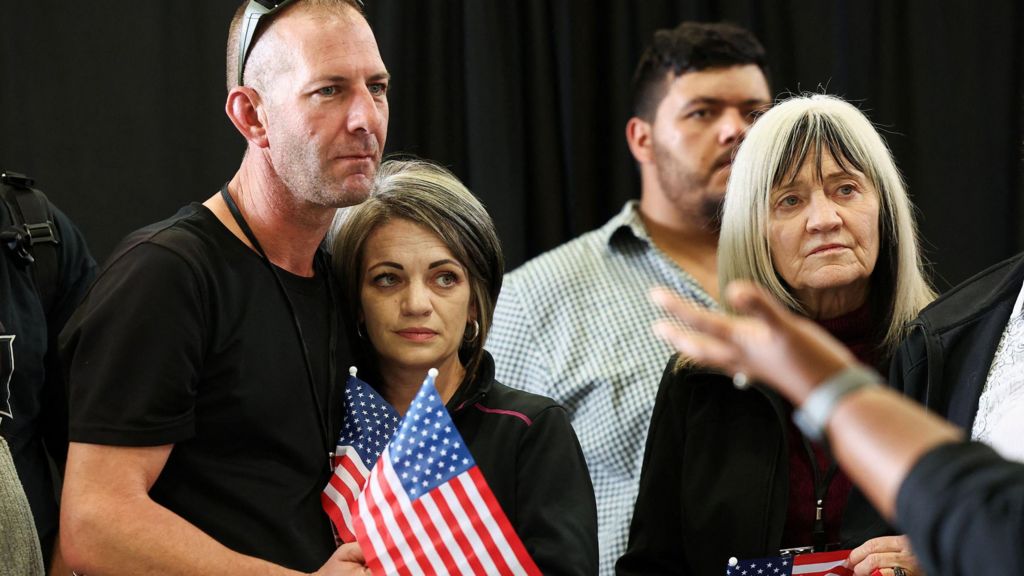
A dramatic shift in the demographic and geographic origin of refugees admitted to the United States has followed former President Donald Trump’s sweeping overhaul of American refugee policy, newly released U.S. government data confirms, triggering escalating diplomatic tensions between Washington and Pretoria over the targeted resettlement of white South African Afrikaners.
According to data compiled by the U.S. Refugee Processing Center, between October 2025 and the end of the first quarter of 2026, just 4,499 refugees total have been resettled across the United States. Strikingly, all but three of these arrivals — who came from Afghanistan — are South African nationals. This data stands in stark contrast to the final full fiscal year of the Biden administration, which ran from October 2023 to September 2024, when the U.S. welcomed 125,000 refugees from 85 different countries across the globe.
After returning to the presidency, Trump implemented a full pause on all refugee admissions to the U.S., even halting processing for applicants fleeing active war zones and humanitarian crises. The only explicit exception carved out in this policy was for Afrikaners, a white ethnic minority in South Africa who Trump has repeatedly claimed face systemic persecution. This framing has been uniformly rejected by the South African government, which has pushed back aggressively against the U.S. policy.
When announcing the policy shift, Trump framed the change as a measure to bolster U.S. national security and protect domestic public safety. Official policy guidance issued by his administration specified that refugee processing priority would be granted to Afrikaner South Africans alongside what the order called “other victims of illegal or unjust discrimination in their respective homelands.”
Diplomatic relations between the two countries have deteriorated rapidly since Trump’s second term began. Just over 12 months ago, South Africa’s ambassador to the U.S., Ebrahim Rasool, was expelled from the country after he publicly accused Trump of “mobilising supremacism” and using the narrative of white victimhood in South Africa as a racial dog whistle to energize his political base.
Tensions boiled over into a high-profile public confrontation during a May 2025 Oval Office meeting between Trump and South African President Cyril Ramaphosa. During the talks, Trump repeated unsubstantiated claims that white South African farmers were the targets of systematic persecution and what he called “genocide.” Ramaphosa directly refuted these false claims, and received public backing from John Steenhuisen, the white leader of South Africa’s Democratic Alliance — a major political party that is part of the country’s current coalition government.
Steenhuisen told Trump that the vast majority of both commercial and smallholder white farmers in South Africa have no intention of leaving the country, and remain committed to building their lives and livelihoods there. In October 2025, the South African government issued an official rebuke of the U.S. policy to prioritize Afrikaner refugee claims, noting that the widespread narrative of a so-called “white genocide” in South Africa has been repeatedly discredited by independent researchers and lacks any credible, verifiable evidence.
The South African government further pointed to an open letter signed by prominent members of the Afrikaner community itself — including leading academics, business leaders, and even descendants of prominent apartheid-era political figures — that rejected the persecution narrative. Multiple signatories of the letter went so far as to label the U.S. resettlement scheme a fundamentally racist policy.
The first cohort of resettled Afrikaner refugees, numbering 68 people, arrived in the U.S. in May 2025. Arrival numbers have surged sharply in early 2026, with 2,848 South African refugees entering the country between February and March alone. The resettled refugees have spread across the U.S., with the single largest concentration of 543 people establishing new homes in Texas.