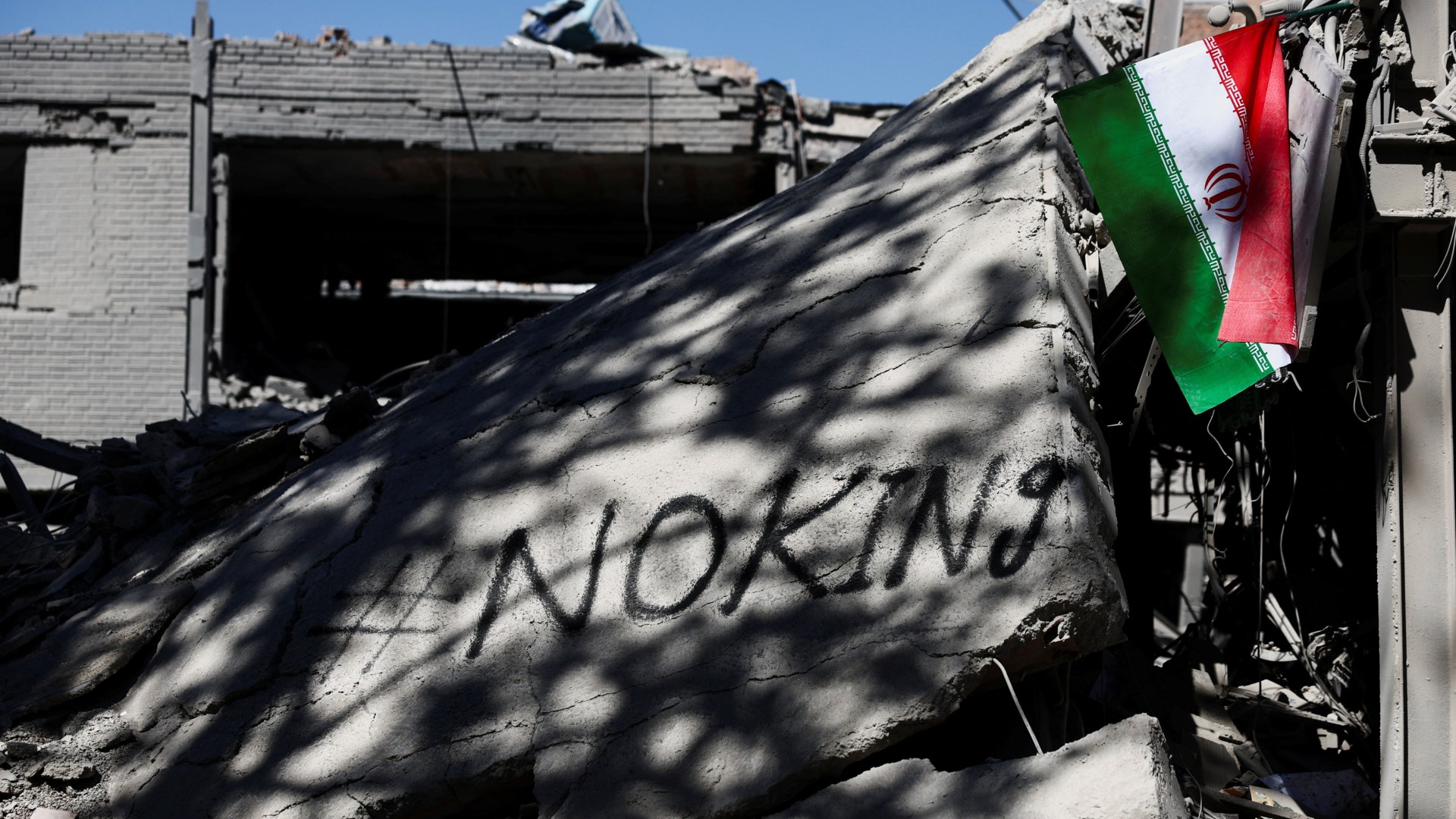
After weeks of devastating US-Israeli airstrikes across Iran, the announcement of a ceasefire has brought much-needed quiet to civilian communities across the country – but for a segment of Iran’s anti-establishment population that initially pinned hopes of political change on the foreign assault, the end of bombing has only delivered crushing disillusionment. For many who once framed external military action as a shortcut to systemic change, the destruction of civilian infrastructure and broken promises of targeted intervention have forced a painful reckoning.
Leila, a 25-year-old Iranian who requested a pseudonym for security reasons, is among those who now admit they were wildly wrong in their early assumptions. “I thought this was it – I thought the Islamic Republic was finally coming to an end,” she explained. Like many other opposition-aligned Iranians, she bought into the narrative that the strikes would be quick, decisive, and deliver immediate political transformation, even claiming she believed Washington and Jerusalem had already struck a post-conflict power-sharing deal with exiled opposition leader Reza Pahlavi. “I was wrong,” she says plainly.
Leila is far from alone. In the opening days of the conflict, a subset of Iranian opponents of the ruling government viewed former U.S. President Donald Trump and Israeli Prime Minister Benjamin Netanyahu as unlikely allies who could clear the path for the change they had long demanded during years of internal unrest. But as the campaign dragged on and the full scale of civilian and infrastructure damage came into view, those rosy expectations evaporated almost entirely.
Leila questions the logic of targeting the country’s basic civilian networks, pointing to the destroyed bridges, demolished railway lines, and flattened oil depots that dot the post-strike landscape. “How does that help change a government?” she asks. The contradiction between Trump’s past messaging and his eventual threats hit especially hard: back in January, at the peak of widespread anti-government protests that had been met with a brutal security crackdown, Trump took to social media to promise demonstrators that help was imminent. Just weeks before the ceasefire, he issued a terrifying public warning to Iran that “a whole civilization will die tonight, never to be brought back again” before backing down to agree to the pause in hostilities.
“In the span of just two months, we went from ‘help is on the way’ to threats about the destruction of Iranian civilization,” Leila said. The fallout has not only been political – it has torn apart personal relationships, too. She says she lost friendships over her decision to trust foreign powers, after she dismissed warnings from peers that Trump and Netanyahu would not act in Iran’s best interest, even accusing doubters of being sympathetic to the ruling establishment. Many of those bonds have never healed. “Now I feel like everything I believed in just collapsed,” she admits.
Twenty-nine-year-old Ali shared a nearly identical arc of hope followed by disillusionment. In the wake of the January nationwide protests – sparked by soaring inflation that escalated into widespread anti-government unrest, with conflicting death tolls putting fatalities between 3,117 (per Iranian government figures) and at least 7,015 (per the U.S.-based Human Rights Activists News Agency) – Ali came to believe external military force was the only path to change. “We thought war would finish everything,” he said. Instead, the strikes destroyed his family’s home, leaving him and his relatives homeless, though they escaped with their lives.
Ali had bought into claims that U.S. and Israeli military technology would enable precision strikes that avoided civilian casualties, targeting only regime figures and military sites. “Maybe when they realised they couldn’t change the system, they started hitting everything. Or maybe I was just naive,” he reflected.
Not all anti-establishment Iranians shared the initial optimism that foreign intervention would bring freedom. Forty-seven-year-old Maryam says she always knew the campaign would end in disaster. “Only blind people could think that a war started by Trump and Netanyahu would bring us freedom,” she argued. “Didn’t we see Gaza? Lebanon? Syria? How could anyone think this would be different?”
By the end of the strikes, U.S. and Israeli attacks had leveled critical national infrastructure: energy facilities, transportation links, steel and petrochemical plants, a Tehran synagogue, multiple hospitals, universities, schools, and hundreds of small local businesses. “Maybe we should be relieved that the explosions have stopped,” Maryam concedes. “But how do you rebuild a country after this?” She remains sharply critical of Iranians who initially backed the strikes, many of whom she says are now trying to distance themselves from their earlier support. “I cannot forgive that,” she says.
Fifty-four-year-old Abbas goes even further, arguing that the war has permanently ended any remaining political relevance for Reza Pahlavi, the son of Iran’s last monarch and a leading exiled opposition figure. “Reza Pahlavi did everything he could to reach to power,” Abbas said. “But he never condemned any of the US or Israeli attacks on Iran’s infrastructure.” He pointed to Pahlavi’s public praise for Trump, noting the opposition leader used every form of flattery to win U.S. support, only to be cast aside once Washington reached a ceasefire deal with the Tehran government. “I hope his supporters understand now: you can’t rely on someone who is willing to see his own people killed and his country destroyed just to get to power,” Abbas added.
For many ordinary Iranians, the ceasefire has brought a long-overdue sense of relief, even as deep uncertainty lingers. Thirty-four-year-old Niloufar, a Tehran resident who spent 40 days sheltering indoors to avoid airstrikes, says the announcement of a ceasefire still feels surreal. “When the ceasefire was announced, it felt unreal. Like something had lifted off my chest,” she said. “For the first time in 40 days, I was able to sleep peacefully.”
Despite the pause, sporadic explosions continue to be reported, and a recent Israeli strike in Lebanon that killed dozens has already been labeled a violation of the ceasefire terms by Iranian officials. Many Iranians remain skeptical that the truce will hold, and distrust runs deep on all sides. Thirty-one-year-old Mehdi says he trusts neither the U.S. and Israeli governments nor his own country’s ruling establishment. “I don’t trust the US or Israel. Honestly, I don’t even trust them more than our own government,” he said. He notes that negotiations were already underway before the strikes began, leaving him wondering why this round of talks should be trusted more than past efforts. “We were negotiating, then suddenly they attacked,” he said. “What if they negotiate again and then strike even harder?”
That sense of profound, widespread disillusionment defines the current moment for many opposition Iranians. Ali sums it up bluntly: “Before the war, we used to say things couldn’t get worse. Now we know they can. We thought war would solve everything. Now we know it’s not that simple.” He adds a final, sharp judgment: “And we learnt something else, too: Reza Pahlavi is a stupid and ineffective politician who shows little real concern for the lives of those of us still living inside Iran.”