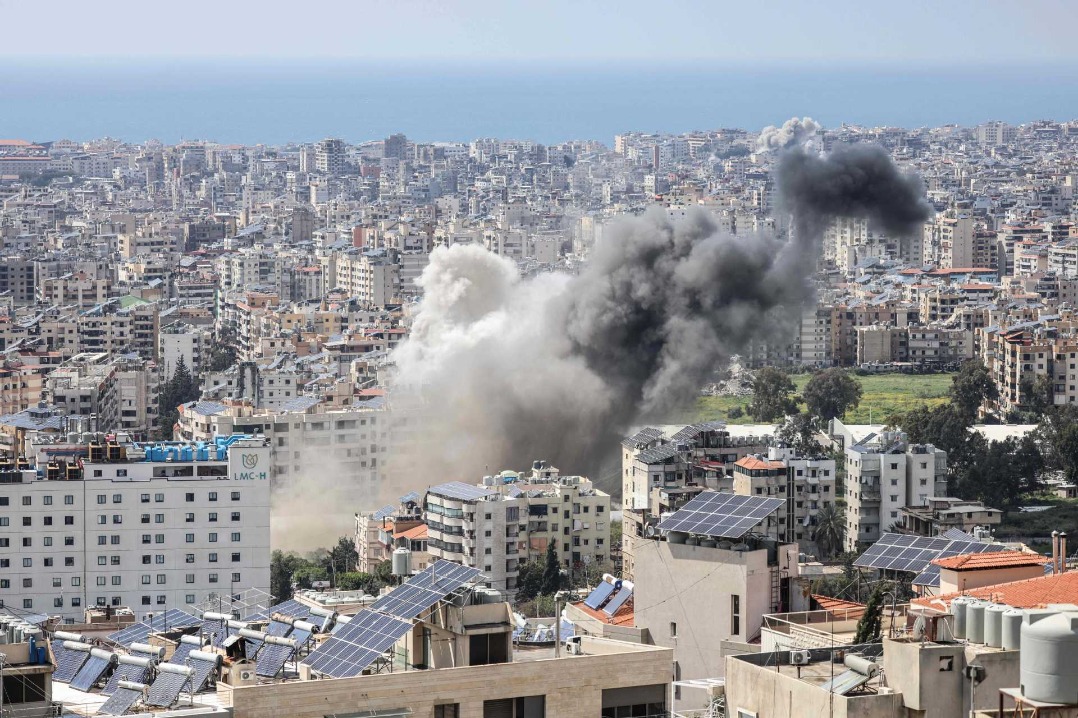
Less than 24 hours after a two-week ceasefire between the United States and Iran was first announced, deep divisions and conflicting claims have thrown the truce into chaos, with disputes over its geographic scope, shipping access through the Strait of Hormuz and core terms on Iran’s nuclear program blocking progress on planned peace talks. The breakdown began Wednesday when Israel launched large-scale strikes against Hezbollah positions in Lebanon, which Lebanon’s civil defense service confirmed killed at least 254 people and left hundreds more wounded. In the wake of the attacks, Iran immediately accused the U.S. of breaking the terms of the ceasefire, insisting the truce explicitly included Lebanon and all allied factions operating in the country. This claim has been met with starkly opposing stances from Washington and Jerusalem, both of which argue that Lebanon was never part of the negotiated truce, while Pakistan — the third-party mediator that brokered the ceasefire — has confirmed Iran’s position that the agreement does extend to Lebanese territory. Mohammad Bagher Ghalibaf, speaker of Iran’s parliament, reaffirmed Tehran’s stance in an official statement, saying that any valid ceasefire must include Hezbollah in Lebanon regardless of U.S. and Israeli objections. The planned next step for the ceasefire — a new round of negotiations led by U.S. Vice President JD Vance in Islamabad, Pakistan’s capital — now hangs in the balance. Following the Israeli strikes, Iranian officials have repeatedly characterized moving forward with bilateral talks as unreasonable under current circumstances. Ghalibaf emphasized that launching negotiations or upholding a bilateral ceasefire is impossible in the context of ongoing attacks. The two sides also remain irreconcilably divided on another core sticking point: Iran’s nuclear program, the issue U.S. President Donald Trump has repeatedly cited as a primary justification for launching the war. Trump wrote on social media that the U.S. would work with Iran to locate and eliminate all undeclared nuclear material, which he referred to as nuclear “dust.” Ghalibaf pushed back against this framing, noting that the ceasefire explicitly permits Iran to continue its domestic uranium enrichment activities. Disputes have also erupted over access to the Strait of Hormuz, one of the world’s most critical energy chokepoints. Iranian state media outlet Fars News reported that all tanker traffic through the strait was suspended Wednesday afternoon in direct response to Israel’s strikes in Lebanon. White House press secretary Karoline Leavitt rejected this claim during Wednesday’s press briefing, asserting that traffic through the waterway had actually increased, and that she had received private confirmation that the strait was open and operating as required by the Trump administration. On-the-ground reporting from the BBC tells a different story: by 2 p.m. local time Wednesday, only three bulk carriers — the NJ Earth, Daytona Beach, and Hai Long 1 — had successfully transited the strait, leaving nearly 800 commercial ships stranded on either side. Multiple shipping sources also confirmed that Iran has been broadcasting English-language warnings to all tankers in the Persian Gulf, stating that any vessel that attempts to pass through the strait without prior authorization from Iranian authorities will be targeted and destroyed by military force. Hamid Hosseini, spokesperson for Iran’s Oil, Gas and Petrochemical Products Exporters’ Union — an organization that works closely with the Iranian government — told the Financial Times that Iran’s new requirement is designed to let Tehran inspect passing vessels and collect transit tolls. Hosseini explained that Iran needs to monitor all traffic moving through the strait to prevent weapons from being transferred to opposing forces during the 14-day truce. He added that while commercial traffic is technically allowed, the new inspection process will slow transit significantly, and Tehran has no urgency to speed up procedures. Despite the widespread chaos and conflicting claims that have emerged just hours after the ceasefire was announced, U.S. stock markets reacted with clear optimism to the announcement of a truce. All three major U.S. indexes — the Dow Jones Industrial Average, S&P 500, and Nasdaq — posted solid gains between 2.5% and 2.8% following news of the ceasefire. Analysts attribute the rally to investor hopes that a sustained truce would reduce global energy market volatility and lower the risk of a broader regional conflict that could disrupt global economic growth.