The recent ceasefire agreement between Iran and the United States has sparked cautious optimism across global markets, offering a much-needed respite for a world economy sent into turmoil after the outbreak of hostilities in late February. However, industry analysts and economic experts warn that a full, balanced recovery will be uneven, with multiple sectors facing persistent headwinds that could delay a return to pre-conflict stability for months.
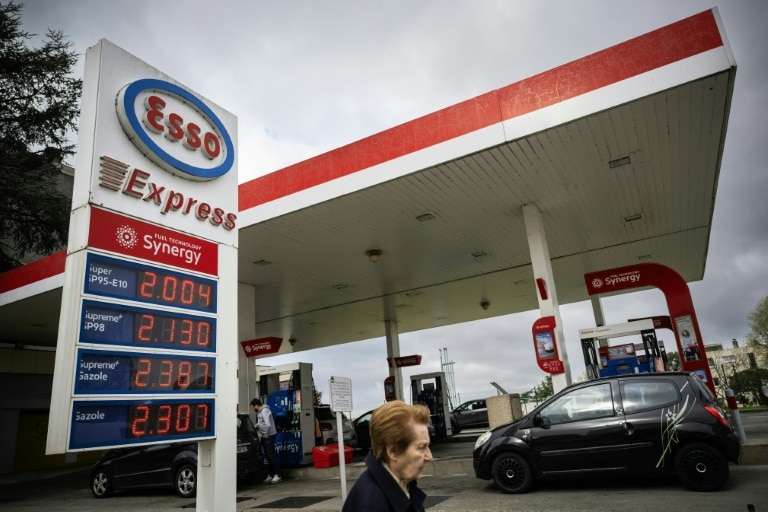
One of the most immediate market reactions to the truce was a sharp drop in global oil prices, with leading international crude contracts falling below the psychologically significant $100 per barrel threshold. This pullback is set to bring direct relief to consumers around the world, who have grappled with skyrocketing retail fuel prices over recent weeks. In response to the surge, many national governments were forced to implement emergency consumption reduction measures and targeted support programs to protect low-income households from energy cost shocks. In France, for example, fuel prices could drop between 5 and 10 euro cents per litre “very quickly” according to Olivier Gantois, president of the French Union of Petroleum Industries (Ufip), in an interview with AFP.
The truce also led to the reopening of the Strait of Hormuz, the strategic chokepoint that carries roughly 20 percent of the world’s daily crude oil and liquefied natural gas shipments. Already, two commercial vessels — one Greek-owned and another flagged in Liberia — have completed transits of the waterway since the agreement was reached. Despite this milestone, risk management firm Vanguard cautioned that the Strait “remains subject to coordination with Iranian armed forces, suggesting continued Iranian control and influence.” This ongoing oversight means shipping conditions will likely remain controlled and potentially restrictive for the foreseeable future. Niels Rasmussen, chief analyst for global shipping association Bimco, added that he does not expect a sudden flood of vessels returning to the Gulf. “Many ships have already sailed to other regions and they do not want to risk being trapped after the two-week window closes,” Rasmussen explained.
Aviation, one of the sectors hit hardest by the regional conflict and subsequent energy market volatility, is also set for a slow return to normal operations. To date, only Iraq has announced a full reopening of its airspace to all commercial traffic. Major aviation hubs in the United Arab Emirates and Qatar — including Dubai, Abu Dhabi and Doha, which handle a large share of global long-haul flight traffic — still maintain extensive flight restrictions. Beyond airspace access, the International Air Transport Association (IATA), the global industry body for airlines, warns that restoring normal jet fuel supplies will take several months due to widespread disruptions to Gulf refining capacity. As a result, the trade group notes that “the most immediate lever” for airlines to protect their operating margins remains passing higher energy costs through to consumers via elevated ticket prices.
Even with the ceasefire in place and oil prices trending downward, experts warn that meaningful increases in physical energy supply will not materialize quickly. Widespread damage to oil and gas infrastructure across the Gulf region has left output capacity severely constrained, and rebuilding will be a gradual process. “Restarting oilfields and fixing damaged infrastructure is a gradual process, and producers will be cautious about ramping up output without reliable export routes,” said Simone Tagliapietra, a fellow at Brussels-based think tank Bruegel. International Energy Agency (IEA) executive director Fatih Birol echoed this assessment in an interview with French newspaper Le Figaro published Tuesday, noting: “Seventy-five energy plants have been attacked and damaged and more than a third of them are seriously or very seriously affected. Recovery will take a long time.”
Global financial markets reacted positively to the ceasefire news, with major stock indices posting strong gains and European government borrowing costs falling sharply. Claudia Panseri, chief investment officer at UBS Wealth Management France, told AFP that the long-term macroeconomic impact of the conflict will depend entirely on the durability of the truce. “If we quickly return to February levels, the macroeconomic impact and the impact on budgets won’t be very significant, I’d say almost negligible,” Panseri said. But she cautioned that if the agreement collapses within the next two weeks, and oil prices climb back above $100 per barrel while natural gas prices remain elevated, the knock-on effects for global inflation and economic growth will be far more severe.