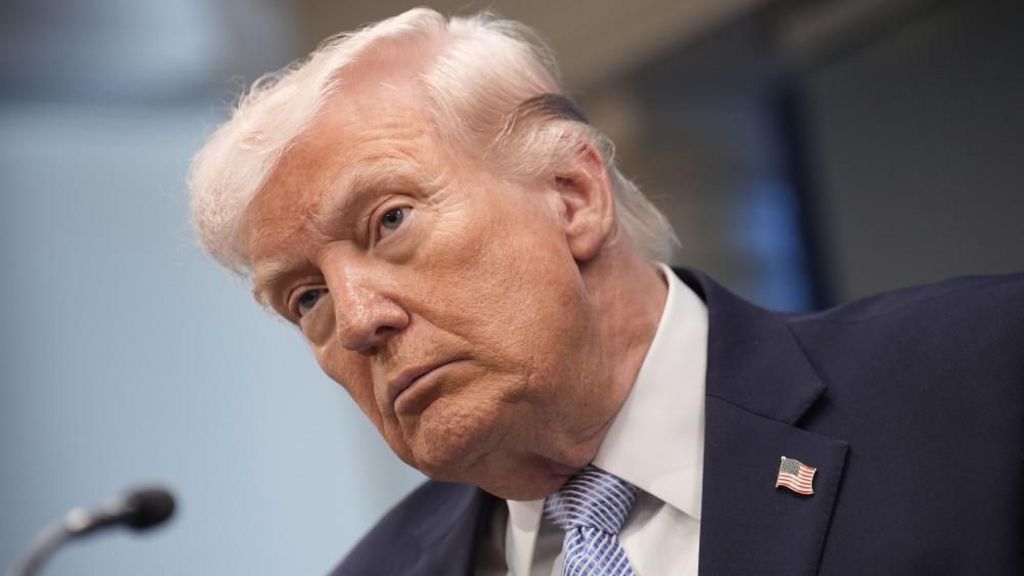
Just 90 minutes before a self-imposed deadline that would have triggered massive U.S. airstrikes against Iranian energy and transportation infrastructure, a last-minute de-escalation has pulled the region back from the brink of full-scale war. On Tuesday Washington time, U.S. President Donald Trump announced via his social media platform that Washington and Tehran had made substantial progress toward a definitive peace agreement, and he had approved a 14-day ceasefire to create space for negotiations to move forward.
The ceasefire is not a one-sided commitment: it requires Iran to also suspend all offensive operations and fully reopen the Strait of Hormuz, the world’s most critical oil chokepoint, for unimpeded commercial shipping. Tehran has publicly confirmed it will meet these conditions. The breakthrough comes as a surprise to many global observers, since earlier the same day, Trump had issued an unprecedented, inflammatory threat that he would wipe out Iranian civilization “never to be brought back again” – a statement that shattered long-held norms of diplomatic rhetoric from sitting U.S. presidents.
It remains unconfirmed whether this extreme threat pushed Iran to accept a ceasefire it had rejected in earlier talks. What is undeniable is that the president’s rhetoric marks a profound break from decades of U.S. diplomatic practice. Even if the temporary ceasefire paves the way for a lasting peace deal, experts say Trump’s threats and the brief conflict have already reshaped how the international community views the United States. A nation that long positioned itself as a global guarantor of stability is now seen as destabilizing the core foundations of the existing international order, as Trump, who has built his political brand on breaking domestic norms, extends that approach to global diplomacy.
Domestically, the president’s comments have sparked sharp bipartisan backlash. Congressional Democrats have been quick to condemn the threats, with some even calling for Trump’s removal from office. “It is clear that the president has continued to decline and is not fit to lead,” Congressman Joaquin Castro posted on X. Senate Majority Leader Chuck Schumer, the top Senate Democrat, added that any Republican who refuses to vote to end the Iran war will be held responsible for all consequences of the conflict.
While most members of Trump’s own party have rallied around him, defections are far more widespread than in most previous controversies. Georgia Republican Congressman Austin Scott, a senior member of the House Armed Services Committee, publicly rejected the president’s rhetoric, telling reporters “The president’s comments are counter-productive, and I do not agree with them.” Normally loyal Wisconsin Senator Ron Johnson called a full-scale bombing campaign a “huge mistake,” while Texas Congressman Nathaniel Moran wrote on social media that he could not support threatening the destruction of an entire civilization. “This is not who we are, and it is not consistent with the principles that have long guided America,” Moran said. Alaska Senator Lisa Murkowski, a frequent critic of Trump, added that the threat “cannot be excused away as an attempt to gain leverage in negotiations with Iran.”
The White House has already pushed back against critics, arguing that Trump’s high-stakes leverage worked to force Iran to the negotiating table. In his ceasefire announcement, Trump claimed the U.S. had “met and exceeded” all of its initial military objectives in the conflict. U.S. airstrikes have degraded Iran’s conventional military capabilities and killed multiple top Iranian regime leaders, though the Islamic fundamentalist government remains in power.
Many core U.S. objectives remain unfulfilled, however. The status of Iran’s enriched uranium stockpile – the core material for a potential nuclear weapons program – remains undisclosed, and Iran still retains significant influence over regional armed proxies including Yemen’s Houthi rebels. Even if Iran fully opens the Strait of Hormuz, the crisis has underscored Tehran’s ability to disrupt global energy supplies by closing the chokepoint, strengthening its geopolitical leverage going forward.
In his official response to the ceasefire announcement, Iranian Foreign Minister Seyed Aragchi confirmed Iran would suspend its defensive operations and allow safe commercial passage through the Strait of Hormuz, coordinated with Iranian armed forces. He added that the U.S. had accepted the general framework of Iran’s 10-point peace proposal, which includes full withdrawal of U.S. military forces from the Middle East, lifting all economic sanctions on Iran, war reparations from the U.S., and formal Iranian sovereignty over the Strait of Hormuz. It remains unclear whether Trump will agree to any of these sweeping demands, leaving the 14-day negotiation period facing major potential pitfalls.
For the immediate term, the ceasefire delivers a political win for Trump, who followed through on his high-stakes threat to force a negotiation. But the truce is only a temporary pause in hostilities, not a permanent resolution. The full long-term cost of the president’s unprecedented rhetoric, the conflict, and the norm-breaking that preceded the ceasefire will not be clear for years to come.